













Thermochemical energy storage in barium carbonate enhanced by iron(iii) oxide
Literature Information
Publication Date
2023-02-08
DOI
10.1039/D2CP05745J
Impact Factor
3.676
Authors
Kyran Williamson, Anita M. D’Angelo, Terry D. Humphries, Mark Paskevicius, Craig E. Buckley
View Original
Abstract
Renewable energy requires cost effective and reliable storage to compete with fossil fuels. This study introduces a new reactive carbonate composite (RCC) where Fe2O3 is used to thermodynamically destabilise BaCO3 and reduce its decomposition temperature from 1400 °C to 850 °C, which is more suitable for thermal energy storage applications. Fe2O3 is consumed on heating to form BaFe12O19, which is a stable Fe source for promoting reversible CO2 reactions. Two reversible reaction steps were observed that corresponded to, first, the reaction between β-BaCO3 and BaFe12O19, and second, between γ-BaCO3 and BaFe12O19. The thermodynamic parameters were determined to be ΔH = 199 ± 6 kJ mol−1 of CO2, ΔS = 180 ± 6 J K−1 mol−1 of CO2 and ΔH = 212 ± 6 kJ mol−1 of CO2, ΔS = 185 ± 7 J K−1 mol−1 of CO2, respectively, for the two reactions. Due to the low-cost and high gravimetric and volumetric energy density, the RCC is demonstrated to be a promising candidate for next generation thermal energy storage.
Related Literature
Quantum effects in ultrafast electron transfers within cryptochromes
Thiago Firmino, Fabien Cailliez, David Mendive-Tapia, Fabien Gatti, Christoph Meier, Aurélien de la Lande
2016-06-29
Paper
DOI: 10.1039/C6CP02809H
Correction: Photochemical etiology of promising ancestors of the RNA nucleobases
M. M. Brister, M. Pollum, C. E. Crespo-Hernández
2016-07-25
Correction
DOI: 10.1039/C6CP90188C
The S66x8 benchmark for noncovalent interactions revisited: explicitly correlated ab initio methods and density functional theory
Brina Brauer, Manoj K. Kesharwani, Sebastian Kozuch, Jan M. L. Martin
2016-03-01
Paper
DOI: 10.1039/C6CP00688D
A computationally efficient double hybrid density functional based on the random phase approximation
Stefan Grimme, Marc Steinmetz
2015-12-03
Paper
DOI: 10.1039/C5CP06600J
Radical attached aluminum nanoclusters: an alternative way of cluster stabilization
Turbasu Sengupta, Sourav Pal
2016-07-06
Paper
DOI: 10.1039/C6CP03601E
Magnetic properties with multiwavelets and DFT: the complete basis set limit achieved
Stig Rune Jensen, Dan Jonsson, Rune Sørland Monstad, Kenneth Ruud, Luca Frediani
2016-04-11
Paper
DOI: 10.1039/C6CP01294A
Multiple superhyperfine fields in a {DyFe2Dy} coordination cluster revealed using bulk susceptibility and 57Fe Mössbauer studies
Valeriu Mereacre, Christopher E. Anson
2016-07-05
Paper
DOI: 10.1039/C6CP02942F
Understanding abnormal potential behaviors at the 1st charge in Li2S cathode material for rechargeable Li–S batteries
Yongjo Jung, Byoungwoo Kang
2016-07-11
Paper
DOI: 10.1039/C6CP03146C
A comparative first-principles study of the lithiation, sodiation, and magnesiation of black phosphorus for Li-, Na-, and Mg-ion batteries
K. P. S. S. Hembram, Hyun Jung, Byung Chul Yeo, Sung Jin Pai, Heon Ju Lee, Kwang-Ryeol Lee, Sang Soo Han
2016-07-11
Paper
DOI: 10.1039/C6CP02049F
Mechanistic understanding of calcium–phosphonate solid dissolution and scale inhibitor return behavior in oilfield reservoir: formation of middle phase
Ping Zhang, Dong Shen, Gedeng Ruan
2016-07-08
Paper
DOI: 10.1039/C6CP03148J
You might also like
Compound Q&A
What are the main uses of 1H-Indazole-6-carbonitrile (CAS: 141290-59-7)?
1H-Indazole-6-carbonitrile finds applications in pharmaceuticals, where it serve...
141290-59-71H-Indazole-6-carbon...
Compound Q&A
How should waste containing Dioctyl (2E)-2-butenedioate (CAS: 2997-85-5) be handled?
Waste containing Dioctyl (2E)-2-butenedioate (CAS: 2997-85-5) should be collecte...
2997-85-5Dioctyl (2E)-2-buten...
Compound Q&A
What industries use Sodium [(1,2-benzoxazol-3-ylmethyl)sulfonyl]azanide (CAS: 68291-98-5)?
Sodium [(1,2-benzoxazol-3-ylmethyl)sulfonyl]azanide is primarily used in pharmac...
68291-98-5Sodium [(1,2-benzoxa...
Compound Q&A
Are there alternatives to Dimethyl 4-(4,4,5,5-tetramethyl-1,3,2-dioxaborolan-2-yl)-2,6-pyridinedicarboxylate (CAS: 741709-66-0) in synthesis?
Dimethyl 4-(4,4,5,5-tetramethyl-1,3,2-dioxaborolan-2-yl)-2,6-pyridinedicarboxyla...
741709-66-0Dimethyl 4-(4,4,5,5-...
Compound Q&A
How should waste containing 2-Fluoro-6-hydrazinopyridine (CAS: 80714-39-2) be handled?
Waste containing 2-Fluoro-6-hydrazinopyridine (CAS: 80714-39-2) should be manage...
80714-39-22-Fluoro-6-hydrazino...
Compound Q&A
What is 6-Formyl-2-pyridinecarboxylic acid (CAS: 499214-11-8)?
6-Formyl-2-pyridinecarboxylic acid is an organic compound with the molecular for...
499214-11-86-Formyl-2-pyridinec...
Compound Q&A
What is the market or research trend for 3-(3,4-dimethoxyphenyl)-2,5-dimethyl-N-(2-morpholin-4-ylethyl)pyrazolo[1,5-a]pyrimidin-7-amine (CAS: 900874-91-1)?
Research trends for this compound indicate a focus on its potential applications...
900874-91-13-(3,4-dimethoxyphen...
Compound Q&A
How is 9H-Tribenzo[b,d,f]azepine (CAS: 29875-73-8) typically synthesized?
9H-Tribenzo[b,d,f]azepine is typically synthesized via a multi-step process invo...
29875-73-89H-Tribenzo[b,d,f]az...
Compound Q&A
How is 1-Cyclopropyl-7-ethoxy-6-fluoro-8-methoxy-4-oxo-1,4-dihydro-3-quinolinecarboxylic acid (CAS: 1797982-51-4) typically synthesized?
1-Cyclopropyl-7-ethoxy-6-fluoro-8-methoxy-4-oxo-1,4-dihydro-3-quinolinecarboxyli...
1797982-51-41-Cyclopropyl-7-etho...
Compound Q&A
How should waste containing Methyl 3-oxo-1,2,3,4-tetrahydro-6-quinoxalinecarboxylate (CAS: 671820-52-3) be handled?
Waste containing Methyl 3-oxo-1,2,3,4-tetrahydro-6-quinoxalinecarboxylate (CAS: ...
671820-52-3Methyl 3-oxo-1,2,3,4...
Source Journal
Physical Chemistry Chemical Physics

CiteScore:
5.5
Self-citation Rate:
10.3%
Articles per Year:
3036
Physical Chemistry Chemical Physics (PCCP) is an international journal co-owned by 19 physical chemistry and physics societies from around the world. This journal publishes original, cutting-edge research in physical chemistry, chemical physics and biophysical chemistry. To be suitable for publication in PCCP, articles must include significant innovation and/or insight into physical chemistry; this is the most important criterion that reviewers and Editors will judge against when evaluating submissions. The journal has a broad scope and welcomes contributions spanning experiment, theory, computation and data science. Topical coverage includes spectroscopy, dynamics, kinetics, statistical mechanics, thermodynamics, electrochemistry, catalysis, surface science, quantum mechanics, quantum computing and machine learning. Interdisciplinary research areas such as polymers and soft matter, materials, nanoscience, energy, surfaces/interfaces, and biophysical chemistry are welcomed if they demonstrate significant innovation and/or insight into physical chemistry. Joined experimental/theoretical studies are particularly appreciated when complementary and based on up-to-date approaches.
Recommended Compounds

Ammonium (Z)-2-(furan-2-yl)-2-(methoxyimino)acetate
CAS Number:
97148-39-5
Molecular Formula:
C7H10N2O4
![N-[(9H-Fluoren-9-ylmethoxy)carbonyl]serine structure](https://static.chemtradehub.com/structs/737/73724-45-5-b0dc.webp "N-[(9H-Fluoren-9-ylmethoxy)carbonyl]serine structure")
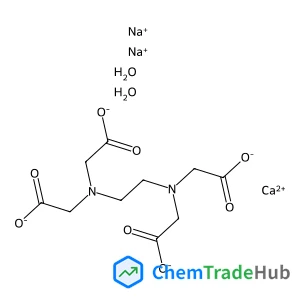
EthylenediaminetetraaceticacidcalciumDisodiumsalthydrate
CAS Number:
23411-34-9
Molecular Formula:
C10H16CaN2Na2O10

Recommended Suppliers



Disclaimer
This page provides academic journal information for reference and research purposes only. We are not affiliated with any journal publishers and do not handle publication submissions. For publication-related inquiries, please contact the respective journal publishers directly.
If you notice any inaccuracies in the information displayed, please contact us at support@chemtradehub.com. We will promptly review and address your concerns.