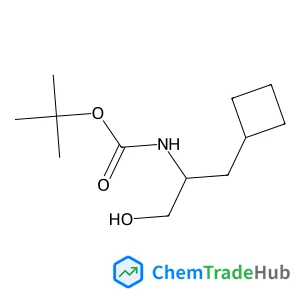
2-Methyl-2-propanyl (1-cyclobutyl-3-hydroxy-2-propanyl)carbamate
CAS Number:
816429-99-9
Molecular Formula:
C12H23NO3
Linhui Hu, Shuai Wang, Lihong Liang
The performance of ceramic/polymer composite materials is significantly affected by their internal interfaces. To reveal the intrinsic interface fracturing mechanism of ceramic/polymer interfaces, an interfacial model composed of SiO2 and polypropylene (PP) is investigated using the molecular dynamics method. The interface damage is quantified by the increase in the interface free volume and deformation of a single PP chain. As stretching speeds increase, the free volume and outflowing atoms of PP chains decrease with the same interfacial displacement, which results in the increase of the interface strength and fracture energy. At low stretching speeds, the interface damage mechanism is determined by a competition between attractions of the PP single chains from SiO2 and PP. In contrast, at higher stretching speeds, the interface fracture is more brittle and the interface strength and fracture energy are both higher owing to the smaller cavity ratio. The results of this study contribute to an in depth understanding of the fracture mechanism of ceramic/polymer interfaces in many systems.

Construction and Building Materials

Heterocyclic Communications

Computational Materials Science

Chemistry of Materials

Journal of Computer-Aided Molecular Design

Journal of Physical Organic Chemistry

Diamond and Related Materials

Catalysis Today

Bio-Medical Materials and Engineering

Main Group Metal Chemistry
Erika P. Brown, Carolyn A. Koh
DOI: 10.1039/C5CP06071K
Cathal Smyth, Daniel G. Oblinsky, Gregory D. Scholes
DOI: 10.1039/C5CP00295H
Mehmet Yagmurcukardes, Engin Torun, Francois M. Peeters, R. Tugrul Senger
DOI: 10.1039/C5CP05538E
Masashi Honda, Yuya Oaki, Hiroaki Imai
DOI: 10.1039/C5CP05584A
Linus O. Johannissen, Sam Hay, Nigel S. Scrutton
DOI: 10.1039/C5CP00614G
Xueming Yuan, Gang Cheng
DOI: 10.1039/C5CP05744B
Harald Ceymann, Moritz Balkenhohl, Alexander Schmiedel, Marco Holzapfel, Christoph Lambert
DOI: 10.1039/C5CP06917C
Xueli Guo, Yiwei Tan
DOI: 10.1039/C5CP05531H
Robert Pendrill, Olof Engström, Andrea Volpato, Mirco Zerbetto, Antonino Polimeno, Göran Widmalm
DOI: 10.1039/C5CP06288H
Tomofumi Tada, Kazunari Yoshizawa
DOI: 10.1039/C5CP05423K
When handling 2-Methyl-2-propanyl 5-amino-2-thiophenecarboxylate (CAS: 1498311-5...
5-Bromo-1,2-dichloro-3-fluorobenzene (CAS: 1000572-93-9) is a crystalline solid ...
(2R)-2-Amino-2-(4-bromophenyl)ethanol (CAS: 354153-64-3) should be stored in a c...
Methyl 4-(aminomethyl)tetrahydro-2H-pyran-4-carboxylate hydrochloride (CAS: 3627...
1,4-Dimethyl-1H-pyrazole-5-sulfonyl chloride is primarily used as an intermediat...
Dinaphtho[1,2-b:2',1'-d]furan is generally safe when handled with appropriate pe...
The market for 7-Methyl-7,9-dihydro-1H-purine-2,6,8(3H)-trione (CAS: 612-37-3) i...
2-(4-Chlorophenyl)malonaldehyde (CAS: 205676-17-1) is a colorless or light yello...
2-Methylchrysene (CAS: 3351-32-4) is typically synthesized via the reaction of c...
N-(6-aminopyrimidin-4-yl)acetamide (CAS: 89533-23-3) is generally considered saf...

Physical Chemistry Chemical Physics (PCCP) is an international journal co-owned by 19 physical chemistry and physics societies from around the world. This journal publishes original, cutting-edge research in physical chemistry, chemical physics and biophysical chemistry. To be suitable for publication in PCCP, articles must include significant innovation and/or insight into physical chemistry; this is the most important criterion that reviewers and Editors will judge against when evaluating submissions. The journal has a broad scope and welcomes contributions spanning experiment, theory, computation and data science. Topical coverage includes spectroscopy, dynamics, kinetics, statistical mechanics, thermodynamics, electrochemistry, catalysis, surface science, quantum mechanics, quantum computing and machine learning. Interdisciplinary research areas such as polymers and soft matter, materials, nanoscience, energy, surfaces/interfaces, and biophysical chemistry are welcomed if they demonstrate significant innovation and/or insight into physical chemistry. Joined experimental/theoretical studies are particularly appreciated when complementary and based on up-to-date approaches.
![2-[2-(2-Methoxyethoxy)ethoxy]-2-methylpropane structure](https://static.chemtradehub.com/structs/527/52788-79-1-71c1.webp "2-[2-(2-Methoxyethoxy)ethoxy]-2-methylpropane structure")