












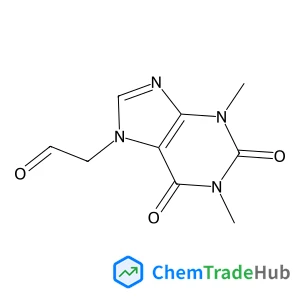
(1,3-Dimethyl-2,6-dioxo-1,2,3,6-tetrahydro-7H-purin-7-yl)acetaldehyde
CAS Number:
5614-53-9
Molecular Formula:
C9H10N4O3
Stefanie Schürmann, Johannes R. Vornweg, Mario Wolter, Christoph R. Jacob
The many-body expansion (MBE) provides an attractive fragmentation method for the efficient quantum-chemical treatment of molecular clusters. However, its convergence with the many-body order is generally slow for molecular clusters that exhibit large intermolecular polarization effects. Ion–water clusters are thus a particularly challenging test case for quantum-chemical fragmentation methods based on the MBE. Here, we assess the accuracy of both the conventional, energy-based MBE and the recently developed density-based MBE [Schmitt-Monreal and Jacob, Int. J. Quantum Chem., 2020, 120, e26228] for ion–water clusters. As test cases, we consider hydrated Ca2+, F−, OH−, and H3O+, and compare both total interaction energies and the relative interaction energies of different structural isomers. We show that an embedded density-based two-body expansion yields highly accurate results compared to supermolecular calculations. Already at the two-body level, the density-based MBE clearly outperforms a conventional, energy-based embedded three-body expansion. We compare different embedding schemes and find that a relaxed frozen-density embedding potential yields the most accurate results. This opens the door to accurate and efficient quantum-chemical calculations for large ion–water clusters as well as condensed-phase systems.
André Rittermeier, Shaojun Miao, Xiaoning Zhang, Maurits W. E. van den Berg, Shankhamala Kundu, Yuemin Wang, Sabine Schimpf, Elke Löffler, Roland A. Fischer, Martin Muhler
DOI: 10.1039/B908034A
Jingjing Zheng, Donald G. Truhlar
DOI: 10.1039/B927504E
Ling Liu, Jianbing Zhao, Patricia J. Culligan, Xi Chen
DOI: 10.1039/B905641F
Salim Nassreddine, Gérard Bergeret, Bernadette Jouguet, Christophe Geantet, Laurent Piccolo
DOI: 10.1039/B925062J
Tatsuo Shibata, Hiroshi Irie, Donald A. Tryk
DOI: 10.1039/B927332H
Francisco García-Blanco, José V. García-Ramos, Santiago Sánchez-Cortés
DOI: 10.1039/B903935J
Josh J. Newby, Christian W. Müller, Ching-Ping Liu, Timothy S. Zwier
DOI: 10.1039/B903830B
When handling 2-Methyl-2-propanyl 5-amino-2-thiophenecarboxylate (CAS: 1498311-5...
5-Bromo-1,2-dichloro-3-fluorobenzene (CAS: 1000572-93-9) is a crystalline solid ...
(2R)-2-Amino-2-(4-bromophenyl)ethanol (CAS: 354153-64-3) should be stored in a c...
Methyl 4-(aminomethyl)tetrahydro-2H-pyran-4-carboxylate hydrochloride (CAS: 3627...
1,4-Dimethyl-1H-pyrazole-5-sulfonyl chloride is primarily used as an intermediat...
Dinaphtho[1,2-b:2',1'-d]furan is generally safe when handled with appropriate pe...
The market for 7-Methyl-7,9-dihydro-1H-purine-2,6,8(3H)-trione (CAS: 612-37-3) i...
2-(4-Chlorophenyl)malonaldehyde (CAS: 205676-17-1) is a colorless or light yello...
2-Methylchrysene (CAS: 3351-32-4) is typically synthesized via the reaction of c...
N-(6-aminopyrimidin-4-yl)acetamide (CAS: 89533-23-3) is generally considered saf...

Physical Chemistry Chemical Physics (PCCP) is an international journal co-owned by 19 physical chemistry and physics societies from around the world. This journal publishes original, cutting-edge research in physical chemistry, chemical physics and biophysical chemistry. To be suitable for publication in PCCP, articles must include significant innovation and/or insight into physical chemistry; this is the most important criterion that reviewers and Editors will judge against when evaluating submissions. The journal has a broad scope and welcomes contributions spanning experiment, theory, computation and data science. Topical coverage includes spectroscopy, dynamics, kinetics, statistical mechanics, thermodynamics, electrochemistry, catalysis, surface science, quantum mechanics, quantum computing and machine learning. Interdisciplinary research areas such as polymers and soft matter, materials, nanoscience, energy, surfaces/interfaces, and biophysical chemistry are welcomed if they demonstrate significant innovation and/or insight into physical chemistry. Joined experimental/theoretical studies are particularly appreciated when complementary and based on up-to-date approaches.
![3-(benzotriazol-1-yl)-N-[[2-[(3-bromophenyl)methoxy]phenyl]methylideneamino]propanamide structure](https://static.chemtradehub.com/structs/559/5595-78-8-0a32.webp "3-(benzotriazol-1-yl)-N-[[2-[(3-bromophenyl)methoxy]phenyl]methylideneamino]propanamide structure")
methyl]-N,2-dimethyl-2-propanesulfinamide structure](https://static.chemtradehub.com/structs/256/2565792-50-7-8a26.webp "N-[(R)-[3-(Benzyloxy)-2-(dicyclohexylphosphino)phenyl](phenyl)methyl]-N,2-dimethyl-2-propanesulfinamide structure")
![4-Chloro-N-{[4-(dimethylamino)phenyl]carbamoyl}benzenesulfonamide structure](https://static.chemtradehub.com/structs/558/5581-42-0-7dcb.webp "4-Chloro-N-{[4-(dimethylamino)phenyl]carbamoyl}benzenesulfonamide structure")



