



Jet-cooled vibronic spectroscopy and asymmetric torsional potentials of phenylcyclopentene
Literature Information
Publication Date
2009-07-07
DOI
10.1039/B903830B
Impact Factor
3.676
Authors
Josh J. Newby, Christian W. Müller, Ching-Ping Liu, Timothy S. Zwier
View Original
Abstract
The ultraviolet spectroscopy of the S1← S0 transition of 1-phenylcyclopentene (PCP) was studied by resonant-two-photon ionization (R2PI), laser-induced fluorescence (LIF) and single vibronic level fluorescence (SVLF). UV–UV hole-burning (UVHB) spectroscopy was used to determine that there is only one spectroscopically distinct conformer in the supersonic expansion. The excitation spectrum shows extensive vibronic structure extending to over 1000 cm−1 above the electronic origin (34 646 cm−1). Much of the vibronic structure is similar to that of styrene and other singly substituted benzene derivatives, with Franck–Condon (FC) activity predominantly in substituent-sensitive benzene modes. Sizeable FC progressions were also found in the inter-ring torsion, reflecting a large displacement in the inter-ring angle upon electronic excitation. No evidence for FC activity in the ring-puckering coordinate is observed. The torsional potentials of the ground and excited states were determined from the experimental transition frequencies by fitting the calculated to the experimental torsional frequency spacings in an automated least-squares fitting procedure. The S1 torsional potential is a symmetric single-well potential centered around a locally planar equilibrium geometry at a torsional angle of ϕ = 0°. The energy levels are reproduced by a cosine term potential function with torsional parameters V2 = 3765 cm−1 and V4 = −183 cm−1. The S0 torsional potential possesses a twisted equilibrium geometry that is strongly asymmetric about ϕ = 0° due to the non-planarity of the cyclopentene ring. The best-fit potential parameters uses a sin/cos potential function (odd/even), with Ve2 = 948 cm−1, Ve4 = −195 cm−1, Vo2 = −162 cm−1 and Vo4 = −268 cm−1. The shape of the potentials are similar to those predicted by relaxed potential energy scans calculated at the DFT, CIS and TDDFT//CIS levels of theory. The change in the torsional angle ϕ upon electronic excitation was determined to be ∼15° from fits of the displacement δ of the S0 torsional potential with respect to the S1 potential. The simulated shift of the S0 potential with respect to the S1 potential of ∼15° is in very good agreement with that obtained from B3LYP calculations.
Recommended Journals

Mini-Reviews in Medicinal Chemistry

Journal of Medical Biochemistry

Photochemical & Photobiological Sciences

Contact Lens & Anterior Eye

Green Chemistry

Angewandte Chemie International Edition

Journal of Enzyme inhibition and Medicinal Chemistry

Molecules

Environmental Toxicology and Pharmacology

Molecular Diversity
Related Literature
Diastereoselective 1,2-difunctionalization of 1,3-enynes enabled by merging photoexcited Hantzsch ester with chromium catalysis
Jia Wu, Xiangyun Xu, Chongwen Duan, Shan Chen, Dan Wang, Likui Fang, Weiyang Tang, Fusheng Li
2023-10-20
Research Article
DOI: 10.1039/D3QO01522J
Asymmetric total synthesis of montanine-type amaryllidaceae alkaloids
Fang Wang, Xiaohan Xu, Yangtian Yan, Jiayang Zhang, Yang Yang
2023-12-03
Research Article
DOI: 10.1039/D3QO01835K
Nascent developments in main group element-catalyzed hydrosilylation and dehydrogenative silylation of alkenes and alkynes
Jiahao Liu, Zhuofeng Ke
2023-12-13
Review Article
DOI: 10.1039/D3QO01777J
Annulation of benzaldehydes with norbornenes toward indanones assisted by monodentate transient directing groups via double C–H activation
Jinyuan Wang, Yunzhi Liu, Nan Han, Yuan Gao, Jun Luo
2023-12-06
Research Article
DOI: 10.1039/D3QO01790G
Solvent- and catalyst-dependent palladium-catalyzed switchable chemodivergent cascade cyclizations of trimethylenemethanes with ortho-formyl cinnamates
Shuyuan Liang, Liangjian Tang, Ying Chen, Xueqiu Huang, Xueqin Wei
2023-11-30
Research Article
DOI: 10.1039/D3QO01525D
B(C6F5)3-catalyzed stepwise 1,5-hydride migration/cyclization: diastereoselective construction of carbocyclic β-amino acid derivatives
Zhiting Wang, Hongchi Liu, Tianxiao Jiang
2023-12-11
Research Article
DOI: 10.1039/D3QO01637D
Isatin-based spiro indolenine alkaloids from Isatis indigotica Fortune with anti-neuroinflammatory and acetylcholinesterase inhibitory effects
Ming Bai, Yu-Fei Xi, Si-Hui Mi, Pei-Yuan Yang, Li-Li Lou, Tian-Ming Lv, Xin Zhang, Guo-Dong Yao, Bin Lin, Shao-Jiang Song
2023-11-21
Research Article
DOI: 10.1039/D3QO01769A
A catalyst-free cross-coupling of isocyanates and triarylboranes for secondary amide synthesis
You-Wei Wu, Mu-Xiang Chen, Yan Li, Lu-Min Hu, Lili Zhao, Zhenhua Jia, Xuefei Zhao, Xu-Hong Hu
2023-11-23
Research Article
DOI: 10.1039/D3QO01617J
Directing group-assisted selective C–H activation of six-membered N-heterocycles and benzo-fused N-heterocycles
Smruti Ranjan Mohanty, Namrata Prusty, Tanmayee Nanda, Pranav Shridhar Mahulkar, Ponneri C. Ravikumar
2023-12-07
Review Article
DOI: 10.1039/D3QO01396K
You might also like
Compound Q&A
What precautions should be taken when handling 2-Methyl-2-propanyl 5-amino-2-thiophenecarboxylate (CAS: 1498311-57-1)?
When handling 2-Methyl-2-propanyl 5-amino-2-thiophenecarboxylate (CAS: 1498311-5...
1498311-57-12-Methyl-2-propanyl ...
Compound Q&A
What are the physical and chemical properties of 5-Bromo-1,2-dichloro-3-fluorobenzene (CAS: 1000572-93-9)?
5-Bromo-1,2-dichloro-3-fluorobenzene (CAS: 1000572-93-9) is a crystalline solid ...
1000572-93-95-Bromo-1,2-dichloro...
Compound Q&A
How should (2R)-2-Amino-2-(4-bromophenyl)ethanol (CAS: 354153-64-3) be stored?
(2R)-2-Amino-2-(4-bromophenyl)ethanol (CAS: 354153-64-3) should be stored in a c...
354153-64-3(2R)-2-Amino-2-(4-br...
Compound Q&A
What regulatory guidelines apply to Methyl 4-(aminomethyl)tetrahydro-2H-pyran-4-carboxylate hydrochloride (CAS: 362707-24-2)?
Methyl 4-(aminomethyl)tetrahydro-2H-pyran-4-carboxylate hydrochloride (CAS: 3627...
362707-24-2Methyl 4-(aminomethy...
Compound Q&A
What are the main uses of 1,4-dimethyl-1H-pyrazole-5-sulfonyl chloride (CAS: 1174834-52-6)?
1,4-Dimethyl-1H-pyrazole-5-sulfonyl chloride is primarily used as an intermediat...
1174834-52-61,4-dimethyl-1H-pyra...
Compound Q&A
Is Dinaphtho[1,2-b:2',1'-d]furan (CAS: 239-69-0) safe?
Dinaphtho[1,2-b:2',1'-d]furan is generally safe when handled with appropriate pe...
239-69-0Dinaphtho[1,2-b:2',1...
Compound Q&A
What is the market or research trend for 7-Methyl-7,9-dihydro-1H-purine-2,6,8(3H)-trione (CAS: 612-37-3)?
The market for 7-Methyl-7,9-dihydro-1H-purine-2,6,8(3H)-trione (CAS: 612-37-3) i...
612-37-37-Methyl-7,9-dihydro...
Compound Q&A
What are the physical and chemical properties of 2-(4-Chlorophenyl)malonaldehyde (CAS: 205676-17-1)?
2-(4-Chlorophenyl)malonaldehyde (CAS: 205676-17-1) is a colorless or light yello...
205676-17-12-(4-Chlorophenyl)ma...
Compound Q&A
How is 2-Methylchrysene (CAS: 3351-32-4) typically synthesized?
2-Methylchrysene (CAS: 3351-32-4) is typically synthesized via the reaction of c...
3351-32-42-Methylchrysene
Compound Q&A
Is N-(6-aminopyrimidin-4-yl)acetamide (CAS: 89533-23-3) safe?
N-(6-aminopyrimidin-4-yl)acetamide (CAS: 89533-23-3) is generally considered saf...
89533-23-3N-(6-aminopyrimidin-...
Source Journal
Physical Chemistry Chemical Physics

CiteScore:
5.5
Self-citation Rate:
10.3%
Articles per Year:
3036
Physical Chemistry Chemical Physics (PCCP) is an international journal co-owned by 19 physical chemistry and physics societies from around the world. This journal publishes original, cutting-edge research in physical chemistry, chemical physics and biophysical chemistry. To be suitable for publication in PCCP, articles must include significant innovation and/or insight into physical chemistry; this is the most important criterion that reviewers and Editors will judge against when evaluating submissions. The journal has a broad scope and welcomes contributions spanning experiment, theory, computation and data science. Topical coverage includes spectroscopy, dynamics, kinetics, statistical mechanics, thermodynamics, electrochemistry, catalysis, surface science, quantum mechanics, quantum computing and machine learning. Interdisciplinary research areas such as polymers and soft matter, materials, nanoscience, energy, surfaces/interfaces, and biophysical chemistry are welcomed if they demonstrate significant innovation and/or insight into physical chemistry. Joined experimental/theoretical studies are particularly appreciated when complementary and based on up-to-date approaches.
Recommended Compounds
![1-Oxa-8-azaspiro[4.5]decan-3-ol structure](https://static.chemtradehub.com/structs/757/757239-76-2-a0ec.webp "1-Oxa-8-azaspiro[4.5]decan-3-ol structure")
![3-[7-Amino-3-(3-pyridinyl)pyrazolo[1,5-a]pyrimidin-6-yl]phenol structure](https://static.chemtradehub.com/structs/861/861249-77-6-025b.webp "3-[7-Amino-3-(3-pyridinyl)pyrazolo[1,5-a]pyrimidin-6-yl]phenol structure")
3-[7-Amino-3-(3-pyridinyl)pyrazolo[1,5-a]pyrimidin-6-yl]phenol
CAS Number:
861249-77-6
Molecular Formula:
C17H13N5O
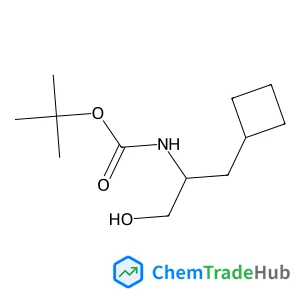
2-Methyl-2-propanyl (1-cyclobutyl-3-hydroxy-2-propanyl)carbamate
CAS Number:
816429-99-9
Molecular Formula:
C12H23NO3
Recommended Suppliers





Disclaimer
This page provides academic journal information for reference and research purposes only. We are not affiliated with any journal publishers and do not handle publication submissions. For publication-related inquiries, please contact the respective journal publishers directly.
If you notice any inaccuracies in the information displayed, please contact us at support@chemtradehub.com. We will promptly review and address your concerns.