












The Rashba effect in two-dimensional hybrid perovskites: the impacts of halogens and surface ligands
Literature Information
Publication Date
2022-10-25
DOI
10.1039/D2CP03971K
Impact Factor
3.676
Authors
Beichen Liu, Huaxiong Gao, Chaoying Meng, Honggang Ye
View Original
Abstract
Two-dimensional (2D) hybrid organic–inorganic perovskites (HOIPs) have gained much research interest nowadays due to their outstanding optoelectronic properties; however, the properties of the Rashba effect in 2D HOIPs have not been fully interpreted. In this work, a detailed thickness dependent structural distortion along with the Rashba splitting energy were investigated. Three types of HOIPs, 2D MAPbCl3, 2D MAPbBr3 and 2D MAPbI3, were adopted to compare the effect of halogens; and three surface ligands, BA, tert-BA and PEA, were adopted to explore the effect of ligands. It turns out that the structural distortion degree decreases with oscillations as the thickness increases, the Rashba splitting magnitude follows the same tendency, and 2D MAPbI3 is less sensitive to the thickness change compared to 2D MAPbBr3 or 2D MAPbCl3. Furthermore, different ligands and their orientations could have dramatically different impacts on the Rashba splitting. The PEA ligands enhance the Rashba splitting magnitude while the BA ligands have the reverse effect, and the impact of tert-BA ligands is insensitive to the increasing thickness. The partial charge density analysis shows that the band edges could be contributed by a charge density at a specific layer in the structure; thus, the Rashba effect is layer dependent in 2D HOIPs. These results provide some new perspectives on the Rashba effect in 2D HOIPs.
Related Literature
DFT calculations on the deprotonation site of the one-electron oxidised guanine–cytosinebase pair
Steen Steenken, Jóhannes Reynisson
2010-06-08
Paper
DOI: 10.1039/C002528C
The positive influence of electrochemical cyclic potentiodynamic passivation (CPP) of a SS316LS surface on its response to fibronectin and pre-osteoblasts
Fereshteh Azari, Hojatollah Vali
2009-05-19
Paper
DOI: 10.1039/B902881A
Themed issue: Solid state and cluster structure prediction
2010-07-19
Editorial
DOI: 10.1039/C0CP90058C
Quantum coherence and its interplay with protein environments in photosynthetic electronic energy transfer
2010-06-12
Perspective
DOI: 10.1039/C003389H
Electronic structure and circular dichroism spectroscopy of naphthalenediimide nanotubes
Benjamin M. Bulheller, G. Dan Pantoş, Jeremy K. M. Sanders, Jonathan D. Hirst
2009-05-15
Paper
DOI: 10.1039/B905187B
Importance of the support material in thin palladium composite membranes for steady hydrogen permeation at elevated temperatures
Takuji Ikeda, David A. Pacheco Tanaka, Margot A. Llosa Tanco, Yoshito Wakui, Koich Sato, Fujio Mizukami, Toshishige M. Suzuki
2009-07-23
Paper
DOI: 10.1039/B909401F
Geometrically asymmetric electrodes for probing electrochemical reaction kinetics: a case study of hydrogen at the Pt–CsH2PO4 interface
Kenji A. Sasaki, Yong Hao, Sossina M. Haile
2009-07-15
Paper
DOI: 10.1039/B909498A
A comparison of infrared spectroscopic methods for the study of heterogeneous reactions occurring on atmospheric aerosol proxies
Deborah J. Last, Juan J. Nájera, Carl J. Percival, Andrew B. Horn
2009-06-29
Paper
DOI: 10.1039/B901815H
Reversible photoisomerization of an azobenzene-functionalized self-assembled monolayer probed by sum-frequency generation vibrational spectroscopy
Steffen Wagner, Felix Leyssner, Christian Kördel, Sebastian Zarwell, Roland Schmidt, Karola Rück-Braun, Petra Tegeder
2009-05-20
Paper
DOI: 10.1039/B823330F
You might also like
Compound Q&A
What precautions should be taken when handling 2-Methyl-2-propanyl 5-amino-2-thiophenecarboxylate (CAS: 1498311-57-1)?
When handling 2-Methyl-2-propanyl 5-amino-2-thiophenecarboxylate (CAS: 1498311-5...
1498311-57-12-Methyl-2-propanyl ...
Compound Q&A
What are the physical and chemical properties of 5-Bromo-1,2-dichloro-3-fluorobenzene (CAS: 1000572-93-9)?
5-Bromo-1,2-dichloro-3-fluorobenzene (CAS: 1000572-93-9) is a crystalline solid ...
1000572-93-95-Bromo-1,2-dichloro...
Compound Q&A
How should (2R)-2-Amino-2-(4-bromophenyl)ethanol (CAS: 354153-64-3) be stored?
(2R)-2-Amino-2-(4-bromophenyl)ethanol (CAS: 354153-64-3) should be stored in a c...
354153-64-3(2R)-2-Amino-2-(4-br...
Compound Q&A
What regulatory guidelines apply to Methyl 4-(aminomethyl)tetrahydro-2H-pyran-4-carboxylate hydrochloride (CAS: 362707-24-2)?
Methyl 4-(aminomethyl)tetrahydro-2H-pyran-4-carboxylate hydrochloride (CAS: 3627...
362707-24-2Methyl 4-(aminomethy...
Compound Q&A
What are the main uses of 1,4-dimethyl-1H-pyrazole-5-sulfonyl chloride (CAS: 1174834-52-6)?
1,4-Dimethyl-1H-pyrazole-5-sulfonyl chloride is primarily used as an intermediat...
1174834-52-61,4-dimethyl-1H-pyra...
Compound Q&A
Is Dinaphtho[1,2-b:2',1'-d]furan (CAS: 239-69-0) safe?
Dinaphtho[1,2-b:2',1'-d]furan is generally safe when handled with appropriate pe...
239-69-0Dinaphtho[1,2-b:2',1...
Compound Q&A
What is the market or research trend for 7-Methyl-7,9-dihydro-1H-purine-2,6,8(3H)-trione (CAS: 612-37-3)?
The market for 7-Methyl-7,9-dihydro-1H-purine-2,6,8(3H)-trione (CAS: 612-37-3) i...
612-37-37-Methyl-7,9-dihydro...
Compound Q&A
What are the physical and chemical properties of 2-(4-Chlorophenyl)malonaldehyde (CAS: 205676-17-1)?
2-(4-Chlorophenyl)malonaldehyde (CAS: 205676-17-1) is a colorless or light yello...
205676-17-12-(4-Chlorophenyl)ma...
Compound Q&A
How is 2-Methylchrysene (CAS: 3351-32-4) typically synthesized?
2-Methylchrysene (CAS: 3351-32-4) is typically synthesized via the reaction of c...
3351-32-42-Methylchrysene
Compound Q&A
Is N-(6-aminopyrimidin-4-yl)acetamide (CAS: 89533-23-3) safe?
N-(6-aminopyrimidin-4-yl)acetamide (CAS: 89533-23-3) is generally considered saf...
89533-23-3N-(6-aminopyrimidin-...
Source Journal
Physical Chemistry Chemical Physics

CiteScore:
5.5
Self-citation Rate:
10.3%
Articles per Year:
3036
Physical Chemistry Chemical Physics (PCCP) is an international journal co-owned by 19 physical chemistry and physics societies from around the world. This journal publishes original, cutting-edge research in physical chemistry, chemical physics and biophysical chemistry. To be suitable for publication in PCCP, articles must include significant innovation and/or insight into physical chemistry; this is the most important criterion that reviewers and Editors will judge against when evaluating submissions. The journal has a broad scope and welcomes contributions spanning experiment, theory, computation and data science. Topical coverage includes spectroscopy, dynamics, kinetics, statistical mechanics, thermodynamics, electrochemistry, catalysis, surface science, quantum mechanics, quantum computing and machine learning. Interdisciplinary research areas such as polymers and soft matter, materials, nanoscience, energy, surfaces/interfaces, and biophysical chemistry are welcomed if they demonstrate significant innovation and/or insight into physical chemistry. Joined experimental/theoretical studies are particularly appreciated when complementary and based on up-to-date approaches.
Recommended Compounds
![L-Lysine,N6-[2-[[(1,1-dimethylethoxy)carbonyl]amino]benzoyl]-N2-[(9H-fluoren-9-ylmethoxy)carbonyl]- structure](https://static.chemtradehub.com/structs/159/159322-59-5-c046.webp "L-Lysine,N6-[2-[[(1,1-dimethylethoxy)carbonyl]amino]benzoyl]-N2-[(9H-fluoren-9-ylmethoxy)carbonyl]- structure")
L-Lysine,N6-[2-[[(1,1-dimethylethoxy)carbonyl]amino]benzoyl]-N2-[(9H-fluoren-9-ylmethoxy)carbonyl]-
CAS Number:
159322-59-5
Molecular Formula:
C33H37N3O7
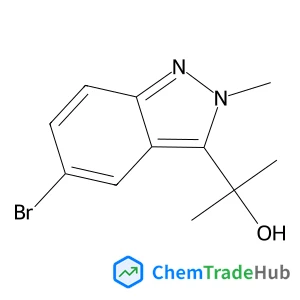
2-(5-Bromo-2-methyl-2H-indazol-3-yl)-2-propanol
CAS Number:
1823787-20-7
Molecular Formula:
C11H13BrN2O
![3-[7-Amino-3-(3-pyridinyl)pyrazolo[1,5-a]pyrimidin-6-yl]phenol structure](https://static.chemtradehub.com/structs/861/861249-77-6-025b.webp "3-[7-Amino-3-(3-pyridinyl)pyrazolo[1,5-a]pyrimidin-6-yl]phenol structure")
3-[7-Amino-3-(3-pyridinyl)pyrazolo[1,5-a]pyrimidin-6-yl]phenol
CAS Number:
861249-77-6
Molecular Formula:
C17H13N5O
Recommended Suppliers



Disclaimer
This page provides academic journal information for reference and research purposes only. We are not affiliated with any journal publishers and do not handle publication submissions. For publication-related inquiries, please contact the respective journal publishers directly.
If you notice any inaccuracies in the information displayed, please contact us at support@chemtradehub.com. We will promptly review and address your concerns.