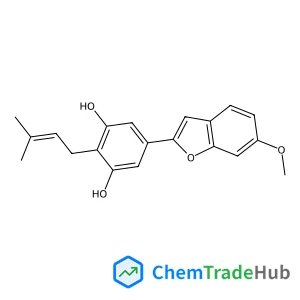
5-(6-Methoxy-1-benzofuran-2-yl)-2-(3-methyl-2-buten-1-yl)-1,3-benzenediol
CAS Number:
1017277-40-5
Molecular Formula:
C20H20O4
Lin Shi, Chengzhi Hu, Changli Yi, Minli Bai, Jizu Lyu, Linsong Gao
Non-equilibrium molecular dynamics simulations of liquid flow through the surface were performed to investigate the flow resistance and thermal resistance under conditions of different solid–liquid interactions and surface temperatures. A novel phenomenon was observed in the simulation, namely the rise of surface temperature increases the flow resistance when solid–liquid interaction is weak, but decreases the flow resistance when solid–liquid interaction is strong. A higher density of the boundary layer brings a larger friction force to increase the flow resistance. For heat transfer, it is innovative to calculate the heat conduction and convection of the boundary region discretely. The results showed that the heat transfer performance of the interface is not positively correlated with the boundary liquid density, and the structure of the boundary liquid is also crucial. We believe that this research can improve the existing theory of flow heat transfer and provide a more effective method for analyzing the flow heat transfer of the solid–liquid interface.
Luca Frediani, Dage Sundholm
DOI: 10.1039/C5CP90198G
Bertha Molina, Alfredo Tlahuice-Flores
DOI: 10.1039/C5CP05171A
Xuefeng Wang, Jiangyan Bian, Lichao Xu, Hua Wang, Shengyu Feng
DOI: 10.1039/C5CP05473G
Gaosheng Nie, Jun Xu, Jianying He, Qingchi Xu, Zhiliang Zhang
DOI: 10.1039/C5CP05435D
Luis Gutiérrez-Arzaluz, Fernando Cortés-Guzmán, Tomás Rocha-Rinza, Jorge Peón
DOI: 10.1039/C5CP03699B
Nada Mehio, J. Casey Johnson, Vyacheslav S. Bryantsev
DOI: 10.1039/C5CP06165B
W. H. Brito, Joice da Silva-Araújo, H. Chacham
DOI: 10.1039/C5CP04926A
Zheng-Hua Tan, Rui Yang, Kazuya Terabe, Xue-Bing Yin, Xin Guo
DOI: 10.1039/C5CP06484H
Aurélien de la Lande, Vicent Moliner, Dennis Salahub
DOI: 10.1039/C5CP90134K
Franziska Buchner, Berit Heggen, Hans-Hermann Ritze, Walter Thiel, Andrea Lübcke
DOI: 10.1039/C5CP04394H
When handling 2-Methyl-2-propanyl 5-amino-2-thiophenecarboxylate (CAS: 1498311-5...
5-Bromo-1,2-dichloro-3-fluorobenzene (CAS: 1000572-93-9) is a crystalline solid ...
(2R)-2-Amino-2-(4-bromophenyl)ethanol (CAS: 354153-64-3) should be stored in a c...
Methyl 4-(aminomethyl)tetrahydro-2H-pyran-4-carboxylate hydrochloride (CAS: 3627...
1,4-Dimethyl-1H-pyrazole-5-sulfonyl chloride is primarily used as an intermediat...
Dinaphtho[1,2-b:2',1'-d]furan is generally safe when handled with appropriate pe...
The market for 7-Methyl-7,9-dihydro-1H-purine-2,6,8(3H)-trione (CAS: 612-37-3) i...
2-(4-Chlorophenyl)malonaldehyde (CAS: 205676-17-1) is a colorless or light yello...
2-Methylchrysene (CAS: 3351-32-4) is typically synthesized via the reaction of c...
N-(6-aminopyrimidin-4-yl)acetamide (CAS: 89533-23-3) is generally considered saf...

Physical Chemistry Chemical Physics (PCCP) is an international journal co-owned by 19 physical chemistry and physics societies from around the world. This journal publishes original, cutting-edge research in physical chemistry, chemical physics and biophysical chemistry. To be suitable for publication in PCCP, articles must include significant innovation and/or insight into physical chemistry; this is the most important criterion that reviewers and Editors will judge against when evaluating submissions. The journal has a broad scope and welcomes contributions spanning experiment, theory, computation and data science. Topical coverage includes spectroscopy, dynamics, kinetics, statistical mechanics, thermodynamics, electrochemistry, catalysis, surface science, quantum mechanics, quantum computing and machine learning. Interdisciplinary research areas such as polymers and soft matter, materials, nanoscience, energy, surfaces/interfaces, and biophysical chemistry are welcomed if they demonstrate significant innovation and/or insight into physical chemistry. Joined experimental/theoretical studies are particularly appreciated when complementary and based on up-to-date approaches.