












Magnetic properties of C–N planar structures: d0 ferromagnetism and half-metallicity
Literature Information
Publication Date
2015-11-06
DOI
10.1039/C5CP04926A
Impact Factor
3.676
Authors
W. H. Brito, Joice da Silva-Araújo, H. Chacham
View Original
Abstract
We investigate, from first principles calculations, the magnetic properties of planar carbon nitride structures with the lowest formation energies within twenty eight distinct stoichiometries and porosities. Surprisingly, we find that 3/4 of the low-energy carbon nitride structures present energetically favorable magnetic phases, and that more than 3/10 are ferromagnetic. This suggests that d0 magnetism is a usual feature in this class of materials. Notably, within the energetically favorable ferromagnetic structures, we find that two structures have very high stabilization energies for ferromagnetic order, one having the highest predicted so far for this class of materials. We also find that several structures are half-metals, and one structure is half-zero-gap semiconductor (semicondutor in one spin channel, and graphene-like in the other channel).
Related Literature
Cd-free CIGS solar cells with buffer layer based on the In2S3 derivatives
Liudmila Larina, Jae Ho Yun, Kyung Hoon Yoon, HyukSang Kwon, Byung Tae Ahn
2013-05-08
Paper
DOI: 10.1039/C3CP50324K
Fullerene C70 characterization by 13C NMR and the importance of the solvent and dynamics in spectral simulations
Jakub Kaminský, Miloš Buděšínský, Stefan Taubert, Petr Bouř, Michal Straka
2013-04-19
Paper
DOI: 10.1039/C3CP50657F
Membrane disordering is not sufficient for membrane permeabilization by islet amyloid polypeptide: studies of IAPP(20–29) fragments
Jeffrey R. Brender, Deborah L. Heyl, Shyamprasad Samisetti, Samuel A. Kotler, Joshua M. Osborne, Ranadheer R. Pesaru, Ayyalusamy Ramamoorthy
2013-03-01
Paper
DOI: 10.1039/C3CP44696D
High energy X-rays and the frontiers of materials chemistry
2013-05-09
Editorial
DOI: 10.1039/C3CP90046K
Synthesis and characterization of the crystal structure and magnetic properties of the hydroxyfluoride MnF2−x(OH)x (x ∼ 0.8)
Hamdi Ben Yahia, Masahiro Shikano, Hironori Kobayashi, Maxim Avdeev, Samuel Liu, Chris D. Ling
2013-06-10
Paper
DOI: 10.1039/C3CP50740H
Growth of nanostructured nickel sulfide films on Ni foam as high-performance cathodes for lithium ion batteries
Na Feng, Duokai Hu, Peng Wang, Xiaolei Sun, Xiuwan Li, Deyan He
2013-04-23
Paper
DOI: 10.1039/C3CP50615K
Ultrafast excited state dynamics of trans-[4-(4′-dimethylaminostyryl)] pyridine N-oxide in solution: femtosecond fluorescence up-conversion and theoretical calculations
Anna Szemik-Hojniak, Irena Deperasińska, Krzysztof Oberda, Yuval Erez, Dan Huppert, Yakov P. Nizhnik
2013-04-19
Paper
DOI: 10.1039/C3CP50527H
Stability and structural phase transitions of cobalt porphyrin adlayers on Au(100) surfaces
2013-04-23
Paper
DOI: 10.1039/C3CP50797A
Atomic and electronic structure of molybdenum carbide phases: bulk and low Miller-index surfaces
Francesc Viñes, Jose A. Rodriguez, Francesc Illas
2013-05-29
Paper
DOI: 10.1039/C3CP51389K
You might also like
Compound Q&A
What are the main uses of 1H-Indazole-6-carbonitrile (CAS: 141290-59-7)?
1H-Indazole-6-carbonitrile finds applications in pharmaceuticals, where it serve...
141290-59-71H-Indazole-6-carbon...
Compound Q&A
How should waste containing Dioctyl (2E)-2-butenedioate (CAS: 2997-85-5) be handled?
Waste containing Dioctyl (2E)-2-butenedioate (CAS: 2997-85-5) should be collecte...
2997-85-5Dioctyl (2E)-2-buten...
Compound Q&A
What industries use Sodium [(1,2-benzoxazol-3-ylmethyl)sulfonyl]azanide (CAS: 68291-98-5)?
Sodium [(1,2-benzoxazol-3-ylmethyl)sulfonyl]azanide is primarily used in pharmac...
68291-98-5Sodium [(1,2-benzoxa...
Compound Q&A
Are there alternatives to Dimethyl 4-(4,4,5,5-tetramethyl-1,3,2-dioxaborolan-2-yl)-2,6-pyridinedicarboxylate (CAS: 741709-66-0) in synthesis?
Dimethyl 4-(4,4,5,5-tetramethyl-1,3,2-dioxaborolan-2-yl)-2,6-pyridinedicarboxyla...
741709-66-0Dimethyl 4-(4,4,5,5-...
Compound Q&A
How should waste containing 2-Fluoro-6-hydrazinopyridine (CAS: 80714-39-2) be handled?
Waste containing 2-Fluoro-6-hydrazinopyridine (CAS: 80714-39-2) should be manage...
80714-39-22-Fluoro-6-hydrazino...
Compound Q&A
What is 6-Formyl-2-pyridinecarboxylic acid (CAS: 499214-11-8)?
6-Formyl-2-pyridinecarboxylic acid is an organic compound with the molecular for...
499214-11-86-Formyl-2-pyridinec...
Compound Q&A
What is the market or research trend for 3-(3,4-dimethoxyphenyl)-2,5-dimethyl-N-(2-morpholin-4-ylethyl)pyrazolo[1,5-a]pyrimidin-7-amine (CAS: 900874-91-1)?
Research trends for this compound indicate a focus on its potential applications...
900874-91-13-(3,4-dimethoxyphen...
Compound Q&A
How is 9H-Tribenzo[b,d,f]azepine (CAS: 29875-73-8) typically synthesized?
9H-Tribenzo[b,d,f]azepine is typically synthesized via a multi-step process invo...
29875-73-89H-Tribenzo[b,d,f]az...
Compound Q&A
How is 1-Cyclopropyl-7-ethoxy-6-fluoro-8-methoxy-4-oxo-1,4-dihydro-3-quinolinecarboxylic acid (CAS: 1797982-51-4) typically synthesized?
1-Cyclopropyl-7-ethoxy-6-fluoro-8-methoxy-4-oxo-1,4-dihydro-3-quinolinecarboxyli...
1797982-51-41-Cyclopropyl-7-etho...
Compound Q&A
How should waste containing Methyl 3-oxo-1,2,3,4-tetrahydro-6-quinoxalinecarboxylate (CAS: 671820-52-3) be handled?
Waste containing Methyl 3-oxo-1,2,3,4-tetrahydro-6-quinoxalinecarboxylate (CAS: ...
671820-52-3Methyl 3-oxo-1,2,3,4...
Source Journal
Physical Chemistry Chemical Physics

CiteScore:
5.5
Self-citation Rate:
10.3%
Articles per Year:
3036
Physical Chemistry Chemical Physics (PCCP) is an international journal co-owned by 19 physical chemistry and physics societies from around the world. This journal publishes original, cutting-edge research in physical chemistry, chemical physics and biophysical chemistry. To be suitable for publication in PCCP, articles must include significant innovation and/or insight into physical chemistry; this is the most important criterion that reviewers and Editors will judge against when evaluating submissions. The journal has a broad scope and welcomes contributions spanning experiment, theory, computation and data science. Topical coverage includes spectroscopy, dynamics, kinetics, statistical mechanics, thermodynamics, electrochemistry, catalysis, surface science, quantum mechanics, quantum computing and machine learning. Interdisciplinary research areas such as polymers and soft matter, materials, nanoscience, energy, surfaces/interfaces, and biophysical chemistry are welcomed if they demonstrate significant innovation and/or insight into physical chemistry. Joined experimental/theoretical studies are particularly appreciated when complementary and based on up-to-date approaches.
Recommended Compounds

Trichloro(3,3,4,4,5,5,6,6,7,7,8,8,8-tridecafluorooctyl)silane
CAS Number:
78560-45-9
Molecular Formula:
C8H4Cl3F13Si
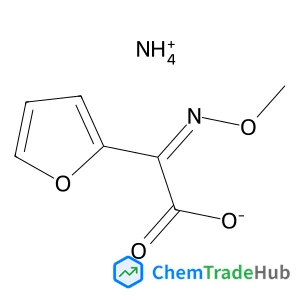
Ammonium (Z)-2-(furan-2-yl)-2-(methoxyimino)acetate
CAS Number:
97148-39-5
Molecular Formula:
C7H10N2O4
Recommended Suppliers




Disclaimer
This page provides academic journal information for reference and research purposes only. We are not affiliated with any journal publishers and do not handle publication submissions. For publication-related inquiries, please contact the respective journal publishers directly.
If you notice any inaccuracies in the information displayed, please contact us at support@chemtradehub.com. We will promptly review and address your concerns.