


Photochemistry of 2-thiooxazole: a plausible prebiotic precursor to RNA nucleotides
Literature Information
Publication Date
2022-08-23
DOI
10.1039/D2CP03167A
Impact Factor
3.676
Authors
Lauren Bertram, Matthew W. Powner
View Original
Abstract
Potentially prebiotic chemical reactions leading to RNA nucleotides involve periods of UV irradiation, which are necessary to promote selectivity and destroy biologially irrelevant side products. Nevertheless, UV light has only been applied to promote specific stages of prebiotic reactions and its effect on complete prebiotic reaction sequences has not been extensively studied. Here, we report on an experimental and computational investigation of the photostability of 2-thiooxazole (2-TO), a potential precursor of pyrimidine and 8-oxopurine nucleotides on early Earth. Our UV-irradiation experiments resulted in rapid decomposition of 2-TO into unidentified small molecule photoproducts. We further clarify the underlying photochemistry by means of accurate ab initio calculations and surface hopping molecular dynamics simulations. Overall, the computational results show efficient rupture of the aromatic ring upon the photoexcitation of 2-TO via breaking of the C–O bond. Consequently, the initial stage of the divergent prebiotic synthesis of pyrimidine and 8-oxopurine nucleotides would require periodic shielding from UV light either with sun screening chromophores or through a planetary scenario that would protect 2-TO until it is transformed into a more stable intermediate compound, e.g. oxazolidinone thione.
Recommended Journals

Science Progress

Proceedings of the National Academy of Sciences of the United States of America

European Journal of Wood and Wood Products

Journal of Physics and Chemistry of Solids

Journal of Heterocyclic Chemistry

Helvetica Chimica Acta

Kinetics and Catalysis

Pharmacological Reviews

Nature

Russian Chemical Reviews
Related Literature
Highlighting the difference in nanostructure between domain-forming and domainless protic ionic liquids
Igor A. Sedov, Timur I. Magsumov
2022-08-31
Paper
DOI: 10.1039/D2CP02925A
The protein-stabilizing effects of TMAO in aqueous and non-aqueous conditions
Daron M. Standley, Tomoko Matsuda, Mohammad Reza Housaindokht
2022-08-10
Paper
DOI: 10.1039/D2CP01279K
Microwave spectra, molecular geometries, and internal rotation of CH3 in N-methylimidazole⋯H2O and 2-methylimidazole⋯H2O Complexes
Eva Gougoula, Charlotte N. Cummings, Chris Medcraft, Juliane Heitkämper, Nicholas R. Walker
2022-05-06
Paper
DOI: 10.1039/D1CP05526G
Prediction of a novel 2D porous boron nitride material with excellent electronic, optical and catalytic properties
Vikram Mahamiya, Alok Shukla
2022-08-10
Paper
DOI: 10.1039/D2CP02705D
Adsorption properties of pyramidal superatomic molecules based on the structural framework of the Au20 cluster
Manli Zhang, Dawen Zhang, Yunhu Hu, Qiyong Zhu, Longjiu Cheng
2022-05-02
Paper
DOI: 10.1039/D2CP01552H
Volume viscosity and ultrasonic relaxation of ethanol–water mixtures studied by molecular dynamics simulations
2022-04-22
Paper
DOI: 10.1039/D2CP00856D
The role of Mo species in Ni–Mo catalysts for dry reforming of methane
Weiqiao Huang, Changgeng Wei
2022-08-19
Paper
DOI: 10.1039/D2CP02120J
Influence of ionic liquids on the electronic environment of atomically dispersed Ir on (MgO)(100)
Deniz Akgül, Viktorya Aviyente
2022-03-08
Paper
DOI: 10.1039/D2CP00043A
C2 product formation in the CO2 electroreduction on boron-doped graphene anchored copper clusters
Balázs Barhács, Ewald Janssens
2022-08-29
Paper
DOI: 10.1039/D2CP01316A
DLSSAffinity: protein–ligand binding affinity prediction via a deep learning model
Huiwen Wang, Haoquan Liu, Shangbo Ning, Chengwei Zeng, Yunjie Zhao
2022-04-04
Paper
DOI: 10.1039/D1CP05558E
You might also like
Compound Q&A
How is Ethyl 4-chlorothieno[2,3-b]pyridine-5-carboxylate (CAS: 59713-58-5) typically synthesized?
Ethyl 4-chlorothieno[2,3-b]pyridine-5-carboxylate (CAS: 59713-58-5) can be synth...
59713-58-5Ethyl 4-chlorothieno...
Compound Q&A
What regulatory guidelines apply to 5-Methyl-1H-indole-3-carbaldehyde (CAS: 52562-50-2)?
5-Methyl-1H-indole-3-carbaldehyde (CAS: 52562-50-2) is subject to various regula...
52562-50-25-Methyl-1H-indole-3...
Compound Q&A
What are the physical and chemical properties of (1,3-Dimethyl-2,4-dioxo-1,2,3,4-tetrahydro-5-pyrimidinyl)boronic acid (CAS: 223418-73-3)?
(1,3-Dimethyl-2,4-dioxo-1,2,3,4-tetrahydro-5-pyrimidinyl)boronic acid is a white...
223418-73-3(1,3-Dimethyl-2,4-di...
Compound Q&A
How should waste containing Sulfocostunolide A (CAS: 1016983-51-9) be handled?
Waste containing Sulfocostunolide A (CAS: 1016983-51-9) should be handled with c...
1016983-51-9Sulfocostunolide A
Compound Q&A
What precautions should be taken when handling Murraxocin (CAS: 88478-44-8)?
When handling Murraxocin (CAS: 88478-44-8), ensure proper personal protective eq...
88478-44-8Murraxocin
Compound Q&A
What are the physical and chemical properties of Formvar (CAS: 63148-64-1)?
Formvar (CAS: 63148-64-1) is an alkyd resin characterized by a high molecular we...
63148-64-1Formvar(R)
Compound Q&A
Is (S)-4-benzyl-2-((benzyloxy)methyl)morpholine (CAS: 205242-66-6) safe?
(S)-4-benzyl-2-((benzyloxy)methyl)morpholine is generally safe when handled with...
205242-66-6(S)-4-benzyl-2-((ben...
Compound Q&A
What industries use Methyl 1-(5-bromo-2-pyrimidinyl)cyclopropanecarboxylate (CAS: 1447607-69-3)?
Methyl 1-(5-bromo-2-pyrimidinyl)cyclopropanecarboxylate (CAS: 1447607-69-3) is p...
1447607-69-3Methyl 1-(5-bromo-2-...
Compound Q&A
Is 2-Methyl-1-phenyl-1-propanamine hydrochloride (CAS: 24290-47-9) safe?
2-Methyl-1-phenyl-1-propanamine hydrochloride (CAS: 24290-47-9) is generally con...
24290-47-92-Methyl-1-phenyl-1-...
Compound Q&A
How is 3-(4-Bromophenyl)-2-methylpropanoic acid (CAS: 66735-01-1) typically synthesized?
3-(4-Bromophenyl)-2-methylpropanoic acid is synthesized through a multi-step pro...
66735-01-13-(4-Bromophenyl)-2-...
Source Journal
Physical Chemistry Chemical Physics

CiteScore:
5.5
Self-citation Rate:
10.3%
Articles per Year:
3036
Physical Chemistry Chemical Physics (PCCP) is an international journal co-owned by 19 physical chemistry and physics societies from around the world. This journal publishes original, cutting-edge research in physical chemistry, chemical physics and biophysical chemistry. To be suitable for publication in PCCP, articles must include significant innovation and/or insight into physical chemistry; this is the most important criterion that reviewers and Editors will judge against when evaluating submissions. The journal has a broad scope and welcomes contributions spanning experiment, theory, computation and data science. Topical coverage includes spectroscopy, dynamics, kinetics, statistical mechanics, thermodynamics, electrochemistry, catalysis, surface science, quantum mechanics, quantum computing and machine learning. Interdisciplinary research areas such as polymers and soft matter, materials, nanoscience, energy, surfaces/interfaces, and biophysical chemistry are welcomed if they demonstrate significant innovation and/or insight into physical chemistry. Joined experimental/theoretical studies are particularly appreciated when complementary and based on up-to-date approaches.
Recommended Compounds
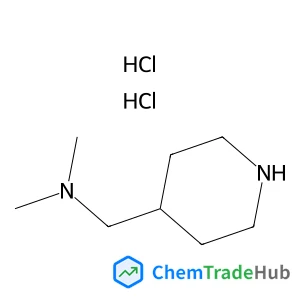
N,N-dimethyl(piperidin-4-yl)methanamine hydrochloride
CAS Number:
172281-72-0
Molecular Formula:
C8H20Cl2N2
![2-Methyl-2-propanyl 1,6-diazaspiro[3.4]octane-6-carboxylate structure](https://static.chemtradehub.com/structs/115/1158749-79-1-81ee.webp "2-Methyl-2-propanyl 1,6-diazaspiro[3.4]octane-6-carboxylate structure")
2-Methyl-2-propanyl 1,6-diazaspiro[3.4]octane-6-carboxylate
CAS Number:
1158749-79-1
Molecular Formula:
C11H20N2O2
![2-(Methylsulfonyl)-2,4,5,6-tetrahydropyrrolo[3,4-c]pyrazole structure](https://static.chemtradehub.com/structs/122/1226781-80-1-09d5.webp "2-(Methylsulfonyl)-2,4,5,6-tetrahydropyrrolo[3,4-c]pyrazole structure")
2-(Methylsulfonyl)-2,4,5,6-tetrahydropyrrolo[3,4-c]pyrazole
CAS Number:
1226781-80-1
Molecular Formula:
C6H9N3O2S
Recommended Suppliers






Disclaimer
This page provides academic journal information for reference and research purposes only. We are not affiliated with any journal publishers and do not handle publication submissions. For publication-related inquiries, please contact the respective journal publishers directly.
If you notice any inaccuracies in the information displayed, please contact us at support@chemtradehub.com. We will promptly review and address your concerns.