












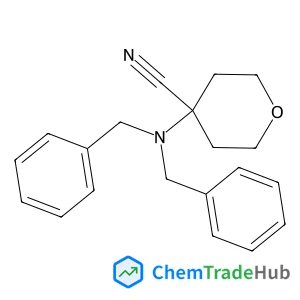
4-(Dibenzylamino)tetrahydro-2H-pyran-4-carbonitrile
CAS Number:
1630906-81-8
Molecular Formula:
C20H22N2O
Zhe-Yong Zhang, Guo-Xiang Zhao, Qiao-Hong Li
Mixed X-anion perovskites, such as CsPbX3 (X = Cl, Br, or I), play an important role in photovoltaic applications. The massive disordered structures associated with mixed anions produce the need for property calculations. However, traditional density functional theory (DFT) computational tools are limited by their computational efficiency to generate the properties of a large number of structures quickly. Researchers have proposed supervised deep learning to forecast crystal properties. For such a supervised convolutional neural network (CNN), we introduce an adversarial loss function that allows for consistent or lower errors with a fewer samples. Meanwhile, we have trained parameterized quantum circuits (PQCs) of CNNs and auto-encoder networks for extracting structural representations. PQCs of deep learning, also named quantum deep learning or quantum machine learning, have been first applied in the research of perovskites and obtained an RMSE (root mean squared error) of less than 1 meV. Our work demonstrates that adversarial learning training mechanisms and PQC-based quantum deep learning will emerge for extensive and deep exploration of data-driven material formation prediction tasks.
Daniel Murdock, Rebecca A. Ingle, Igor V. Sazanovich, Ian P. Clark, Yu Harabuchi, Tetsuya Taketsugu, Satoshi Maeda, Andrew J. Orr-Ewing, Michael N. R. Ashfold
DOI: 10.1039/C5CP06597F
Luis Gutiérrez-Arzaluz, Fernando Cortés-Guzmán, Tomás Rocha-Rinza, Jorge Peón
DOI: 10.1039/C5CP03699B
W. H. Brito, Joice da Silva-Araújo, H. Chacham
DOI: 10.1039/C5CP04926A
Xueming Yuan, Gang Cheng
DOI: 10.1039/C5CP05744B
Ana P. Gamiz-Hernandez, Ville R. I. Kaila
DOI: 10.1039/C5CP05244K
Bertha Molina, Alfredo Tlahuice-Flores
DOI: 10.1039/C5CP05171A
Ludmila B. Boinovich, Alexandre M. Emelyanenko, Kirill A. Emelyanenko, Konstantin I. Maslakov
DOI: 10.1039/C5CP06988B
Heng-Liang Wu, Yujin Tong, Qiling Peng, Na Li, Shen Ye
DOI: 10.1039/C5CP04960A
Noemí Alarcos, Boiko Cohen, Abderrazzak Douhal
DOI: 10.1039/C5CP04548G
Sumita Das
DOI: 10.1039/C5CP04716A
When handling 2-Methyl-2-propanyl 5-amino-2-thiophenecarboxylate (CAS: 1498311-5...
5-Bromo-1,2-dichloro-3-fluorobenzene (CAS: 1000572-93-9) is a crystalline solid ...
(2R)-2-Amino-2-(4-bromophenyl)ethanol (CAS: 354153-64-3) should be stored in a c...
Methyl 4-(aminomethyl)tetrahydro-2H-pyran-4-carboxylate hydrochloride (CAS: 3627...
1,4-Dimethyl-1H-pyrazole-5-sulfonyl chloride is primarily used as an intermediat...
Dinaphtho[1,2-b:2',1'-d]furan is generally safe when handled with appropriate pe...
The market for 7-Methyl-7,9-dihydro-1H-purine-2,6,8(3H)-trione (CAS: 612-37-3) i...
2-(4-Chlorophenyl)malonaldehyde (CAS: 205676-17-1) is a colorless or light yello...
2-Methylchrysene (CAS: 3351-32-4) is typically synthesized via the reaction of c...
N-(6-aminopyrimidin-4-yl)acetamide (CAS: 89533-23-3) is generally considered saf...

Physical Chemistry Chemical Physics (PCCP) is an international journal co-owned by 19 physical chemistry and physics societies from around the world. This journal publishes original, cutting-edge research in physical chemistry, chemical physics and biophysical chemistry. To be suitable for publication in PCCP, articles must include significant innovation and/or insight into physical chemistry; this is the most important criterion that reviewers and Editors will judge against when evaluating submissions. The journal has a broad scope and welcomes contributions spanning experiment, theory, computation and data science. Topical coverage includes spectroscopy, dynamics, kinetics, statistical mechanics, thermodynamics, electrochemistry, catalysis, surface science, quantum mechanics, quantum computing and machine learning. Interdisciplinary research areas such as polymers and soft matter, materials, nanoscience, energy, surfaces/interfaces, and biophysical chemistry are welcomed if they demonstrate significant innovation and/or insight into physical chemistry. Joined experimental/theoretical studies are particularly appreciated when complementary and based on up-to-date approaches.


![1-{[5-(4,4,5,5-Tetramethyl-1,3,2-dioxaborolan-2-yl)-2-thienyl]methyl}piperidine structure](https://static.chemtradehub.com/structs/121/1218790-44-3-baef.webp "1-{[5-(4,4,5,5-Tetramethyl-1,3,2-dioxaborolan-2-yl)-2-thienyl]methyl}piperidine structure")




