












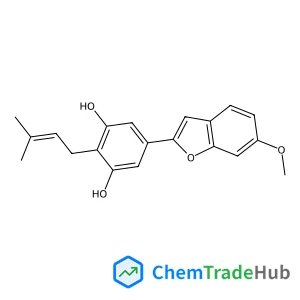
5-(6-Methoxy-1-benzofuran-2-yl)-2-(3-methyl-2-buten-1-yl)-1,3-benzenediol
CAS Number:
1017277-40-5
Molecular Formula:
C20H20O4
Xianshi Liu, Zenghui Lao, Xuhua Li, Xuewei Dong, Guanghong Wei
Amyotrophic lateral sclerosis (ALS) is intensively associated with insoluble aggregates formed by transactivation response element DNA-binding protein 43 (TDP-43) in the cytoplasm of neuron cells. A recent experimental study reported that two ALS-linked familial variants, A315E and A315pT (pT, phosphorylated threonine), can induce irreversible aggregation of the TDP-43 312NFGAFS317 segment (TDP-43312–317). However, the underlying molecular mechanism remains largely elusive. Here, we investigated the early aggregation process of the wild type (WT) 312NFGAFS317 segment and its A315E and A315pT variants by performing multiple microsecond all-atom molecular dynamics simulations. Our simulations show that the two variants display lower fluidity than WT, consistent with their decreased labilities observed in previous denaturation assay experiments. Despite each of the two variants carrying one negative charge, unexpectedly, we find that both A315E mutation and A315pT phosphorylation enhance intermolecular interactions and result in the formation of more compact oligomers. Compared to WT, A315E oligomers possess low β-sheet content but a compact hydrophobic core, while A315pT oligomers have high β-sheet content and large β-sheets. Side chain hydrogen-bonding and hydrophobic interactions as well as N312–E315 salt bridges contribute most to the increased aggregation propensity of the A315E mutant. By contrast, main chain and side chain hydrogen-bonding interactions, side chain hydrophobic and aromatic interactions, are crucial to the enhanced aggregation capability of the A315pT variant. These results indicate that glutamate mutation and phosphorylation at position 315 induce the irreversible aggregation of TDP-43312–317 peptides through differential mechanisms, which remind us that we should be careful in the investigation of the phosphorylation effect on protein aggregation by using phosphomimetic substitutions. This study provides mechanistic insights into the A315E/A315pT-induced irreversible aggregation of TDP-43312–317, which may be helpful for the in-depth understanding of ALS-mutation/phosphorylation-associated liquid-to-solid phase transition of TDP-43 protein aggregates.
Chun Liu, Hua Jiang
DOI: 10.1039/B814501F
Wenbin Chen, Xijuan Tu, Xiangqun Guo
DOI: 10.1039/B820145E
Kyung-Chang Seo, Young-Geol Kwon, Dae-Hee Kim, In-Sook Jang, Jin-Won Cho, Sung-Kee Chung
DOI: 10.1039/B821058F
Zhixun Luo, Yi Luo, Jie Li, Kai Liu, Hongbing Fu, Ying Ma, Jiannian Yao
DOI: 10.1039/B819402E
Jing Huang, Guorui Li, Zhiguo Wu, Zhibin Song, Yangyang Zhou, Liang Shuai, Xiaocheng Weng, Xiang Zhou, Guangfu Yang
DOI: 10.1039/B819789J
Piotr Michal Diakowski, Heinz-Bernhard Kraatz
DOI: 10.1039/B819876D
Valeria Amendola, Luigi Fabbrizzi
DOI: 10.1039/B808264M
Daeseob Shim, Seung-Ho Jung, Eun-Ha Kim, Dong-Myung Yoon, Kun-Hong Lee, Soo-Hwan Jeong
DOI: 10.1039/B816534C
When handling 2-Methyl-2-propanyl 5-amino-2-thiophenecarboxylate (CAS: 1498311-5...
5-Bromo-1,2-dichloro-3-fluorobenzene (CAS: 1000572-93-9) is a crystalline solid ...
(2R)-2-Amino-2-(4-bromophenyl)ethanol (CAS: 354153-64-3) should be stored in a c...
Methyl 4-(aminomethyl)tetrahydro-2H-pyran-4-carboxylate hydrochloride (CAS: 3627...
1,4-Dimethyl-1H-pyrazole-5-sulfonyl chloride is primarily used as an intermediat...
Dinaphtho[1,2-b:2',1'-d]furan is generally safe when handled with appropriate pe...
The market for 7-Methyl-7,9-dihydro-1H-purine-2,6,8(3H)-trione (CAS: 612-37-3) i...
2-(4-Chlorophenyl)malonaldehyde (CAS: 205676-17-1) is a colorless or light yello...
2-Methylchrysene (CAS: 3351-32-4) is typically synthesized via the reaction of c...
N-(6-aminopyrimidin-4-yl)acetamide (CAS: 89533-23-3) is generally considered saf...

Physical Chemistry Chemical Physics (PCCP) is an international journal co-owned by 19 physical chemistry and physics societies from around the world. This journal publishes original, cutting-edge research in physical chemistry, chemical physics and biophysical chemistry. To be suitable for publication in PCCP, articles must include significant innovation and/or insight into physical chemistry; this is the most important criterion that reviewers and Editors will judge against when evaluating submissions. The journal has a broad scope and welcomes contributions spanning experiment, theory, computation and data science. Topical coverage includes spectroscopy, dynamics, kinetics, statistical mechanics, thermodynamics, electrochemistry, catalysis, surface science, quantum mechanics, quantum computing and machine learning. Interdisciplinary research areas such as polymers and soft matter, materials, nanoscience, energy, surfaces/interfaces, and biophysical chemistry are welcomed if they demonstrate significant innovation and/or insight into physical chemistry. Joined experimental/theoretical studies are particularly appreciated when complementary and based on up-to-date approaches.
![3-[7-Amino-3-(3-pyridinyl)pyrazolo[1,5-a]pyrimidin-6-yl]phenol structure](https://static.chemtradehub.com/structs/861/861249-77-6-025b.webp "3-[7-Amino-3-(3-pyridinyl)pyrazolo[1,5-a]pyrimidin-6-yl]phenol structure")
![2-[2-(2-Methoxyethoxy)ethoxy]-2-methylpropane structure](https://static.chemtradehub.com/structs/527/52788-79-1-71c1.webp "2-[2-(2-Methoxyethoxy)ethoxy]-2-methylpropane structure")
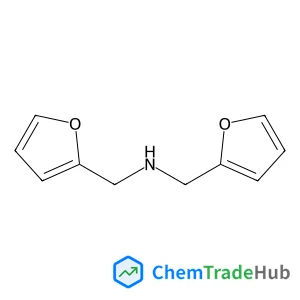
methyl]-N,2-dimethyl-2-propanesulfinamide structure](https://static.chemtradehub.com/structs/256/2565792-50-7-8a26.webp "N-[(R)-[3-(Benzyloxy)-2-(dicyclohexylphosphino)phenyl](phenyl)methyl]-N,2-dimethyl-2-propanesulfinamide structure")


