












Influence of vanillic acid immobilization in Nafion membranes on intramembrane diffusion and structural properties
Literature Information
Publication Date
2022-04-06
DOI
10.1039/D2CP01125E
Impact Factor
3.676
Authors
Blake Trusty, Samuel Berens, Ahmad Yahya, Junchuan Fang, Sarah Barber, Anastasios P. Angelopoulos, Jonathan D. Nickels, Sergey Vasenkov
View Original
Abstract
Pulsed field gradient (PFG) NMR in combination with quasielastic neutron scattering (QENS) was used to investigate self-diffusion of water and acetone in Nafion membranes with and without immobilized vanillic acid (VA). Complementary characterization of these membranes was performed by small angle X-ray scattering (SAXS) and NMR relaxometry. This study was motivated by the recent data showing that an organic acid, such as VA, in Nafion can preserve its catalytic activity in the presence of water even at high intra-polymer water concentrations corresponding up to 100% ambient relative humidity. However, there is currently no clear understanding of how immobilized organic acid molecules influence the microscopic transport properties and related structural properties of Nafion. Microscopic diffusion data measured by PFG NMR and QENS are compared for Nafion with and without VA. For displacements smaller than the micrometer-sized domains previously reported for Nafion, the VA addition was not observed to lead to any significant changes in the water and/or acetone self-diffusivity measured by each technique inside Nafion. However, the reported PFG NMR data present evidence of a different influence of acetone concentration in the membranes with and without VA on the water permeance of the interfaces between neighboring micrometer-sized domains. The reported diffusion data are correlated with the results of SAXS structural characterization and NMR relaxation data for water and acetone.
Related Literature
Influence of vanillic acid immobilization in Nafion membranes on intramembrane diffusion and structural properties
Blake Trusty, Samuel Berens, Ahmad Yahya, Junchuan Fang, Sarah Barber, Anastasios P. Angelopoulos, Jonathan D. Nickels, Sergey Vasenkov
2022-04-06
Paper
DOI: 10.1039/D2CP01125E
Reaction dynamics of Diels–Alder reactions from machine learned potentials
Tom A. Young, Tristan Johnston-Wood, Hanwen Zhang, Fernanda Duarte
2022-08-10
Paper
DOI: 10.1039/D2CP02978B
Modulating the Schottky barrier of MXenes/2D SiC contacts via functional groups and biaxial strain: a first-principles study
Lingqin Huang, Xuliang Deng, Sumin Pan, Wenwen Cui
2022-08-30
Paper
DOI: 10.1039/D2CP02351B
Tuning the structural stability and electrochemical properties in graphene anode materials by B doping: a first-principles study
Xialei Guo, Yuhua Hou, Xuan Chen, Ruyan Zhang, Wei Li, Xiaoma Tao, Youlin Huang
2022-08-18
Paper
DOI: 10.1039/D2CP02730E
Glucose-induced self-assembly and phase separation in hydrophilic triblock copolymers and the governing mechanism
Divya Patel, Amit K. Bhojani, Debes Ray, Dheeraj K. Singh, Sanyukta Bhattacharjee, Debabrata Seth, Vinod K. Aswal, Ketan Kuperkar, Pratap Bahadur
2022-08-10
Paper
DOI: 10.1039/D2CP01909D
Photochemistry of 2-thiooxazole: a plausible prebiotic precursor to RNA nucleotides
Lauren Bertram, Matthew W. Powner
2022-08-23
Paper
DOI: 10.1039/D2CP03167A
N-doped engineering of a high-voltage LiNi0.5Mn1.5O4 cathode with superior cycling capability for wide temperature lithium–ion batteries
Mingzhu Li, Qingping Li, Maofeng Hu, Yongxu Du, Zhipeng Duan, Hongguang Fan, Yongpeng Cui, Shuang Liu, Yongcheng Jin, Wei Liu
2022-03-30
Paper
DOI: 10.1039/D2CP00835A
sp2-to-sp3 transitions in graphite during cold-compression
Xiaohong Yuan, Yong Cheng, Pei Wang, Fuyang Liu, Songbai Han, Jinlong Zhu, Ming-Sheng Wang, Liping Wang
2022-04-04
Paper
DOI: 10.1039/D2CP00178K
Influence of ionic liquids on the electronic environment of atomically dispersed Ir on (MgO)(100)
Deniz Akgül, Viktorya Aviyente
2022-03-08
Paper
DOI: 10.1039/D2CP00043A
A theoretical study on laser cooling feasibility of XH (X = As, Sb and Bi): effects of intersystem crossings and spin–orbit couplings
Jianwei Cao, Haitao Ma
2022-03-30
Paper
DOI: 10.1039/D2CP00387B
You might also like
Compound Q&A
How is Ethyl 4-chlorothieno[2,3-b]pyridine-5-carboxylate (CAS: 59713-58-5) typically synthesized?
Ethyl 4-chlorothieno[2,3-b]pyridine-5-carboxylate (CAS: 59713-58-5) can be synth...
59713-58-5Ethyl 4-chlorothieno...
Compound Q&A
What regulatory guidelines apply to 5-Methyl-1H-indole-3-carbaldehyde (CAS: 52562-50-2)?
5-Methyl-1H-indole-3-carbaldehyde (CAS: 52562-50-2) is subject to various regula...
52562-50-25-Methyl-1H-indole-3...
Compound Q&A
What are the physical and chemical properties of (1,3-Dimethyl-2,4-dioxo-1,2,3,4-tetrahydro-5-pyrimidinyl)boronic acid (CAS: 223418-73-3)?
(1,3-Dimethyl-2,4-dioxo-1,2,3,4-tetrahydro-5-pyrimidinyl)boronic acid is a white...
223418-73-3(1,3-Dimethyl-2,4-di...
Compound Q&A
How should waste containing Sulfocostunolide A (CAS: 1016983-51-9) be handled?
Waste containing Sulfocostunolide A (CAS: 1016983-51-9) should be handled with c...
1016983-51-9Sulfocostunolide A
Compound Q&A
What precautions should be taken when handling Murraxocin (CAS: 88478-44-8)?
When handling Murraxocin (CAS: 88478-44-8), ensure proper personal protective eq...
88478-44-8Murraxocin
Compound Q&A
What are the physical and chemical properties of Formvar (CAS: 63148-64-1)?
Formvar (CAS: 63148-64-1) is an alkyd resin characterized by a high molecular we...
63148-64-1Formvar(R)
Compound Q&A
Is (S)-4-benzyl-2-((benzyloxy)methyl)morpholine (CAS: 205242-66-6) safe?
(S)-4-benzyl-2-((benzyloxy)methyl)morpholine is generally safe when handled with...
205242-66-6(S)-4-benzyl-2-((ben...
Compound Q&A
What industries use Methyl 1-(5-bromo-2-pyrimidinyl)cyclopropanecarboxylate (CAS: 1447607-69-3)?
Methyl 1-(5-bromo-2-pyrimidinyl)cyclopropanecarboxylate (CAS: 1447607-69-3) is p...
1447607-69-3Methyl 1-(5-bromo-2-...
Compound Q&A
Is 2-Methyl-1-phenyl-1-propanamine hydrochloride (CAS: 24290-47-9) safe?
2-Methyl-1-phenyl-1-propanamine hydrochloride (CAS: 24290-47-9) is generally con...
24290-47-92-Methyl-1-phenyl-1-...
Compound Q&A
How is 3-(4-Bromophenyl)-2-methylpropanoic acid (CAS: 66735-01-1) typically synthesized?
3-(4-Bromophenyl)-2-methylpropanoic acid is synthesized through a multi-step pro...
66735-01-13-(4-Bromophenyl)-2-...
Source Journal
Physical Chemistry Chemical Physics

CiteScore:
5.5
Self-citation Rate:
10.3%
Articles per Year:
3036
Physical Chemistry Chemical Physics (PCCP) is an international journal co-owned by 19 physical chemistry and physics societies from around the world. This journal publishes original, cutting-edge research in physical chemistry, chemical physics and biophysical chemistry. To be suitable for publication in PCCP, articles must include significant innovation and/or insight into physical chemistry; this is the most important criterion that reviewers and Editors will judge against when evaluating submissions. The journal has a broad scope and welcomes contributions spanning experiment, theory, computation and data science. Topical coverage includes spectroscopy, dynamics, kinetics, statistical mechanics, thermodynamics, electrochemistry, catalysis, surface science, quantum mechanics, quantum computing and machine learning. Interdisciplinary research areas such as polymers and soft matter, materials, nanoscience, energy, surfaces/interfaces, and biophysical chemistry are welcomed if they demonstrate significant innovation and/or insight into physical chemistry. Joined experimental/theoretical studies are particularly appreciated when complementary and based on up-to-date approaches.
Recommended Compounds
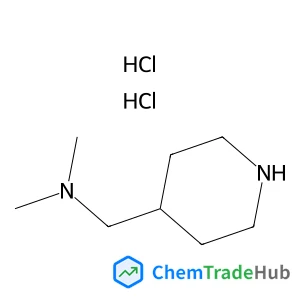
N,N-dimethyl(piperidin-4-yl)methanamine hydrochloride
CAS Number:
172281-72-0
Molecular Formula:
C8H20Cl2N2
Recommended Suppliers




Disclaimer
This page provides academic journal information for reference and research purposes only. We are not affiliated with any journal publishers and do not handle publication submissions. For publication-related inquiries, please contact the respective journal publishers directly.
If you notice any inaccuracies in the information displayed, please contact us at support@chemtradehub.com. We will promptly review and address your concerns.