













![2-Bromo-7-chloro-4H-pyrrolo[2,3-b]pyrazine structure](https://static.chemtradehub.com/structs/115/1150617-58-5-0b0a.webp "2-Bromo-7-chloro-4H-pyrrolo[2,3-b]pyrazine structure")
Methane pyrolysis in low-cost, alkali-halide molten salts at high temperatures
Literature Information
Publication Date
2021-10-27
DOI
10.1039/D1SE01408K
Impact Factor
6.367
Authors
Clarke Palmer, Maryam Tarazkar, Michael J. Gordon, Horia Metiu, Eric W. McFarland
View Original
Abstract
Molten salts have received renewed attention as potential reaction media for methane pyrolysis, in which CO2-free hydrogen gas can be produced and the solid carbon can be continuously removed and then stored or utilized. Compared to solid catalysts, there is a lack of fundamental understanding of the methane transformation processes in liquid environments which could inhibit progress to industrializing a low-cost commercial process. In this work, we have investigated methane pyrolysis in alkali-halide molten salts (i.e., NaCl, NaBr, KCl, and KBr) that are industrially attractive due to their low cost, high temperature stability, and non-toxicity. We measured first-order effective activation energies in differential bubble column reactors of ∼300 kJ mol−1 for methane pyrolysis in all molten salts, which is lower than the reported value for the homogeneous uncatalyzed reaction of ∼420 kJ mol−1. We also measured an effective activation energy of ∼230 kJ mol−1 for single CH4-D2 exchange, which is consistent with some solid metal oxide catalysts. Calculations using combined molecular dynamics and density functional theory support the experimental findings with a calculated energy barrier of ∼3.29 eV (or ∼317 kJ mol−1) on a molten KCl surface. The initial reaction rates may be sufficient for an industrial reactor; however, at high conversion, the hydrogen dependent reverse reaction limits single-pass conversion. We also find that the accumulated solid carbon is ‘wetted’ into the liquid salt medium and does not have significant contact with the gas phase or affect methane decomposition rates. The solid phase products are composed of both amorphous and graphitic carbon domains with no long-range ordering. We find that significant salt residue is retained on the carbon removed from the reactor which is inadequately removed by water washing. Only high temperature heat treatments were effective at cleaning the residual salt from the carbon, presumably due to selective evaporation of the salt.
Related Literature
Choline chloride–formic acid mixture as a medium for the reduction of pertechnetates – electrochemical and spectroscopic studies
Damian Połomski, Nicole A. DiBlasi, Kathy Dardenne, Xavier Gaona, Kenneth Czerwinski, Maciej Chotkowski
2022-12-12
Paper
DOI: 10.1039/D2CP05398E
Structural insights into self-assembly of a slow-evolving and mechanically robust supramolecular gel via time-resolved small-angle neutron scattering
Marzieh Mirzamani, Arnab Dawn, Christopher J. Garvey, Lilin He, Hilmar Koerner, Harshita Kumari
2022-11-10
Paper
DOI: 10.1039/D2CP01826H
Rich magnetic phase transitions and completely dual-spin polarization of zigzag PC3 nanoribbons under uniaxial strain
Hui-Min Ni, Jing-Jing He, Fang-Wen Guo, Jia-Bei Dong, Tian-Yi Lu, Wen-Dou Cui, Jia-Ren Yuan, Yan-Dong Guo
2022-12-14
Paper
DOI: 10.1039/D2CP05066H
Exploring the direction-dependency of conductive filament formation and oxygen vacancy migration behaviors in HfO2-based RRAM
Donglan Zhang, Jiong Wang, Qing Wu, Yong Du
2022-12-20
Paper
DOI: 10.1039/D2CP05803K
Controllable construction of red thermally activated delayed fluorescence molecules based on a spiro-acridine donor
Huanling Liu, Kai Zhang, Haipei Zou, Qingfang Mu, Yuzhi Song, Lili Lin, Yuanyuan Xu, Chuan-Kui Wang
2022-12-07
Paper
DOI: 10.1039/D2CP05084F
Tris(dialkylamino)cyclopropenium dialkylphosphate ionic liquids as lubricants
Owen J. Curnow, Rathiga Senthooran, Anthony E. Somers
2022-12-22
Paper
DOI: 10.1039/D2CP05109E
Enhancing pressure consistency and transferability of structure-based coarse-graining
Jiahao Tang, Takayuki Kobayashi, Hedong Zhang, Kenji Fukuzawa, Shintaro Itoh
2022-12-21
Paper
DOI: 10.1039/D2CP04849C
On the stability of peptide secondary structures on the TiO2 (101) anatase surface: a computational insight
Mariona Sodupe, Piero Ugliengo, Albert Rimola
2022-12-01
Paper
DOI: 10.1039/D2CP04395E
Second ionization constant of sulfuric acid in H2O and D2O from 150 to 300 °C at p = 11.5 MPa using flow AC conductivity
Jacy K. Conrad, Hugues Arcis, Jane P. Ferguson, Peter R. Tremaine
2022-12-21
Paper
DOI: 10.1039/D2CP01761J
5-Formylcytosine weakens the G–C pair and imparts local conformational fluctuations to DNA duplexes
Manjula Jaisal, Rajesh Kumar Reddy Sannapureddi, Arjun Rana, Bharathwaj Sathyamoorthy
2022-12-05
Paper
DOI: 10.1039/D2CP04837J
You might also like
Compound Q&A
What precautions should be taken when handling 2-Methyl-2-propanyl 5-amino-2-thiophenecarboxylate (CAS: 1498311-57-1)?
When handling 2-Methyl-2-propanyl 5-amino-2-thiophenecarboxylate (CAS: 1498311-5...
1498311-57-12-Methyl-2-propanyl ...
Compound Q&A
What are the physical and chemical properties of 5-Bromo-1,2-dichloro-3-fluorobenzene (CAS: 1000572-93-9)?
5-Bromo-1,2-dichloro-3-fluorobenzene (CAS: 1000572-93-9) is a crystalline solid ...
1000572-93-95-Bromo-1,2-dichloro...
Compound Q&A
How should (2R)-2-Amino-2-(4-bromophenyl)ethanol (CAS: 354153-64-3) be stored?
(2R)-2-Amino-2-(4-bromophenyl)ethanol (CAS: 354153-64-3) should be stored in a c...
354153-64-3(2R)-2-Amino-2-(4-br...
Compound Q&A
What regulatory guidelines apply to Methyl 4-(aminomethyl)tetrahydro-2H-pyran-4-carboxylate hydrochloride (CAS: 362707-24-2)?
Methyl 4-(aminomethyl)tetrahydro-2H-pyran-4-carboxylate hydrochloride (CAS: 3627...
362707-24-2Methyl 4-(aminomethy...
Compound Q&A
What are the main uses of 1,4-dimethyl-1H-pyrazole-5-sulfonyl chloride (CAS: 1174834-52-6)?
1,4-Dimethyl-1H-pyrazole-5-sulfonyl chloride is primarily used as an intermediat...
1174834-52-61,4-dimethyl-1H-pyra...
Compound Q&A
Is Dinaphtho[1,2-b:2',1'-d]furan (CAS: 239-69-0) safe?
Dinaphtho[1,2-b:2',1'-d]furan is generally safe when handled with appropriate pe...
239-69-0Dinaphtho[1,2-b:2',1...
Compound Q&A
What is the market or research trend for 7-Methyl-7,9-dihydro-1H-purine-2,6,8(3H)-trione (CAS: 612-37-3)?
The market for 7-Methyl-7,9-dihydro-1H-purine-2,6,8(3H)-trione (CAS: 612-37-3) i...
612-37-37-Methyl-7,9-dihydro...
Compound Q&A
What are the physical and chemical properties of 2-(4-Chlorophenyl)malonaldehyde (CAS: 205676-17-1)?
2-(4-Chlorophenyl)malonaldehyde (CAS: 205676-17-1) is a colorless or light yello...
205676-17-12-(4-Chlorophenyl)ma...
Compound Q&A
How is 2-Methylchrysene (CAS: 3351-32-4) typically synthesized?
2-Methylchrysene (CAS: 3351-32-4) is typically synthesized via the reaction of c...
3351-32-42-Methylchrysene
Compound Q&A
Is N-(6-aminopyrimidin-4-yl)acetamide (CAS: 89533-23-3) safe?
N-(6-aminopyrimidin-4-yl)acetamide (CAS: 89533-23-3) is generally considered saf...
89533-23-3N-(6-aminopyrimidin-...
Source Journal
Recommended Compounds
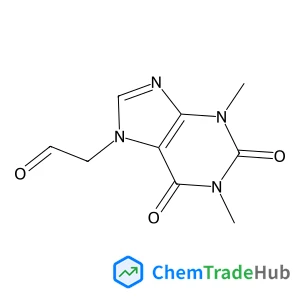
(1,3-Dimethyl-2,6-dioxo-1,2,3,6-tetrahydro-7H-purin-7-yl)acetaldehyde
CAS Number:
5614-53-9
Molecular Formula:
C9H10N4O3
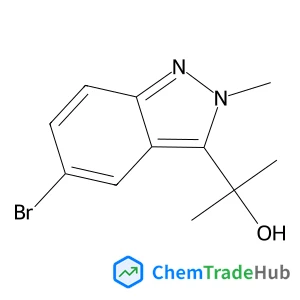
2-(5-Bromo-2-methyl-2H-indazol-3-yl)-2-propanol
CAS Number:
1823787-20-7
Molecular Formula:
C11H13BrN2O
Recommended Suppliers




Disclaimer
This page provides academic journal information for reference and research purposes only. We are not affiliated with any journal publishers and do not handle publication submissions. For publication-related inquiries, please contact the respective journal publishers directly.
If you notice any inaccuracies in the information displayed, please contact us at support@chemtradehub.com. We will promptly review and address your concerns.