












Choline chloride–formic acid mixture as a medium for the reduction of pertechnetates – electrochemical and spectroscopic studies
Literature Information
Publication Date
2022-12-12
DOI
10.1039/D2CP05398E
Impact Factor
3.676
Authors
Damian Połomski, Nicole A. DiBlasi, Kathy Dardenne, Xavier Gaona, Kenneth Czerwinski, Maciej Chotkowski
View Original
Abstract
The physicochemical properties of a choline chloride (ChCl) and formic acid (FA) mixture (1 : 2 molar ratio) have been studied over a broad range of temperatures (−140 to 60 °C). Differential scanning calorimetry has shown that the examined system remains in the liquid state at very low temperatures – a glass transition is observed in the range of −125 °C to −90 °C. The kinematic viscosity, ionic conductivity and the width of the electrochemical window determined for this system revealed its beneficial electrochemical properties. This indicates the suitability of ChCl : FA electrolytes in electrochemical measurements. In this non-aqueous electrolyte, electrochemical reduction of Tc(VII) ions has been studied for the first time. Cyclic voltammetry and chronopotentiometry experiments revealed that the electroreduction of pertechnetates is a multi-path process which leads to the formation of a Tc(IV) ionic form. X-Ray absorption spectroscopy of the latter revealed its structure as a TcCl62− complex.
Recommended Journals
Related Literature
Measuring the mechanical properties of flexible crystals using bi-modal atomic force microscopy
Madeleine F. Dupont, Edwin Mayes, Kay Latham
2019-09-02
Paper
DOI: 10.1039/C9CP04542B
Effects of temperature and grain size on deformation of polycrystalline copper–graphene nanolayered composites
Yunlong Ma, Sen Zhang, Yunfei Xu, Xiaoyi Liu
2020-02-10
Paper
DOI: 10.1039/C9CP06830A
Electric-field-tunable molecular adsorption on germanane
J. P. Ye, G. Liu, Y. Han, W. W. Luo, B. Z. Sun, X. L. Lei, B. Xu, C. Y. Ouyang, H. L. Zhang
2019-08-28
Paper
DOI: 10.1039/C9CP04122B
Coinage metal dimers as the noncovalent interaction acceptors: study of the σ-lump interactions
Jing Cui, Xueying Zhang, Lingpeng Meng, Qingzhong Li
2019-08-29
Paper
DOI: 10.1039/C9CP03686E
Dynamics of AlOH inelastic scattering with p-H2(J = 0) on a full and accurate potential energy surface
Manel Naouai, Faouzi Najar, Kamel Hammami
2019-08-26
Paper
DOI: 10.1039/C9CP04214H
Atmospheric oxidation mechanism and kinetics of 2-bromo-4,6-dinitroaniline by OH radicals – a theoretical study
M. Gnanaprakasam, G. Saranya, S. Bandaru, N. J. English, K. Senthilkumar
2019-09-06
Paper
DOI: 10.1039/C9CP04271G
The nanoscopic principles of capacitive ion sensing interfaces
Paulo R. Bueno, Robert Hein, Adriano Santos, Jason J. Davis
2020-01-20
Communication
DOI: 10.1039/C9CP05543F
Why does the presence of silicon atoms improve the emission properties of biphenyl derivatives? – Verification of various hypotheses by experiment and theory
Karolina Rachuta, Jacek Koput, Gordon L. Hug, Mariusz Majchrzak
2019-08-28
Paper
DOI: 10.1039/C9CP03749G
Rechargeable Mg–M (M = Li, Na and K) dual-metal–ion batteries based on a Berlin green cathode and a metallic Mg anode
Yujie Zhang, Jingwei Shen, Xue Li, Zhongxue Chen, Shun-an Cao, Ting Li, Fei Xu
2019-08-23
Paper
DOI: 10.1039/C9CP03836A
You might also like
Compound Q&A
What precautions should be taken when handling 2-Methyl-2-propanyl 5-amino-2-thiophenecarboxylate (CAS: 1498311-57-1)?
When handling 2-Methyl-2-propanyl 5-amino-2-thiophenecarboxylate (CAS: 1498311-5...
1498311-57-12-Methyl-2-propanyl ...
Compound Q&A
What are the physical and chemical properties of 5-Bromo-1,2-dichloro-3-fluorobenzene (CAS: 1000572-93-9)?
5-Bromo-1,2-dichloro-3-fluorobenzene (CAS: 1000572-93-9) is a crystalline solid ...
1000572-93-95-Bromo-1,2-dichloro...
Compound Q&A
How should (2R)-2-Amino-2-(4-bromophenyl)ethanol (CAS: 354153-64-3) be stored?
(2R)-2-Amino-2-(4-bromophenyl)ethanol (CAS: 354153-64-3) should be stored in a c...
354153-64-3(2R)-2-Amino-2-(4-br...
Compound Q&A
What regulatory guidelines apply to Methyl 4-(aminomethyl)tetrahydro-2H-pyran-4-carboxylate hydrochloride (CAS: 362707-24-2)?
Methyl 4-(aminomethyl)tetrahydro-2H-pyran-4-carboxylate hydrochloride (CAS: 3627...
362707-24-2Methyl 4-(aminomethy...
Compound Q&A
What are the main uses of 1,4-dimethyl-1H-pyrazole-5-sulfonyl chloride (CAS: 1174834-52-6)?
1,4-Dimethyl-1H-pyrazole-5-sulfonyl chloride is primarily used as an intermediat...
1174834-52-61,4-dimethyl-1H-pyra...
Compound Q&A
Is Dinaphtho[1,2-b:2',1'-d]furan (CAS: 239-69-0) safe?
Dinaphtho[1,2-b:2',1'-d]furan is generally safe when handled with appropriate pe...
239-69-0Dinaphtho[1,2-b:2',1...
Compound Q&A
What is the market or research trend for 7-Methyl-7,9-dihydro-1H-purine-2,6,8(3H)-trione (CAS: 612-37-3)?
The market for 7-Methyl-7,9-dihydro-1H-purine-2,6,8(3H)-trione (CAS: 612-37-3) i...
612-37-37-Methyl-7,9-dihydro...
Compound Q&A
What are the physical and chemical properties of 2-(4-Chlorophenyl)malonaldehyde (CAS: 205676-17-1)?
2-(4-Chlorophenyl)malonaldehyde (CAS: 205676-17-1) is a colorless or light yello...
205676-17-12-(4-Chlorophenyl)ma...
Compound Q&A
How is 2-Methylchrysene (CAS: 3351-32-4) typically synthesized?
2-Methylchrysene (CAS: 3351-32-4) is typically synthesized via the reaction of c...
3351-32-42-Methylchrysene
Compound Q&A
Is N-(6-aminopyrimidin-4-yl)acetamide (CAS: 89533-23-3) safe?
N-(6-aminopyrimidin-4-yl)acetamide (CAS: 89533-23-3) is generally considered saf...
89533-23-3N-(6-aminopyrimidin-...
Source Journal
Physical Chemistry Chemical Physics

CiteScore:
5.5
Self-citation Rate:
10.3%
Articles per Year:
3036
Physical Chemistry Chemical Physics (PCCP) is an international journal co-owned by 19 physical chemistry and physics societies from around the world. This journal publishes original, cutting-edge research in physical chemistry, chemical physics and biophysical chemistry. To be suitable for publication in PCCP, articles must include significant innovation and/or insight into physical chemistry; this is the most important criterion that reviewers and Editors will judge against when evaluating submissions. The journal has a broad scope and welcomes contributions spanning experiment, theory, computation and data science. Topical coverage includes spectroscopy, dynamics, kinetics, statistical mechanics, thermodynamics, electrochemistry, catalysis, surface science, quantum mechanics, quantum computing and machine learning. Interdisciplinary research areas such as polymers and soft matter, materials, nanoscience, energy, surfaces/interfaces, and biophysical chemistry are welcomed if they demonstrate significant innovation and/or insight into physical chemistry. Joined experimental/theoretical studies are particularly appreciated when complementary and based on up-to-date approaches.
Recommended Compounds
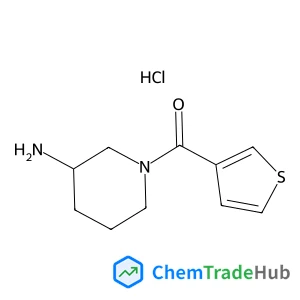
(3-Amino-piperidin-1-yl)-thiophen-3-yl-methanone hydrochloride
CAS Number:
1185316-70-4
Molecular Formula:
C10H15ClN2OS
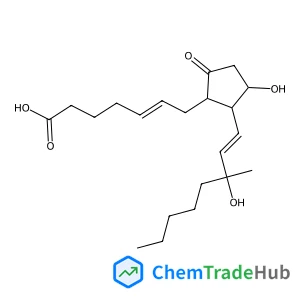
(5Z,11alpha,13E,15R)-11,15-Dihydroxy-15-methyl-9-oxoprosta-5,13-dien-1-oic acid
CAS Number:
55028-70-1
Molecular Formula:
C21H34O5
Recommended Suppliers



Disclaimer
This page provides academic journal information for reference and research purposes only. We are not affiliated with any journal publishers and do not handle publication submissions. For publication-related inquiries, please contact the respective journal publishers directly.
If you notice any inaccuracies in the information displayed, please contact us at support@chemtradehub.com. We will promptly review and address your concerns.