












α-Oxidation of banana lignin with atmospheric oxygen catalyzed by Co3O4
Literature Information
Publication Date
2021-03-24
DOI
10.1039/D1RE00053E
Impact Factor
4.239
Authors
Carlos Augusto Cabral Kramer, Luciene Santos de Carvalho
View Original
Abstract
Lignin is an important macromolecule present in biomass, and its structure contains a great diversity of aromatic rings and organic chains that can potentially be converted into smaller molecules with high added value. Several methods for the derivatization of lignin are considered in the literature; however, they come up against the high recalcitrance of lignin. As an alternative, oxidation of α-hydroxyls, as a preliminary step, facilitates the breakdown of its polymeric chain. An efficient oxidative method was developed in this work, consisting of the oxidation of banana organosolv lignin via atmospheric oxygen gas in the presence of Co3O4 as a heterogeneous catalyst at a temperature of 80 °C and ambient pressure. The ideal concentration of the catalyst is 1% (mol/mol), which after 54 hours of reaction was sufficient for the maximum growth of the intensity of the carbonyl band at 1710 cm−1 (by FTIR), increasing the transmittance by 0.32%. A decrease in intensity by 0.31% of the band at 3400–3430 cm−1 is also observed (hydroxyls), confirming the effectiveness of the method and the conversion capacity of the catalyst. The non-appearance/intensification of other bands is attributed to the good selectivity of Co3O4.
Related Literature
Folding oligomers of difluorinated thienylfurans: a DFT study
2009-11-17
Paper
DOI: 10.1039/B916415D
Synergistic effect of crystal and electronic structures on the visible-light-driven photocatalytic performances of Bi2O3 polymorphs
Hefeng Cheng, Baibiao Huang, Jibao Lu, Zeyan Wang, Bing Xu, Xiaoyan Qin, Xiaoyang Zhang, Ying Dai
2010-10-25
Paper
DOI: 10.1039/C0CP01189D
Autonomous folding in the membrane proximal HIV peptide gp41659–671: pH tuneability at micelle interfaces
Craig R. Gregor, Eleonora Cerasoli, Paul R. Tulip, Maxim G. Ryadnov, Glenn J. Martyna
2010-11-08
Paper
DOI: 10.1039/C0CP01502D
Kinetics of bulk polymerisation and Gompertz's law
Michael Schmitt, Rainer Schulze-Pillot, Rolf Hempelmann
2010-10-29
Paper
DOI: 10.1039/C0CP00447B
Measuring the three-phase contact angle of nanoparticles at fluid interfaces
Olivier J. Cayre, Martien A. Cohen Stuart, Simeon D. Stoyanov, Vesselin N. Paunov
2009-11-11
Communication
DOI: 10.1039/B917353F
Solvent polarity effect on intramolecular electron transfer in a corrole–naphthalene bisimide dyad
Lucia Flamigni, Dagmara Wyrostek, Roman Voloshchuk, Daniel T. Gryko
2009-11-12
Paper
DOI: 10.1039/B916525H
Interaction of water, hydrogen and their mixtures with SnO2 based materials: the role of surface hydroxyl groups in detection mechanisms
Roman G. Pavelko, Helen Daly, Christopher Hardacre, Alexey A. Vasiliev, Eduard Llobet
2010-01-27
Paper
DOI: 10.1039/B921665K
Electron mobility in liquid and supercritical helium measured using corona discharges: a new semi-empirical model for cavity formation
F. Aitken, Z.-L. Li, N. Bonifaci, A. Denat, K. von Haeften
2010-11-04
Paper
DOI: 10.1039/C0CP00786B
Controlling the mechanism of fulvene S1/S0 decay: switching off the stepwise population transfer
David Mendive-Tapia, Benjamin Lasorne, Graham A. Worth, Michael J. Bearpark, Michael A. Robb
2010-11-16
Paper
DOI: 10.1039/C0CP01757D
You might also like
Compound Q&A
What are the main uses of 4-Nitrophenyl phosphate disodium salt hexahydrate (CAS: 333338-18-4)?
4-Nitrophenyl phosphate disodium salt hexahydrate is primarily used as a substra...
333338-18-44-Nitrophenyl phosph...
Compound Q&A
What are the main uses of 2-(Trifluoromethyl)-1,3-oxazole-4-carboxylic Acid (CAS: 1060816-01-4)?
2-(Trifluoromethyl)-1,3-oxazole-4-carboxylic Acid (CAS: 1060816-01-4) is widely ...
1060816-01-42-(Trifluoromethyl)-...
Compound Q&A
How should 2-Fluoro-4-biphenylcarboxylic acid (CAS: 137045-30-8) be stored?
2-Fluoro-4-biphenylcarboxylic acid should be stored in a cool, dry place at room...
137045-30-82-Fluoro-4-biphenylc...
Compound Q&A
What industries use Prednisolone-21-Carboxylic Acid (CAS: 61549-70-0)?
Prednisolone-21-Carboxylic Acid is primarily used in the pharmaceutical industry...
61549-70-0Prednisolone-21-Carb...
Compound Q&A
How should 4-(Hydrazinomethyl)-1,2,3-benzenetriol (CAS: 3614-72-0) be stored?
4-(Hydrazinomethyl)-1,2,3-benzenetriol (CAS: 3614-72-0) should be stored in a co...
3614-72-04-(Hydrazinomethyl)-...
Compound Q&A
What industries use 4-Amino-1-methyl-1H-pyrazole-5-carboxylic acid hydrochloride (CAS: 92534-70-8)?
4-Amino-1-methyl-1H-pyrazole-5-carboxylic acid hydrochloride (CAS: 92534-70-8) i...
92534-70-84-Amino-1-methyl-1H-...
Compound Q&A
What regulatory guidelines apply to dehydropachymic acid (CAS: 77012-31-8)?
Dehydropachymic acid (CAS: 77012-31-8) is regulated by various agencies. It fall...
77012-31-8Dehydropachymic acid
Compound Q&A
What is the market or research trend for 6-[(2,2-Dimethylpropanoyl)amino]nicotinic acid (CAS: 898561-66-5)?
The market and research trends for 6-[(2,2-Dimethylpropanoyl)amino]nicotinic aci...
898561-66-56-[(2,2-Dimethylprop...
Compound Q&A
How should 1,10-Phenanthroline-2,9-dicarbaldehyde (CAS: 57709-62-3) be stored?
1,10-Phenanthroline-2,9-dicarbaldehyde should be stored in a cool, dry place awa...
57709-62-31,10-Phenanthroline-...
Compound Q&A
How is 5-Carbamoyl-11-oxo-10,11-dihydro-5H-dibenzo[b,f]azepin-10-yl acetate (CAS: 113952-21-9) typically synthesized?
5-Carbamoyl-11-oxo-10,11-dihydro-5H-dibenzo[b,f]azepin-10-yl acetate can be synt...
113952-21-95-Carbamoyl-11-oxo-1...
Source Journal
Reaction Chemistry & Engineering

CiteScore:
0
Self-citation Rate:
8.8%
Articles per Year:
284
Reaction Chemistry & Engineering is an interdisciplinary journal reporting cutting-edge research focused on enhancing the understanding and efficiency of reactions. Reaction engineering leverages the interface where fundamental molecular chemistry meets chemical engineering and technology. Challenges in chemistry can be overcome by the application of new technologies, while engineers may find improved solutions for process development from the latest developments in reaction chemistry. Reaction Chemistry & Engineering is a unique forum for researchers whose interests span the broad areas of chemical engineering and chemical sciences to come together in solving problems of importance to wider society. All papers should be written to be approachable by readers across the engineering and chemical sciences. Papers that consider multiple scales, from the laboratory up to and including plant scale, are particularly encouraged.
Recommended Compounds
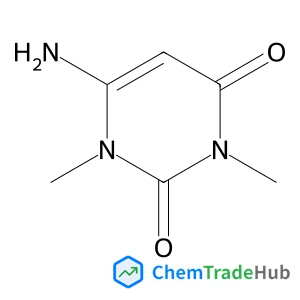
6-amino-1,3-dimethyl-1,2,3,4-tetrahydropyrimidine-2,4-dione
CAS Number:
6642-31-5
Molecular Formula:
C6H9N3O2
Recommended Suppliers






Disclaimer
This page provides academic journal information for reference and research purposes only. We are not affiliated with any journal publishers and do not handle publication submissions. For publication-related inquiries, please contact the respective journal publishers directly.
If you notice any inaccuracies in the information displayed, please contact us at support@chemtradehub.com. We will promptly review and address your concerns.