


Switchable hydroxysulfonyloxylation and defluorination–decarboxylation sulfonylation of gem-difluoroalkenes with sodium sulfinate via aerobic oxidation
Literature Information
Publication Date
2021-09-03
DOI
10.1039/D1QO01005K
Impact Factor
5.281
Authors
Xiang Liu, Jiatong Lin, Canzhan Zhuang, Jinling Zhong, Dan Song, Jiaji Zhao, Hua Cao
View Original
Abstract
A novel and attractive aerobic oxidative hydroxysulfonyloxylation of gem-difluoroalkenes with sodium sulfinate via free radical addition has been developed. In addition, successive defluorination–decarboxylation sulfonylation of gem-difluoroalkenes in the presence of Et3N·3HF is realized. These transformations present dual capacity of molecular oxygen and sodium sulfinate, furnishing difluoroalkyl sulfonates and sulfone derivatives under metal-free and mild conditions.
Recommended Journals

Journal of Organometallic Chemistry

Pure and Applied Chemistry

Planta Medica

Journal of Heterocyclic Chemistry

Israel Journal of Chemistry

Kinetics and Catalysis

Molecular Pharmacology

European Journal of Wood and Wood Products

Organic Preparations and Procedures International

Journal of Physics and Chemistry of Solids
Related Literature
Water structures on a Pt(111) electrode from ab initio molecular dynamic simulations for a variety of electrochemical conditions
Sung Sakong, Axel Groß
2020-01-17
Paper
DOI: 10.1039/C9CP06584A
Excited-state proton transfer in protonated adrenaline revealed by cryogenic UV photodissociation spectroscopy
Jordan Dezalay, Michel Broquier, Satchin Soorkia
2020-04-28
Paper
DOI: 10.1039/D0CP01127D
Adiabatic motion and statistical mechanics via mass-zero constrained dynamics
Sara Bonella, Rodolphe Vuilleumier
2020-03-06
Paper
DOI: 10.1039/D0CP00163E
High-throughput experimentation meets artificial intelligence: a new pathway to catalyst discovery
Katherine McCullough, Travis Williams, Kathleen Mingle, Pooyan Jamshidi, Jochen Lauterbach
2020-04-30
Perspective
DOI: 10.1039/D0CP00972E
Role of image charges in ionic liquid confined between metallic interfaces
Samuel Ntim, Marialore Sulpizi
2020-03-20
Paper
DOI: 10.1039/D0CP00409J
Interface hybridization and spin filter effect in metal-free phthalocyanine spin valves
Xiannian Yao, Lianqun Zhou, Fubo Tian
2020-04-28
Paper
DOI: 10.1039/D0CP00651C
Fine structure in the solution state 13C-NMR spectrum of C60 and its endofullerene derivatives
George Razvan Bacanu, Gabriela Hoffman, Michael Amponsah, Maria Concistrè, Richard J. Whitby, Malcolm H. Levitt
2020-05-13
Paper
DOI: 10.1039/D0CP01282C
You might also like
Compound Q&A
What are the main uses of 4-Nitrophenyl phosphate disodium salt hexahydrate (CAS: 333338-18-4)?
4-Nitrophenyl phosphate disodium salt hexahydrate is primarily used as a substra...
333338-18-44-Nitrophenyl phosph...
Compound Q&A
What are the main uses of 2-(Trifluoromethyl)-1,3-oxazole-4-carboxylic Acid (CAS: 1060816-01-4)?
2-(Trifluoromethyl)-1,3-oxazole-4-carboxylic Acid (CAS: 1060816-01-4) is widely ...
1060816-01-42-(Trifluoromethyl)-...
Compound Q&A
How should 2-Fluoro-4-biphenylcarboxylic acid (CAS: 137045-30-8) be stored?
2-Fluoro-4-biphenylcarboxylic acid should be stored in a cool, dry place at room...
137045-30-82-Fluoro-4-biphenylc...
Compound Q&A
What industries use Prednisolone-21-Carboxylic Acid (CAS: 61549-70-0)?
Prednisolone-21-Carboxylic Acid is primarily used in the pharmaceutical industry...
61549-70-0Prednisolone-21-Carb...
Compound Q&A
How should 4-(Hydrazinomethyl)-1,2,3-benzenetriol (CAS: 3614-72-0) be stored?
4-(Hydrazinomethyl)-1,2,3-benzenetriol (CAS: 3614-72-0) should be stored in a co...
3614-72-04-(Hydrazinomethyl)-...
Compound Q&A
What industries use 4-Amino-1-methyl-1H-pyrazole-5-carboxylic acid hydrochloride (CAS: 92534-70-8)?
4-Amino-1-methyl-1H-pyrazole-5-carboxylic acid hydrochloride (CAS: 92534-70-8) i...
92534-70-84-Amino-1-methyl-1H-...
Compound Q&A
What regulatory guidelines apply to dehydropachymic acid (CAS: 77012-31-8)?
Dehydropachymic acid (CAS: 77012-31-8) is regulated by various agencies. It fall...
77012-31-8Dehydropachymic acid
Compound Q&A
What is the market or research trend for 6-[(2,2-Dimethylpropanoyl)amino]nicotinic acid (CAS: 898561-66-5)?
The market and research trends for 6-[(2,2-Dimethylpropanoyl)amino]nicotinic aci...
898561-66-56-[(2,2-Dimethylprop...
Compound Q&A
How should 1,10-Phenanthroline-2,9-dicarbaldehyde (CAS: 57709-62-3) be stored?
1,10-Phenanthroline-2,9-dicarbaldehyde should be stored in a cool, dry place awa...
57709-62-31,10-Phenanthroline-...
Compound Q&A
How is 5-Carbamoyl-11-oxo-10,11-dihydro-5H-dibenzo[b,f]azepin-10-yl acetate (CAS: 113952-21-9) typically synthesized?
5-Carbamoyl-11-oxo-10,11-dihydro-5H-dibenzo[b,f]azepin-10-yl acetate can be synt...
113952-21-95-Carbamoyl-11-oxo-1...
Source Journal
Organic Chemistry Frontiers

CiteScore:
7.8
Self-citation Rate:
8.7%
Articles per Year:
724
Organic Chemistry Frontiers publishes high-quality research from across organic chemistry. Emphases are placed on studies that make significant contributions to the field of organic chemistry by reporting either new or significantly improved protocols or methodologies. Topics include, but are not limited to the following: Organic synthesis Development of synthetic methodologies Catalysis Natural products Functional organic materials Supramolecular and macromolecular chemistry Physical and computational organic chemistry
Recommended Compounds

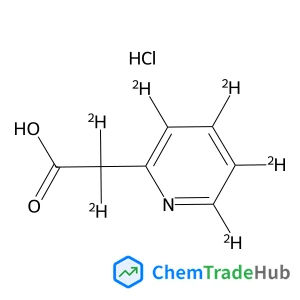
2,2-dideuterio-2-(3,4,5,6-tetradeuterio-2-pyridyl)acetic acid;hydrochloride
CAS Number:
1329799-67-8
Molecular Formula:
C7H2ClD6NO2
Recommended Suppliers








Disclaimer
This page provides academic journal information for reference and research purposes only. We are not affiliated with any journal publishers and do not handle publication submissions. For publication-related inquiries, please contact the respective journal publishers directly.
If you notice any inaccuracies in the information displayed, please contact us at support@chemtradehub.com. We will promptly review and address your concerns.