


![1-[4-(4-Methyl-1H-imidazol-1-yl)phenyl]ethanone structure](https://static.chemtradehub.com/structs/142/142161-53-3-7f55.webp "1-[4-(4-Methyl-1H-imidazol-1-yl)phenyl]ethanone structure")
Capillary bridges between unsaturated nano-mineral particles: a molecular dynamics study
Literature Information
Publication Date
2022-03-24
DOI
10.1039/D1CP05041A
Impact Factor
3.676
Authors
Yubing Ouyang, Shujian Chen, Kwesi Sagoe-Crentsil, Wenhui Duan
View Original
Abstract
Capillary bridges play an important role in the process of cohesion, which is crucial for wet granular media, and engineering of pharmaceuticals and food processing. However, the understanding of capillary bridges at the nanoscale remains unclear because the mechanical performance of nanoscale capillary bridges cannot be fully captured and explained by classical capillary theory. We applied a novel molecular dynamic simulation to investigate the dynamic formation process of nanoscale capillary bridges between quartz asperities. In comparison with classical capillary theory, our results suggested that the application of the toroidal approximation and gorge method will break down at the scale of 1 nm. Below this threshold, a pronounced oscillation in the adhesive force was observed due to inconsistent distribution of water molecules in the capillary bridges. Moreover, we found a non-linear correlation between the adhesive force and the saturation degree. Different from the cohesive stress of sandy soil as a function of saturation degree, we identified an optimal saturation range of 0.5–0.7 instead of 0.2–0.9 for the sandy soil. Our findings enhance the understanding of capillary bridges and provide new insights into the capillary force between particles in the fields of geotechnical engineering, food-process engineering, the pharmaceutical industry and nanotechnology.
Recommended Journals

Saudi Pharmaceutical Journal

Russian Journal of Coordination Chemistry

Organic Process Research & Development

Current Opinion in Solid State & Materials Science

Crystallography Reports

Russian Chemical Bulletin

Journal of Saudi Chemical Society

Russian Journal of Bioorganic Chemistry

Chemistry Education Research and Practice

Drug Discovery Today
Related Literature
Controlling micro-phase separation in semi-crystalline/amorphous conjugated block copolymers
Lianshan Li, Zhiyuan Tian, Zhiyong Tang
2014-05-21
Communication
DOI: 10.1039/C4PY00498A
Trehalose-functionalized block copolymers form serum-stable micelles
Swapnil R. Tale, Ligeng Yin, Theresa M. Reineke
2014-04-29
Paper
DOI: 10.1039/C4PY00399C
Studying the polymerization initiation efficiency of acetophenone-type initiators via PLP-ESI-MS and femtosecond spectroscopy
Hanna A. Ernst, Andreas-Neil Unterreiner
2014-04-29
Paper
DOI: 10.1039/C4PY00418C
Synthesis and self-assembly of a novel fluorinated triphilic block copolymer
Xinxin Li, Yanhua Yang, Guojun Li
2014-04-22
Paper
DOI: 10.1039/C4PY00308J
How does a tiny terminal alkynyl end group drive fully hydrophilic homopolymers to self-assemble into multicompartment vesicles and flower-like complex particles?
Tingting Liu, Wei Tian, Yunqing Zhu, Yang Bai, Hongxia Yan, Jianzhong Du
2014-05-06
Paper
DOI: 10.1039/C4PY00501E
The effect of LiNTf2 on the propagation rate coefficient of methyl methacrylate
Benjamin B. Noble, Leesa M. Smith, Michelle L. Coote
2014-06-04
Paper
DOI: 10.1039/C4PY00190G
New thermal-responsive polymers based on alanine and (meth)acryl amides
Deyang Yu, Chunhui Luo, Wenxin Fu, Zhibo Li
2014-04-28
Paper
DOI: 10.1039/C4PY00480A
Synthesis and phase behavior of a new 2-vinylbiphenyl-based mesogen-jacketed liquid crystalline polymer with a high glass transition temperature and low threshold molecular weight
Qi-Kai Zhang, Hai-Jian Tian, Yu-Feng Zhu, Yongri Liang, Zhihao Shen, Xing-He Fan
2014-03-11
Paper
DOI: 10.1039/C3PY01755A
Efficient and economical synthesis of dendrimer-like polystyrene with long subchains through arm-first divergent strategy
Xue-Song Ge, Chen He, Wei-Dong He, Sheng-Qi Chen
2014-04-28
Paper
DOI: 10.1039/C4PY00425F
You might also like
Compound Q&A
What precautions should be taken when handling lithium chloride hydrate (1:1:1) (CAS: 16712-20-2)?
When handling lithium chloride hydrate (1:1:1) (CAS: 16712-20-2), it is importan...
16712-20-2Lithium chloride hyd...
Compound Q&A
Is 4-(4H-1,2,4-Triazol-4-yl)piperidine (CAS: 690261-92-8) safe?
4-(4H-1,2,4-Triazol-4-yl)piperidine is generally considered safe for use in phar...
690261-92-84-(4H-1,2,4-Triazol-...
Compound Q&A
How should waste containing 1,3-Thiazole-2-carboxamide (CAS: 16733-85-0) be handled?
Waste containing 1,3-Thiazole-2-carboxamide (CAS: 16733-85-0) should be collecte...
16733-85-01,3-Thiazole-2-carbo...
Compound Q&A
What regulatory guidelines apply to 5-(Difluoromethyl)-2-fluorobenzonitrile (CAS: 934175-58-3)?
5-(Difluoromethyl)-2-fluorobenzonitrile (CAS: 934175-58-3) is subject to regulat...
934175-58-35-(Difluoromethyl)-2...
Compound Q&A
How is Methyl 3-acetamido-2-thiophenecarboxylate (CAS: 22288-79-5) typically synthesized?
Methyl 3-acetamido-2-thiophenecarboxylate can be synthesized by the reaction of ...
22288-79-5Methyl 3-acetamido-2...
Compound Q&A
What is 4-Isoquinolinecarbonitrile (CAS: 34846-65-6)?
4-Isoquinolinecarbonitrile is a chemical compound with the CAS number 34846-65-6...
34846-65-64-Isoquinolinecarbon...
Compound Q&A
How should Methyl 1H-1,2,3-triazole-4-carboxylate (CAS: 877309-59-6) be stored?
Store Methyl 1H-1,2,3-triazole-4-carboxylate (CAS: 877309-59-6) in a cool, dry p...
877309-59-6Methyl 1H-1,2,3-tria...
Compound Q&A
What regulatory guidelines apply to 6-Bromo[1,3]thiazolo[5,4-b]pyridin-2-amine (CAS: 1160791-13-8)?
6-Bromo[1,3]thiazolo[5,4-b]pyridin-2-amine (CAS: 1160791-13-8) is subject to the...
1160791-13-86-Bromo[1,3]thiazolo...
Compound Q&A
Is (2S,3S)-2-Ammonio-3-(3,4-dihydroxyphenyl)-3-hydroxypropanoate (CAS: 23651-95-8) safe?
(2S,3S)-2-Ammonio-3-(3,4-dihydroxyphenyl)-3-hydroxypropanoate (CAS: 23651-95-8) ...
23651-95-8(2S,3S)-2-Ammonio-3-...
Compound Q&A
What are the physical and chemical properties of 7-bromo-3-methyl-3,4-dihydroquinazolin-4-one (CAS: 1293987-84-4)?
7-Bromo-3-methyl-3,4-dihydroquinazolin-4-one is a solid with a crystalline form....
1293987-84-47-bromo-3-methyl-3,4...
Source Journal
Physical Chemistry Chemical Physics

CiteScore:
5.5
Self-citation Rate:
10.3%
Articles per Year:
3036
Physical Chemistry Chemical Physics (PCCP) is an international journal co-owned by 19 physical chemistry and physics societies from around the world. This journal publishes original, cutting-edge research in physical chemistry, chemical physics and biophysical chemistry. To be suitable for publication in PCCP, articles must include significant innovation and/or insight into physical chemistry; this is the most important criterion that reviewers and Editors will judge against when evaluating submissions. The journal has a broad scope and welcomes contributions spanning experiment, theory, computation and data science. Topical coverage includes spectroscopy, dynamics, kinetics, statistical mechanics, thermodynamics, electrochemistry, catalysis, surface science, quantum mechanics, quantum computing and machine learning. Interdisciplinary research areas such as polymers and soft matter, materials, nanoscience, energy, surfaces/interfaces, and biophysical chemistry are welcomed if they demonstrate significant innovation and/or insight into physical chemistry. Joined experimental/theoretical studies are particularly appreciated when complementary and based on up-to-date approaches.
Recommended Compounds
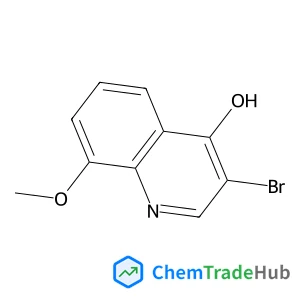
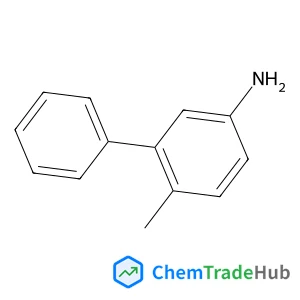
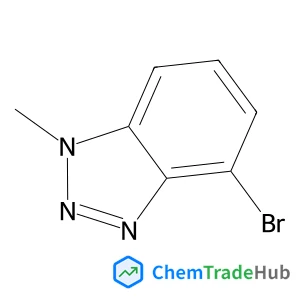
![N-[2-(2-Pyridinyl)ethyl]-1-propanamine structure](https://static.chemtradehub.com/structs/554/55496-57-6-22b4.webp "N-[2-(2-Pyridinyl)ethyl]-1-propanamine structure")
Recommended Suppliers





Disclaimer
This page provides academic journal information for reference and research purposes only. We are not affiliated with any journal publishers and do not handle publication submissions. For publication-related inquiries, please contact the respective journal publishers directly.
If you notice any inaccuracies in the information displayed, please contact us at support@chemtradehub.com. We will promptly review and address your concerns.