












![tert-Butyl N-[(2-chloropyridin-4-yl)methyl]carbamate structure](https://static.chemtradehub.com/structs/916/916210-27-0-9f95.webp "tert-Butyl N-[(2-chloropyridin-4-yl)methyl]carbamate structure")
tert-Butyl N-[(2-chloropyridin-4-yl)methyl]carbamate
CAS Number:
916210-27-0
Molecular Formula:
C11H15ClN2O2
Martin Redhead, Marta Westwood, Seppe Leysen, Jeremy Davis, Christian Ottmann
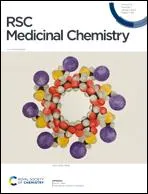
The stabilisation of protein–protein interactions (PPIs) through molecular glues is a novel and promising approach in drug discovery. In stark contrast to research in protein–protein inhibition the field of stabilisation remains underdeveloped with comparatively few examples of small-molecule stabilisers of PPIs reported to date. At the same time identifying molecular glues has received recent sustained interest, especially in the fields of targeted protein degradation and 14-3-3 PPIs. The hub-protein 14-3-3 has a broad interactome with more than 500 known protein partners which presents a great opportunity for therapeutic intervention. In this study we have developed an HTRF assay suitable for HTS of the 14-3-3/SLP76 PPI and have completed a proof of concept screen against a chemically diverse library of 20 K molecules. The adaptor protein SLP76 has been reported to interact with 14-3-3 proteins downstream of the TCR playing an important role in mediating its own proteasomal degradation. We believe that stabilisation of this PPI could be exploited to potentiate degradation of SLP76 and therefore inhibit TCR signalling. This would represent an interesting alternative to other approaches in the field of targeted protein degradation. Here we disclose 16 novel stabilisers of the 14-3-3/SLP76 PPI across multiple different chemotypes. Based on the early results presented here we would recommend this approach to find molecular glues with broad applicability in the field of 14-3-3 PPIs.
Andika Asyuda, Xianglong Wan, Michael Zharnikov
DOI: 10.1039/D0CP01740J
K. Kirievsky, D. Fuks, Y. Gelbstein
DOI: 10.1039/D0CP00956C
Nagaprasad Reddy Samala, Ilya Grinberg
DOI: 10.1039/D0CP04478D
Bo Kong, Xin-You An, Ti-Xian Zeng, Jihua Zhang
DOI: 10.1039/C9CP06094D
Michael Gradzielski
DOI: 10.1039/D0CP01076F
Pascal Didier, Jagannath Kuchlyan, Lara Martinez-Fernandez, Pauline Gosset, Jérémie Léonard, Yitzhak Tor, Roberto Improta, Yves Mély
DOI: 10.1039/C9CP06931C
Le Li, Xuhua Li, Yiming Tang, Zenghui Lao, Jiangtao Lei, Guanghong Wei
DOI: 10.1039/C9CP06671C
Elisabeth Levrau, Matthias M. Minjauw, Michiel Van Daele, Rita Vos, Jolien Dendooven, Christophe Detavernier
DOI: 10.1039/D0CP00395F
Eugenii Ya. Misochko, Alexander V. Akimov, Denis V. Korchagin, Yulia S. Ganushevich, Egor A. Melnikov, Vasili A. Miluykov
DOI: 10.1039/D0CP05254J
Mariagrazia Fortino, Elisabetta Collini, Alfonso Pedone, Julien Bloino
DOI: 10.1039/D0CP00034E
This compound is mainly used as an intermediate in the synthesis of antipsychoti...
Waste containing 1-(D-Ribofuranosyl)-1,4-dihydro-3-pyridinecarboxamide (CAS: 191...
2-Methyl-2-propanyl 3-bromo-3-(hydroxymethyl)-1-azetidinecarboxylate (CAS: 20079...
N-(4-Chloro-2-pyridinyl)acetamide (CAS: 245056-66-0) is a chemical compound with...
5-Chloro-2-hydroxybenzoic acid, also known as 5-chlorosalicylic acid, is an arom...
When handling 1,1-Dichloro-1-fluoroethane (CAS: 1717-00-6), it is important to u...
Fmoc-(2S,3R)-3-phenylpyrrolidine-2-carboxylic acid is a white crystalline solid ...
4-Amino-5-bromo-2-pyridinecarboxylic acid is primarily used as a precursor in th...
Handling this compound should be done with personal protective equipment (PPE) i...
When handling 8-bromo-2,2-dimethyl-3,4-dihydro-2H-1,4-benzoxazin-3-one, use prop...
![4-Chloro-3-(trifluoromethyl)-1H-pyrrolo[2,3-b]pyridine structure](https://static.chemtradehub.com/structs/869/869335-75-1-a9d0.webp "4-Chloro-3-(trifluoromethyl)-1H-pyrrolo[2,3-b]pyridine structure")



