












Correction: The development of a full range analytical interatomic potential
Literature Information
Publication Date
2021-02-17
DOI
10.1039/D1CP90032C
Impact Factor
3.676
Authors
X. W. Sheng, K. T. Tang
View Original
Abstract
Correction for ‘The development of a full range analytical interatomic potential’ by X. W. Sheng et al., Phys. Chem. Chem. Phys., 2021, DOI: 10.1039/d0cp04083e.
Related Literature
PEGylation of fluoridated hydroxyapatite (FAp):Ln3+nanorods for cell imaging
Xiaoyong Zhang, Junfeng Hui, Bin Yang, Yong Yang, Daidi Fan, Meiying Liu, Lei Tao, Yen Wei
2013-05-07
Paper
DOI: 10.1039/C3PY00489A
Functionalized polymersomes for biomedical applications
Prasad V. Pawar, Shalini V. Gohil, Jay Prakash Jain, Neeraj Kumar
2013-02-05
Review Article
DOI: 10.1039/C3PY00023K
Push–pull (thio)barbituric acid derivatives in dye photosensitized radical and cationic polymerization reactions under 457/473 nm laser beams or blue LEDs
Mohamad-Ali Tehfe, Frédéric Dumur, Bernadette Graff, Fabrice Morlet-Savary, Didier Gigmes, Jean-Pierre Fouassier, Jacques Lalevée
2013-05-07
Paper
DOI: 10.1039/C3PY00372H
Synthesis and versatile postpolymerization modification of couplable A(BC)mD heterografted comblike block quaterpolymers
Xiao Jiang, Wei Shao, Kun Jiang, Meijing Zhang, Huanhuan Liu, Chunnuan Ye, Youliang Zhao
2013-04-05
Paper
DOI: 10.1039/C3PY00217A
The reactivity of N-vinylcarbazole in RAFT polymerization: trithiocarbonates deliver optimal control for the synthesis of homopolymers and block copolymers
Carlos Guerrero-Sanchez, Graeme Moad
2013-04-30
Paper
DOI: 10.1039/C3PY00487B
Hydrogen bonding assisted reversible-deactivation radical copolymerization of 4-vinylpyridine and styrene: a facile approach for adjusting polymerization behavior, polymer composition, etc.
Xiaoji Zhou, Wenxiang Wang, Huali Yu, Junfei Zhao, Zhengbiao Zhang, Xiulin Zhu
2013-04-08
Paper
DOI: 10.1039/C3PY00255A
RAFT copolymerization of alginate-derived macromonomers – synthesis of a well-defined poly(HEMAm)-graft-(1→4)-α-l-guluronan copolymer capable of ionotropic gelation
Ali Ghadban, Eric Reynaud, Marguerite Rinaudo, Luca Albertin
2013-07-01
Communication
DOI: 10.1039/C3PY00730H
Fabrication of polymerizable ZnS nanoparticles in N,N′-dimethylacrylamide and the resulting high refractive index optical materials
Guoyan Zhang, Jibin Zhang, Bai Yang
2013-04-26
Paper
DOI: 10.1039/C3PY00458A
Synthesis of α-helix-containing PPEGMEA-g-PBLG, well-defined amphiphilic graft copolymer, by sequential SET-LRP and ROP
Sujuan Zhai, Xuemei Song, Chun Feng, Xiuyu Jiang, Yongjun Li, Guolin Lu, Xiaoyu Huang
2013-05-14
Paper
DOI: 10.1039/C3PY00474K
Nitrogen-rich diaminotriazine-based porous organic polymers for small gas storage and selective uptake
Wei-Chao Song, Xiao-Kang Xu, Qiang Chen, Zhan-Zhong Zhuang, Xian-He Bu
2013-06-13
Paper
DOI: 10.1039/C3PY00590A
You might also like
Compound Q&A
Is 6-(3-Fluorophenyl)picolinic acid (CAS: 887982-40-3) safe?
6-(3-Fluorophenyl)picolinic acid is generally considered safe for laboratory use...
887982-40-36-(3-Fluorophenyl)pi...
Compound Q&A
What industries use (3R)-3-Pyrrolidinol (CAS: 2799-21-5)?
(3R)-3-Pyrrolidinol is used in the pharmaceutical industry as a precursor for dr...
2799-21-5(3R)-3-Pyrrolidinol
Compound Q&A
What precautions should be taken when handling (4R,5R)-4,5-Diethoxycarbonyl-2,2-dimethyldioxolane (CAS: 59779-75-8)?
When handling (4R,5R)-4,5-Diethoxycarbonyl-2,2-dimethyldioxolane (CAS: 59779-75-...
59779-75-8(4R,5R)-4,5-Diethoxy...
Compound Q&A
How is 1-(6-Chloroimidazo[1,2-b]pyridazin-3-yl)ethanone (CAS: 90734-71-7) typically synthesized?
1-(6-Chloroimidazo[1,2-b]pyridazin-3-yl)ethanone is often synthesized via a mult...
90734-71-71-(6-Chloroimidazo[1...
Compound Q&A
What is the market or research trend for N-Ethyl-3,4-dimethylbenzylamine (CAS: 39180-83-1)?
The market for N-Ethyl-3,4-dimethylbenzylamine (CAS: 39180-83-1) remains steady,...
39180-83-1N-Ethyl-3,4-dimethyl...
Compound Q&A
What is Tert-butyl 3-(pyrrolidin-1-yl)azetidine-1-carboxylate (CAS: 1019008-21-9)?
Tert-butyl 3-(pyrrolidin-1-yl)azetidine-1-carboxylate is a chemical compound wit...
1019008-21-9Tert-butyl 3-(pyrrol...
Compound Q&A
What regulatory guidelines apply to 1-Bromo-3-chloro-2,4-dimethoxybenzene (CAS: 1228956-93-1)?
1-Bromo-3-chloro-2,4-dimethoxybenzene (CAS: 1228956-93-1) falls under the classi...
1228956-93-11-Bromo-3-chloro-2,4...
Compound Q&A
Is 8-Bromo-2-methyl-3,4-dihydroisoquinolin-1(2H)-one (CAS: 1368622-07-4) safe?
The safety of 8-Bromo-2-methyl-3,4-dihydroisoquinolin-1(2H)-one (CAS: 1368622-07...
1368622-07-48-Bromo-2-methyl-3,4...
Compound Q&A
Is Benzyl [(3S)-2,6-dioxo-3-piperidinyl]carbamate (CAS: 22785-43-9) safe?
Benzyl [(3S)-2,6-dioxo-3-piperidinyl]carbamate is generally safe when handled wi...
22785-43-9Benzyl [(3S)-2,6-dio...
Compound Q&A
How should 1-{[4-(4,4,5,5-Tetramethyl-1,3,2-dioxaborolan-2-yl)phenyl]sulfonyl}pyrrolidine (CAS: 928657-21-0) be stored?
1-{[4-(4,4,5,5-Tetramethyl-1,3,2-dioxaborolan-2-yl)phenyl]sulfonyl}pyrrolidine s...
928657-21-01-{[4-(4,4,5,5-Tetra...
Source Journal
Physical Chemistry Chemical Physics

CiteScore:
5.5
Self-citation Rate:
10.3%
Articles per Year:
3036
Physical Chemistry Chemical Physics (PCCP) is an international journal co-owned by 19 physical chemistry and physics societies from around the world. This journal publishes original, cutting-edge research in physical chemistry, chemical physics and biophysical chemistry. To be suitable for publication in PCCP, articles must include significant innovation and/or insight into physical chemistry; this is the most important criterion that reviewers and Editors will judge against when evaluating submissions. The journal has a broad scope and welcomes contributions spanning experiment, theory, computation and data science. Topical coverage includes spectroscopy, dynamics, kinetics, statistical mechanics, thermodynamics, electrochemistry, catalysis, surface science, quantum mechanics, quantum computing and machine learning. Interdisciplinary research areas such as polymers and soft matter, materials, nanoscience, energy, surfaces/interfaces, and biophysical chemistry are welcomed if they demonstrate significant innovation and/or insight into physical chemistry. Joined experimental/theoretical studies are particularly appreciated when complementary and based on up-to-date approaches.
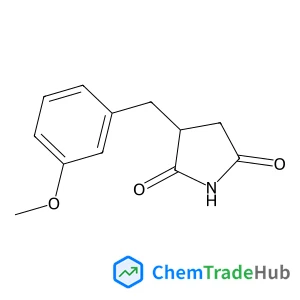
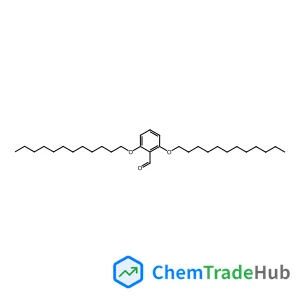
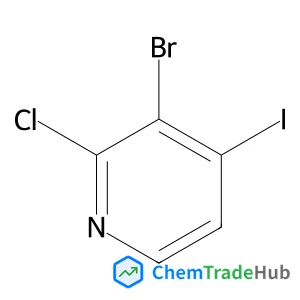
Recommended Compounds

Recommended Suppliers





Disclaimer
This page provides academic journal information for reference and research purposes only. We are not affiliated with any journal publishers and do not handle publication submissions. For publication-related inquiries, please contact the respective journal publishers directly.
If you notice any inaccuracies in the information displayed, please contact us at support@chemtradehub.com. We will promptly review and address your concerns.