












The impact of twisting on the intersystem crossing in acenes: an experimental and computational study
Literature Information
Publication Date
2022-01-03
DOI
10.1039/D1CP05728F
Impact Factor
3.676
Authors
Partha Malakar, Veniamin Borin, Anjan Bedi, Igor Schapiro, Ori Gidron, Sanford Ruhman
View Original
Abstract
Due to their unique excited state dynamics, acenes play a dominant role in optoelectronic and light-harvesting applications. Their optical and electronic properties are typically tailored by side-group engineering, which often result in distortion of the acene core from planarity. However, the effect of such distortion on their excited state dynamics is not clear. In this work, we investigate the effect of twisting on the photophysics of acenes, which are helically locked to a defined twist angle by tethers of different lengths. Ultrafast transient absorption and time resolved fluorescence show a clear dependence of the rate of intersystem crossing with twisting. This trend is explained using quantum chemical calculations, showing an increase of spin–orbit coupling (SOC). At much earlier times, structural reorganization in S1, including coherent vibrational wave packet motions, is reflected in transient spectral changes. As predicted by theory, decreasing the length of diagonal tether induces enhanced activity and frequency blue-shifting of a normal vibration consisting of anthracene twisting against restraint of the tethering chain. Overall, these results serve as design principles for tuning photophysical properties of acenes via controlled twisting of their aromatic core.
Related Literature
Self-assemblies of TTF derivatives programmed by alkyl chains and functional groups
Bin Tu, Guo-jun Hu, Qiao-jun Fang, Jun-jie Qi, Xun-wen Xiao, Yan-fang Geng, Qing-dao Zeng
2018-02-02
Paper
DOI: 10.1039/C7CP08201K
Effects of CNT size on the desalination performance of an outer-wall CNT slit membrane
Elisa Y. M. Ang, Teng Yong Ng, Rongming Lin, Zishun Liu, K. R. Geethalakshmi
2018-04-19
Paper
DOI: 10.1039/C8CP01191E
Phase equilibrium and physical properties of biobased ionic liquid mixtures
Ariel A. C. Toledo Hijo, Guilherme J. Maximo, Rosiane L. Cunha, Felipe H. S. Fonseca, Lisandro P. Cardoso, Jorge F. B. Pereira, Mariana C. Costa, Eduardo A. C. Batista, Antonio J. A. Meirelles
2018-02-01
Paper
DOI: 10.1039/C7CP06841G
Unexpected protonation state of Glu197 discovered from simulations of tacrine in butyrylcholinesterase
Xiao Wan, Yuan Yao, Lei Fang, Junjun Liu
2018-05-08
Paper
DOI: 10.1039/C8CP01566J
Ternary CBe4Au4 cluster: a 16-electron system with quasi-planar tetracoordinate carbon
Lin-Yan Feng, Hua-Jin Zhai
2018-02-13
Paper
DOI: 10.1039/C7CP08420J
All-atom molecular dynamics simulations of spin labelled double and single-strand DNA for EPR studies
C. Prior, L. Danilāne, V. S. Oganesyan
2018-04-16
Paper
DOI: 10.1039/C7CP08625C
Magnetic field effects dynamics of ethylammonium nitrate ionic liquid confined between glass plates
2018-01-31
Paper
DOI: 10.1039/C7CP06554J
Use multiscale simulation to explore the effects of the homodimerizations between different conformation states on the activation and allosteric pathway for the μ-opioid receptor
Xi Zhang, Yuan Yuan, Longrong Wang, Yanzhi Guo, Menglong Li, Chuan Li, Xuemei Pu
2018-04-19
Paper
DOI: 10.1039/C8CP02016G
A drastic influence of the anion nature and concentration on high pressure intrusion–extrusion of electrolyte solutions in Silicalite-1
A. Ryzhikov, H. Nouali, T. J. Daou, J. Patarin
2018-02-01
Paper
DOI: 10.1039/C7CP06520E
Correction: Insights into the enhanced CeN triple bond in the HCeN molecule
Zhen Pu, Wenjie Yu, Soumendra K. Roy, Chaoyang Li, Bingyun Ao, Tianwei Liu, Maobing Shuai, Xuefeng Wang
2018-05-21
Correction
DOI: 10.1039/C8CP91766C
You might also like
Compound Q&A
What is 3-Fluoro-2-methylbenzylamine (CAS: 771573-36-5)?
3-Fluoro-2-methylbenzylamine is an organic compound with the CAS number 771573-3...
771573-36-53-Fluoro-2-methylben...
Compound Q&A
Is Tert-butyl 2-(oxetan-3-ylidene)acetate (CAS: 1207175-03-8) safe?
Tert-butyl 2-(oxetan-3-ylidene)acetate is considered safe for its intended uses ...
1207175-03-8Tert-butyl 2-(oxetan...
Compound Q&A
What precautions should be taken when handling 4-Acetyl-2-fluorobenzonitrile (CAS: 214760-18-6)?
Proper personal protective equipment (PPE) such as gloves, goggles, and a lab co...
214760-18-64-Acetyl-2-fluoroben...
Compound Q&A
How is 2-Ethyl-4-methyl-1,3-thiazole (CAS: 15679-12-6) typically synthesized?
2-Ethyl-4-methyl-1,3-thiazole is commonly synthesized via the reaction of thiour...
15679-12-62-Ethyl-4-methyl-1,3...
Compound Q&A
How should 5',5''-([2,2'-Bithiophene]-5,5'-diyl)bis(([1,1':3',1''-terphenyl]-4,4''-dicarboxylic acid)) (CAS: 1227780-71-3) be stored?
This compound should be stored in a cool, dry place away from direct sunlight an...
1227780-71-35',5''''-([2,2'-Bith...
Compound Q&A
What regulatory guidelines apply to L-Lysine Acetate Salt (CAS: 52315-92-1)?
L-Lysine Acetate Salt (CAS: 52315-92-1) is subject to various regulatory guideli...
52315-92-1L-LYSINE ACETATE SAL...
Compound Q&A
Is 6-Fluoro-3-hydroxy-2-pyrazinecarboxamide (CAS: 259793-96-9) safe?
6-Fluoro-3-hydroxy-2-pyrazinecarboxamide (CAS: 259793-96-9) is generally conside...
259793-96-96-Fluoro-3-hydroxy-2...
Compound Q&A
What are the physical and chemical properties of 1,1'-Sulfonylbis(1H-imidazole) (CAS: 7189-69-7)?
1,1'-Sulfonylbis(1H-imidazole) is a crystalline solid with a molecular weight of...
7189-69-71,1'-Sulfonylbis(1H-...
Compound Q&A
What industries use 4-methyl-7-nitro-1H-indole-3-carbonitrile (CAS: 289483-82-5)?
4-Methyl-7-nitro-1H-indole-3-carbonitrile (CAS: 289483-82-5) is primarily used i...
289483-82-54-methyl-7-nitro-1H-...
Compound Q&A
How should waste containing 5-Bromo-3-indolyl-beta-galactoside (CAS: 97753-82-7) be handled?
Waste containing 5-Bromo-3-indolyl-beta-galactoside (CAS: 97753-82-7) should be ...
97753-82-75-Bromo-3-indolyl-be...
Source Journal
Physical Chemistry Chemical Physics

CiteScore:
5.5
Self-citation Rate:
10.3%
Articles per Year:
3036
Physical Chemistry Chemical Physics (PCCP) is an international journal co-owned by 19 physical chemistry and physics societies from around the world. This journal publishes original, cutting-edge research in physical chemistry, chemical physics and biophysical chemistry. To be suitable for publication in PCCP, articles must include significant innovation and/or insight into physical chemistry; this is the most important criterion that reviewers and Editors will judge against when evaluating submissions. The journal has a broad scope and welcomes contributions spanning experiment, theory, computation and data science. Topical coverage includes spectroscopy, dynamics, kinetics, statistical mechanics, thermodynamics, electrochemistry, catalysis, surface science, quantum mechanics, quantum computing and machine learning. Interdisciplinary research areas such as polymers and soft matter, materials, nanoscience, energy, surfaces/interfaces, and biophysical chemistry are welcomed if they demonstrate significant innovation and/or insight into physical chemistry. Joined experimental/theoretical studies are particularly appreciated when complementary and based on up-to-date approaches.
Recommended Compounds
![1,1'-[(E)-1,2-Ethenediyl]bis(4-bromobenzene) structure](https://static.chemtradehub.com/structs/188/18869-30-2-c907.webp "1,1'-[(E)-1,2-Ethenediyl]bis(4-bromobenzene) structure")
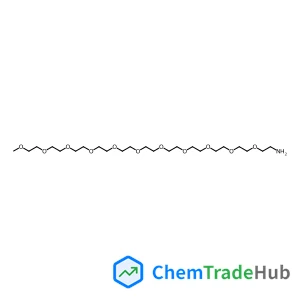
2,5,8,11,14,17,20,23,26,29,32-Undecaoxatetratriacontan-34-amine
CAS Number:
854601-60-8
Molecular Formula:
C23H49NO11
Recommended Suppliers





Disclaimer
This page provides academic journal information for reference and research purposes only. We are not affiliated with any journal publishers and do not handle publication submissions. For publication-related inquiries, please contact the respective journal publishers directly.
If you notice any inaccuracies in the information displayed, please contact us at support@chemtradehub.com. We will promptly review and address your concerns.