












Macromolecular crowding: how shape and interaction affect the structure, function, conformational dynamics and relative domain movement of a multi-domain protein
Literature Information
Publication Date
2022-05-19
DOI
10.1039/D1CP04842B
Impact Factor
3.676
Authors
Nilimesh Das, Pratik Sen
View Original
Abstract
The cellular environment is crowded by macromolecules of various sizes, shapes, and charges, which modulate protein structure, function and dynamics. Herein, we contemplated the effect of three different macromolecular crowders: dextran-40, Ficoll-70 and PEG-35 on the structure, active-site conformational dynamics, function and relative domain movement of multi-domain human serum albumin (HSA). All the crowders used in this study have zero charges and similar sizes (at least in the dilute region) but different shapes and compositions. Some observations follow the traditional crowding theory. For example, all the crowders increased the α-helicity of HSA and hindered the conformational fluctuation dynamics. However, some observations are not in line with the expectations, such as an increase in the size of HSA with PEG-35 and uncorrelated domain movement of HSA with Ficoll-70 and PEG-35. The relative domain movement is correlated with the activity, suggesting that such moves are essential for protein function. The interaction between HSA and Ficoll-70 is proposed to be hydrophobic in nature. Overall, our results provide a somewhat systematic study of the shape-dependent macromolecular crowding effect on various protein properties and present a possible new insight into the mechanism of macromolecular crowding.
Related Literature
Detection of single-nucleotide mismatches using scanning electrochemical microscopy
Piotr Michal Diakowski, Heinz-Bernhard Kraatz
2009-01-05
Communication
DOI: 10.1039/B819876D
Activation of metal-bound η5-C5Me5groups to Diels–Alder addition of 3O2 and other dienophiles
Neil M. Boag, K. Mohan Rao
2009-01-27
Communication
DOI: 10.1039/B818537A
Supramolecular self-assembly of amphiphilic hyperbranched polymers at all scales and dimensions: progress, characteristics and perspectives
Yongfeng Zhou, Deyue Yan
2009-01-13
Feature Article
DOI: 10.1039/B814560C
Intramolecular dimer radical anions of [3n] cyclophanes: transannular distance dependent stabilization energy
Mamoru Fujitsuka, Sachiko Tojo, Teruo Shinmyozu, Tetsuro Majima
2009-02-20
Communication
DOI: 10.1039/B810122A
A ratiometric fluorescent sensor with a large Stokes shift for imaging zinc ions in living cells
Chun Liu, Hua Jiang
2008-12-24
Communication
DOI: 10.1039/B814501F
Switching the photo-induced energy and electron-transfer processes in BODIPY–phthalocyanine conjugates
Jian-Yong Liu, Eugeny A. Ermilov, Beate Röder, Dennis K. P. Ng
2009-01-28
Communication
DOI: 10.1039/B821630D
Synergic asymmetric organocatalysis (SAOc) of Cinchonaalkaloids and secondary amines in the synthesis of bicyclo[2.2.2]octan-2-ones‡
Marco Bella, Daniele M. Scarpino Schietroma, Pier Paolo Cusella, Tecla Gasperi, Valerio Visca
2008-12-08
Communication
DOI: 10.1039/B816550E
Fluorophore-cored dendrimers for patterns in metalloprotein sensing
Siriporn Jiwpanich, Britto S. Sandanaraj, S. Thayumanavan
2009-01-05
Communication
DOI: 10.1039/B815263B
Photocatalytic printing of inorganic nanopatterns via poly(styrene-block-carbosilane) copolymer thin films on titania substrates
Juan Peng, Alejandra Garcia Marcos, Seong-Jun Jeong, Holger Frey, Dong Ha Kim
2009-01-06
Communication
DOI: 10.1039/B816398G
You might also like
Compound Q&A
What precautions should be taken when handling 2-Methyl-2-propanyl 5-amino-2-thiophenecarboxylate (CAS: 1498311-57-1)?
When handling 2-Methyl-2-propanyl 5-amino-2-thiophenecarboxylate (CAS: 1498311-5...
1498311-57-12-Methyl-2-propanyl ...
Compound Q&A
What are the physical and chemical properties of 5-Bromo-1,2-dichloro-3-fluorobenzene (CAS: 1000572-93-9)?
5-Bromo-1,2-dichloro-3-fluorobenzene (CAS: 1000572-93-9) is a crystalline solid ...
1000572-93-95-Bromo-1,2-dichloro...
Compound Q&A
How should (2R)-2-Amino-2-(4-bromophenyl)ethanol (CAS: 354153-64-3) be stored?
(2R)-2-Amino-2-(4-bromophenyl)ethanol (CAS: 354153-64-3) should be stored in a c...
354153-64-3(2R)-2-Amino-2-(4-br...
Compound Q&A
What regulatory guidelines apply to Methyl 4-(aminomethyl)tetrahydro-2H-pyran-4-carboxylate hydrochloride (CAS: 362707-24-2)?
Methyl 4-(aminomethyl)tetrahydro-2H-pyran-4-carboxylate hydrochloride (CAS: 3627...
362707-24-2Methyl 4-(aminomethy...
Compound Q&A
What are the main uses of 1,4-dimethyl-1H-pyrazole-5-sulfonyl chloride (CAS: 1174834-52-6)?
1,4-Dimethyl-1H-pyrazole-5-sulfonyl chloride is primarily used as an intermediat...
1174834-52-61,4-dimethyl-1H-pyra...
Compound Q&A
Is Dinaphtho[1,2-b:2',1'-d]furan (CAS: 239-69-0) safe?
Dinaphtho[1,2-b:2',1'-d]furan is generally safe when handled with appropriate pe...
239-69-0Dinaphtho[1,2-b:2',1...
Compound Q&A
What is the market or research trend for 7-Methyl-7,9-dihydro-1H-purine-2,6,8(3H)-trione (CAS: 612-37-3)?
The market for 7-Methyl-7,9-dihydro-1H-purine-2,6,8(3H)-trione (CAS: 612-37-3) i...
612-37-37-Methyl-7,9-dihydro...
Compound Q&A
What are the physical and chemical properties of 2-(4-Chlorophenyl)malonaldehyde (CAS: 205676-17-1)?
2-(4-Chlorophenyl)malonaldehyde (CAS: 205676-17-1) is a colorless or light yello...
205676-17-12-(4-Chlorophenyl)ma...
Compound Q&A
How is 2-Methylchrysene (CAS: 3351-32-4) typically synthesized?
2-Methylchrysene (CAS: 3351-32-4) is typically synthesized via the reaction of c...
3351-32-42-Methylchrysene
Compound Q&A
Is N-(6-aminopyrimidin-4-yl)acetamide (CAS: 89533-23-3) safe?
N-(6-aminopyrimidin-4-yl)acetamide (CAS: 89533-23-3) is generally considered saf...
89533-23-3N-(6-aminopyrimidin-...
Source Journal
Physical Chemistry Chemical Physics

CiteScore:
5.5
Self-citation Rate:
10.3%
Articles per Year:
3036
Physical Chemistry Chemical Physics (PCCP) is an international journal co-owned by 19 physical chemistry and physics societies from around the world. This journal publishes original, cutting-edge research in physical chemistry, chemical physics and biophysical chemistry. To be suitable for publication in PCCP, articles must include significant innovation and/or insight into physical chemistry; this is the most important criterion that reviewers and Editors will judge against when evaluating submissions. The journal has a broad scope and welcomes contributions spanning experiment, theory, computation and data science. Topical coverage includes spectroscopy, dynamics, kinetics, statistical mechanics, thermodynamics, electrochemistry, catalysis, surface science, quantum mechanics, quantum computing and machine learning. Interdisciplinary research areas such as polymers and soft matter, materials, nanoscience, energy, surfaces/interfaces, and biophysical chemistry are welcomed if they demonstrate significant innovation and/or insight into physical chemistry. Joined experimental/theoretical studies are particularly appreciated when complementary and based on up-to-date approaches.
Recommended Compounds
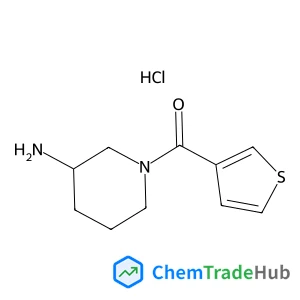
(3-Amino-piperidin-1-yl)-thiophen-3-yl-methanone hydrochloride
CAS Number:
1185316-70-4
Molecular Formula:
C10H15ClN2OS
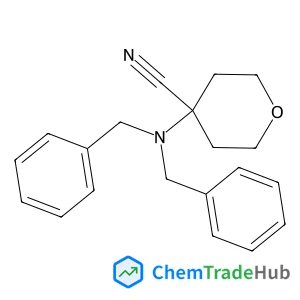
4-(Dibenzylamino)tetrahydro-2H-pyran-4-carbonitrile
CAS Number:
1630906-81-8
Molecular Formula:
C20H22N2O
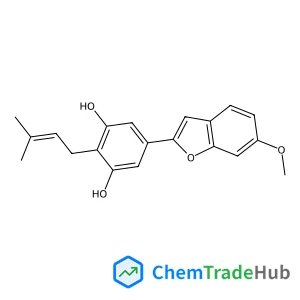
5-(6-Methoxy-1-benzofuran-2-yl)-2-(3-methyl-2-buten-1-yl)-1,3-benzenediol
CAS Number:
1017277-40-5
Molecular Formula:
C20H20O4
Recommended Suppliers





Disclaimer
This page provides academic journal information for reference and research purposes only. We are not affiliated with any journal publishers and do not handle publication submissions. For publication-related inquiries, please contact the respective journal publishers directly.
If you notice any inaccuracies in the information displayed, please contact us at support@chemtradehub.com. We will promptly review and address your concerns.