


Towards a predictive model for polymer solubility using the noncovalent interaction index: polyethylene as a case study
Literature Information
Publication Date
2021-11-09
DOI
10.1039/D1CP04346C
Impact Factor
3.676
Authors
Mats Denayer, Jelle Vekeman, Frederik Tielens, Frank De Proft
View Original
Abstract
In this work we present the development of a novel, quantitative solubility descriptor based on the non-covalent interaction index. It is presented as a more insightful alternative to Hansen's solubility parameters and the COSMO model to assess and predict polymer solubility in different solvents. To this end, we studied the solvation behaviour as a function of the chain length of a single chain of arguably the most simple polymer, polyethylene, in anisole (solvent) and methanol (poor solvent) via molecular dynamics simulations. It was found that in anisole the solute maximized its interface with the solvent, whereas in methanol the macromolecule formed rod-like structures by folding on itself once the chain length surpassed a certain barrier. We assessed this behaviour – which can be related to solubility – quantitatively and qualitatively via well-known descriptors, namely the solvation free energy, and the solvent accessible surface area. In addition, we propose the non-covalent interaction (NCI) index as a versatile descriptor, providing information on the strength, as well as the nature, of the solute–solvent interactions, the solute's intramolecular interactions and on the solute's conformation, both qualitatively and quantitatively. Finally, as a quantitative measure for solubility, defined in this context as the solute's tendency to maximize its interactions with the solvent, we propose two new NCI-based descriptors: the relative integrated NCI density and the integrated NCI difference. The former represents the quantitative difference in solute–solvent interactions between a fully extended coil and the actual conformation during simulation and the latter the quantitative difference between the intermolecular (solute–solvent) and the intramolecular (in the solute) non-covalent interactions. The easy interpretation and calculation of these novel quantities open up the possibility of fast, reliable and insightful high-throughput screening of different (anti)solvent and solute combinations.
Recommended Journals

Nature Reviews Drug Discovery

Molecular Diversity

Photochemical & Photobiological Sciences

Environmental Toxicology and Pharmacology

CrystEngComm

Green Chemistry

Physical Chemistry Chemical Physics

Journal of Enzyme inhibition and Medicinal Chemistry

Current Pharmaceutical Biotechnology

Angewandte Chemie International Edition
Related Literature
pH-Responsive nanocapsules from silylated copolymers
J. Fickert, K. Landfester
2016-06-08
Communication
DOI: 10.1039/C6PY00878J
On the structure–control relationship of amide-functionalized SG1-based alkoxyamines for nitroxide-mediated polymerization and conjugation
Elise Guégain, Vianney Delplace, Thomas Trimaille, Didier Gigmes, Didier Siri, Sylvain R. A. Marque, Yohann Guillaneuf, Julien Nicolas
2015-03-19
Paper
DOI: 10.1039/C5PY00283D
Hierarchical superstructures of norbornene-based polymers depending on dendronized side-chains
Dae-Yoon Kim, Dong-Gue Kang, Suyong Shin, Tae-Lim Choi, Kwang-Un Jeong
2016-08-01
Paper
DOI: 10.1039/C6PY01286H
Novel chromium complexes with a [OSSO]-type bis(phenolato) dianionic ligand mediate the alternating ring-opening copolymerization of epoxides and phthalic anhydride
Gaoshan Si, Li Zhang, Bing Han, Zhongyu Duan, Boqian Li, Jincheng Dong, Xiangqing Li, Binyuan Liu
2015-07-21
Paper
DOI: 10.1039/C5PY01040C
N-Ferrocenylsulfonyl-2-methylaziridine: the first ferrocene monomer for the anionic (co)polymerization of aziridines
Tatjana Homann-Müller, Elisabeth Rieger, Arda Alkan, Frederik R. Wurm
2016-07-21
Paper
DOI: 10.1039/C6PY01019A
Simultaneous utilization of a bifunctional ruthenium complex as an efficient catalyst for RAFT controlled photopolymerization and a sensing probe for the facile fabrication of an ECL platform
Tao Chen, Yuanhong Xu, Zhi Peng, Aihua Li, Jingquan Liu
2016-08-29
Paper
DOI: 10.1039/C6PY01016D
Shape-persistent fluorescent tetraphenylmethane dendrimers
Julio I. Urzúa, María A. Regueira, Massimo Lazzari, Mercedes Torneiro
2016-07-29
Paper
DOI: 10.1039/C6PY01046F
Surface-initiated SET living radical polymerisation for the synthesis of silica–polymer core–shell nanoparticles
Jessica Tom, Kohji Ohno
2016-09-07
Paper
DOI: 10.1039/C6PY01290F
You might also like
Compound Q&A
What precautions should be taken when handling 2-Methyl-2-propanyl 5-amino-2-thiophenecarboxylate (CAS: 1498311-57-1)?
When handling 2-Methyl-2-propanyl 5-amino-2-thiophenecarboxylate (CAS: 1498311-5...
1498311-57-12-Methyl-2-propanyl ...
Compound Q&A
What are the physical and chemical properties of 5-Bromo-1,2-dichloro-3-fluorobenzene (CAS: 1000572-93-9)?
5-Bromo-1,2-dichloro-3-fluorobenzene (CAS: 1000572-93-9) is a crystalline solid ...
1000572-93-95-Bromo-1,2-dichloro...
Compound Q&A
How should (2R)-2-Amino-2-(4-bromophenyl)ethanol (CAS: 354153-64-3) be stored?
(2R)-2-Amino-2-(4-bromophenyl)ethanol (CAS: 354153-64-3) should be stored in a c...
354153-64-3(2R)-2-Amino-2-(4-br...
Compound Q&A
What regulatory guidelines apply to Methyl 4-(aminomethyl)tetrahydro-2H-pyran-4-carboxylate hydrochloride (CAS: 362707-24-2)?
Methyl 4-(aminomethyl)tetrahydro-2H-pyran-4-carboxylate hydrochloride (CAS: 3627...
362707-24-2Methyl 4-(aminomethy...
Compound Q&A
What are the main uses of 1,4-dimethyl-1H-pyrazole-5-sulfonyl chloride (CAS: 1174834-52-6)?
1,4-Dimethyl-1H-pyrazole-5-sulfonyl chloride is primarily used as an intermediat...
1174834-52-61,4-dimethyl-1H-pyra...
Compound Q&A
Is Dinaphtho[1,2-b:2',1'-d]furan (CAS: 239-69-0) safe?
Dinaphtho[1,2-b:2',1'-d]furan is generally safe when handled with appropriate pe...
239-69-0Dinaphtho[1,2-b:2',1...
Compound Q&A
What is the market or research trend for 7-Methyl-7,9-dihydro-1H-purine-2,6,8(3H)-trione (CAS: 612-37-3)?
The market for 7-Methyl-7,9-dihydro-1H-purine-2,6,8(3H)-trione (CAS: 612-37-3) i...
612-37-37-Methyl-7,9-dihydro...
Compound Q&A
What are the physical and chemical properties of 2-(4-Chlorophenyl)malonaldehyde (CAS: 205676-17-1)?
2-(4-Chlorophenyl)malonaldehyde (CAS: 205676-17-1) is a colorless or light yello...
205676-17-12-(4-Chlorophenyl)ma...
Compound Q&A
How is 2-Methylchrysene (CAS: 3351-32-4) typically synthesized?
2-Methylchrysene (CAS: 3351-32-4) is typically synthesized via the reaction of c...
3351-32-42-Methylchrysene
Compound Q&A
Is N-(6-aminopyrimidin-4-yl)acetamide (CAS: 89533-23-3) safe?
N-(6-aminopyrimidin-4-yl)acetamide (CAS: 89533-23-3) is generally considered saf...
89533-23-3N-(6-aminopyrimidin-...
Source Journal
Physical Chemistry Chemical Physics
CiteScore:
5.5
Self-citation Rate:
10.3%
Articles per Year:
3036
Physical Chemistry Chemical Physics (PCCP) is an international journal co-owned by 19 physical chemistry and physics societies from around the world. This journal publishes original, cutting-edge research in physical chemistry, chemical physics and biophysical chemistry. To be suitable for publication in PCCP, articles must include significant innovation and/or insight into physical chemistry; this is the most important criterion that reviewers and Editors will judge against when evaluating submissions. The journal has a broad scope and welcomes contributions spanning experiment, theory, computation and data science. Topical coverage includes spectroscopy, dynamics, kinetics, statistical mechanics, thermodynamics, electrochemistry, catalysis, surface science, quantum mechanics, quantum computing and machine learning. Interdisciplinary research areas such as polymers and soft matter, materials, nanoscience, energy, surfaces/interfaces, and biophysical chemistry are welcomed if they demonstrate significant innovation and/or insight into physical chemistry. Joined experimental/theoretical studies are particularly appreciated when complementary and based on up-to-date approaches.
Recommended Compounds
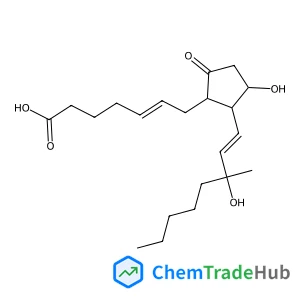
(5Z,11alpha,13E,15R)-11,15-Dihydroxy-15-methyl-9-oxoprosta-5,13-dien-1-oic acid
CAS Number:
55028-70-1
Molecular Formula:
C21H34O5
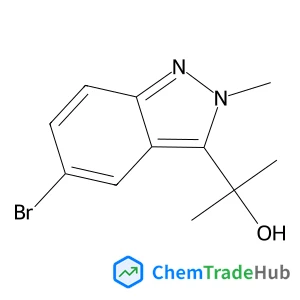
2-(5-Bromo-2-methyl-2H-indazol-3-yl)-2-propanol
CAS Number:
1823787-20-7
Molecular Formula:
C11H13BrN2O
methyl]-N,2-dimethyl-2-propanesulfinamide structure](https://static.chemtradehub.com/structs/256/2565792-50-7-8a26.webp "N-[(R)-[3-(Benzyloxy)-2-(dicyclohexylphosphino)phenyl](phenyl)methyl]-N,2-dimethyl-2-propanesulfinamide structure")
N-[(R)-[3-(Benzyloxy)-2-(dicyclohexylphosphino)phenyl](phenyl)methyl]-N,2-dimethyl-2-propanesulfinamide
CAS Number:
2565792-50-7
Molecular Formula:
C37H50NO2PS
![1-{[5-(4,4,5,5-Tetramethyl-1,3,2-dioxaborolan-2-yl)-2-thienyl]methyl}piperidine structure](https://static.chemtradehub.com/structs/121/1218790-44-3-baef.webp "1-{[5-(4,4,5,5-Tetramethyl-1,3,2-dioxaborolan-2-yl)-2-thienyl]methyl}piperidine structure")
1-{[5-(4,4,5,5-Tetramethyl-1,3,2-dioxaborolan-2-yl)-2-thienyl]methyl}piperidine
CAS Number:
1218790-44-3
Molecular Formula:
C16H26BNO2S
Recommended Suppliers



Disclaimer
This page provides academic journal information for reference and research purposes only. We are not affiliated with any journal publishers and do not handle publication submissions. For publication-related inquiries, please contact the respective journal publishers directly.
If you notice any inaccuracies in the information displayed, please contact us at support@chemtradehub.com. We will promptly review and address your concerns.