












Surface-initiated SET living radical polymerisation for the synthesis of silica–polymer core–shell nanoparticles
Literature Information
Publication Date
2016-09-07
DOI
10.1039/C6PY01290F
Impact Factor
5.582
Authors
Jessica Tom, Kohji Ohno
View Original
Abstract
We report the use of surface-initiated single-electron transfer living radical polymerisation (SI SET-LRP) to prepare inorganic–organic core–shell nanoparticles with functional grafted chains of high molecular weight. The potential of SI SET-LRP is demonstrated by the preparation of a series of silica–polymer core–shell materials from a silica nanoparticle template bearing a bromo ester initiating group in the presence of a free initiator, with detailed kinetic investigations using methyl acrylate and tert-butyl acrylate. Under optimised polymerisation conditions, concentrated polymer brushes with grafting densities as high as 0.8 chains per nm2 and relatively high molecular weight polymer grafts (degree of polymerisation, DPn, up to 1000) were achieved whilst employing a heterogeneous copper(0) wire catalyst at low polymerisation temperatures. Under optimal conditions, the polymer shell grows similarly to the free polymer with increasing monomer conversion to produce well-defined monodisperse particles with a narrow size distribution. The particle uniformity results in the formation of particle assemblies that display long-range 2D and 3D order, as characterised by electron microscopy.
Recommended Journals
Related Literature
Bromobis(triphenylphosphine)(N-succinimide)palladium(ii) as a novel catalyst for Stille cross-coupling reactions
Catherine M. Crawforth, Suzanne Burling, Ian J. S. Fairlamb, Richard J. K. Taylor, Adrian C. Whitwood
2003-07-28
Communication
DOI: 10.1039/B304960D
Concise total synthesis of the aporphine alkaloid 7,7′-bisdehydro-O-methylisopiline by an InCl3 mediated cycloisomerization reaction
Alois Fürstner, Victor Mamane
2003-07-22
Communication
DOI: 10.1039/B306880C
Shape-persistent arylene ethynylene macrocycles: syntheses and supramolecular chemistry
Dahui Zhao, Jeffrey S. Moore
2002-11-15
Feature Article
DOI: 10.1039/B207442G
A new type of three-dimensional framework constructed from dodecanuclear cadmium(ii) macrocycles‡
Ruihu Wang, Maochun Hong, Junhua Luo, Rong Cao, Jiabao Weng
2003-03-24
Communication
DOI: 10.1039/B212425D
“The splice is right”: how protein splicing is opening new doors in protein science
Edmund C. Schwartz, Tom W. Muir, Amy B. Tyszkiewicz
2003-07-17
Focus
DOI: 10.1039/B304989M
First generation of pentazole (HN5, pentazolic acid), the final azole, and a zinc pentazolate salt in solution: A new N-dearylation of 1-(p-methoxyphenyl) pyrazoles, a 2-(p-methoxyphenyl) tetrazole and application of the methodology to 1-(p-methoxyphenyl) pentazole
R. N. Butler, John C. Stephens, Luke A. Burke
2003-03-18
Communication
DOI: 10.1039/B301491F
New synthetic route for organic polyoxometallic clusters: synthetic and structural investigations on the first dumb-bell shaped polyoxozirconium hydroxide with the [Zr9(μ5-O)2(μ3-O)4(μ-O)4(μ-OH)8] core structure
Guangcai Bai, Qingjun Ma, Herbert W. Roesky, Denis Vidovic, Regine Herbst-Irmer
2003-03-05
Communication
DOI: 10.1039/B212281B
Total synthesis of (±)-dihydrospiniferin-1 via a polyfluoro alkanosulfonyl fluoride induced tandem carbonium ion rearrangement reaction
Ling Chen, Kai Ding, Wei-Sheng Tian
2003-02-28
Communication
DOI: 10.1039/B300016H
Thermolysis of fluorinated cycloalkylidene fulgides yields a new class of photochromic compounds
Mason A. Wolak, Nathan B. Gillespie, Robert R. Birge, Watson J. Lees
2003-03-27
Communication
DOI: 10.1039/B300010A
A mono-TTF-annulated porphyrin as a fluorescence switch
Hongchao Li, Jan O. Jeppesen, Eric Levillain, Jan Becher
2003-02-27
Communication
DOI: 10.1039/B212456D
You might also like
Compound Q&A
What precautions should be taken when handling 2-Methyl-2-propanyl 5-amino-2-thiophenecarboxylate (CAS: 1498311-57-1)?
When handling 2-Methyl-2-propanyl 5-amino-2-thiophenecarboxylate (CAS: 1498311-5...
1498311-57-12-Methyl-2-propanyl ...
Compound Q&A
What are the physical and chemical properties of 5-Bromo-1,2-dichloro-3-fluorobenzene (CAS: 1000572-93-9)?
5-Bromo-1,2-dichloro-3-fluorobenzene (CAS: 1000572-93-9) is a crystalline solid ...
1000572-93-95-Bromo-1,2-dichloro...
Compound Q&A
How should (2R)-2-Amino-2-(4-bromophenyl)ethanol (CAS: 354153-64-3) be stored?
(2R)-2-Amino-2-(4-bromophenyl)ethanol (CAS: 354153-64-3) should be stored in a c...
354153-64-3(2R)-2-Amino-2-(4-br...
Compound Q&A
What regulatory guidelines apply to Methyl 4-(aminomethyl)tetrahydro-2H-pyran-4-carboxylate hydrochloride (CAS: 362707-24-2)?
Methyl 4-(aminomethyl)tetrahydro-2H-pyran-4-carboxylate hydrochloride (CAS: 3627...
362707-24-2Methyl 4-(aminomethy...
Compound Q&A
What are the main uses of 1,4-dimethyl-1H-pyrazole-5-sulfonyl chloride (CAS: 1174834-52-6)?
1,4-Dimethyl-1H-pyrazole-5-sulfonyl chloride is primarily used as an intermediat...
1174834-52-61,4-dimethyl-1H-pyra...
Compound Q&A
Is Dinaphtho[1,2-b:2',1'-d]furan (CAS: 239-69-0) safe?
Dinaphtho[1,2-b:2',1'-d]furan is generally safe when handled with appropriate pe...
239-69-0Dinaphtho[1,2-b:2',1...
Compound Q&A
What is the market or research trend for 7-Methyl-7,9-dihydro-1H-purine-2,6,8(3H)-trione (CAS: 612-37-3)?
The market for 7-Methyl-7,9-dihydro-1H-purine-2,6,8(3H)-trione (CAS: 612-37-3) i...
612-37-37-Methyl-7,9-dihydro...
Compound Q&A
What are the physical and chemical properties of 2-(4-Chlorophenyl)malonaldehyde (CAS: 205676-17-1)?
2-(4-Chlorophenyl)malonaldehyde (CAS: 205676-17-1) is a colorless or light yello...
205676-17-12-(4-Chlorophenyl)ma...
Compound Q&A
How is 2-Methylchrysene (CAS: 3351-32-4) typically synthesized?
2-Methylchrysene (CAS: 3351-32-4) is typically synthesized via the reaction of c...
3351-32-42-Methylchrysene
Compound Q&A
Is N-(6-aminopyrimidin-4-yl)acetamide (CAS: 89533-23-3) safe?
N-(6-aminopyrimidin-4-yl)acetamide (CAS: 89533-23-3) is generally considered saf...
89533-23-3N-(6-aminopyrimidin-...
Source Journal
Polymer Chemistry

CiteScore:
8.6
Self-citation Rate:
7.3%
Articles per Year:
457
Polymer Chemistry welcomes submissions in all areas of polymer science that have a strong focus on macromolecular chemistry. Manuscripts may cover a broad range of fields, yet no direct application focus is required.
Recommended Compounds
![3-[7-Amino-3-(3-pyridinyl)pyrazolo[1,5-a]pyrimidin-6-yl]phenol structure](https://static.chemtradehub.com/structs/861/861249-77-6-025b.webp "3-[7-Amino-3-(3-pyridinyl)pyrazolo[1,5-a]pyrimidin-6-yl]phenol structure")
3-[7-Amino-3-(3-pyridinyl)pyrazolo[1,5-a]pyrimidin-6-yl]phenol
CAS Number:
861249-77-6
Molecular Formula:
C17H13N5O
![1-{[5-(4,4,5,5-Tetramethyl-1,3,2-dioxaborolan-2-yl)-2-thienyl]methyl}piperidine structure](https://static.chemtradehub.com/structs/121/1218790-44-3-baef.webp "1-{[5-(4,4,5,5-Tetramethyl-1,3,2-dioxaborolan-2-yl)-2-thienyl]methyl}piperidine structure")
1-{[5-(4,4,5,5-Tetramethyl-1,3,2-dioxaborolan-2-yl)-2-thienyl]methyl}piperidine
CAS Number:
1218790-44-3
Molecular Formula:
C16H26BNO2S
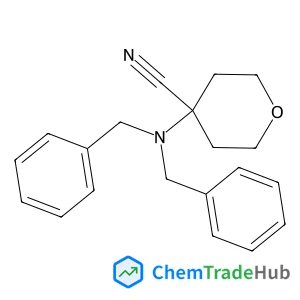
4-(Dibenzylamino)tetrahydro-2H-pyran-4-carbonitrile
CAS Number:
1630906-81-8
Molecular Formula:
C20H22N2O
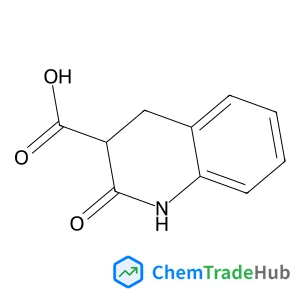
2-Oxo-1,2,3,4-tetrahydro-3-quinolinecarboxylic acid
CAS Number:
246867-17-4
Molecular Formula:
C10H9NO3
Recommended Suppliers




Disclaimer
This page provides academic journal information for reference and research purposes only. We are not affiliated with any journal publishers and do not handle publication submissions. For publication-related inquiries, please contact the respective journal publishers directly.
If you notice any inaccuracies in the information displayed, please contact us at support@chemtradehub.com. We will promptly review and address your concerns.