












Simultaneous utilization of a bifunctional ruthenium complex as an efficient catalyst for RAFT controlled photopolymerization and a sensing probe for the facile fabrication of an ECL platform
Literature Information
Publication Date
2016-08-29
DOI
10.1039/C6PY01016D
Impact Factor
5.582
Authors
Tao Chen, Yuanhong Xu, Zhi Peng, Aihua Li, Jingquan Liu
View Original
Abstract
Ruthenium (Ru)-complex (Ru(bpy)32+) catalyzed reversible addition–fragmentation chain transfer (RAFT) photopolymerization is an attractive technique for preparing polymer-functionalized biomaterials because of its gentle reaction conditions. Until now, negatively charged polymers prepared by this polymerization method have been seldom reported, which should be due to the difficulty in removing the positively charged catalyst Ru(bpy)32+ from the negatively-charged polymer owing to the strong electrostatic attraction between them. However, the difficulty in removing Ru(bpy)32+ from the negatively charged polymer should not always be regarded as just a shortcoming, on the contrary, it can be utilized as an advantage for developing a stable and efficient solid-state electrogenerated chemiluminescence (ECL) sensor. Herein, pyrene-functionalized poly(sodium p-styrene sulfonate) (PSS) was successfully synthesized by RAFT photopolymerization catalyzed via the Ru-complex based photoredox catalyst (Ru(bpy)32+) under visible light (λ = 460 nm). It turned out to be a well-controlled RAFT polymerization as evidenced by 1H NMR and gel permeation chromatography (GPC) analyses. Based on the stable electrostatic attraction of Ru(bpy)32+ with PSS and a non-covalent π–π stacking interaction between the pyrene moiety and the highly oriented pyrolytic graphite surface, a stable and efficient solid-state ECL sensor was successfully fabricated. The as-proposed sensor was investigated using tripropylamine as a representative analyte and a low detection limit of 0.1 nM (S/N ≥ 3) was reached. It also exhibited excellent reproducibility (relative standard deviations of 0.56% for 112 continuous cycles) and long-term stability (about 90% of its preliminary ECL intensity can be retained after intermittent use over a 90-day period).
Related Literature
Highly effective ferric hydroxide supported gold catalyst for selective oxidation of CO in the presence of H2
Botao Qiao, Youquan Deng
2003-07-28
Communication
DOI: 10.1039/B307181B
Selective synthesis of conformationally restricted mono-cyclopentadienyl titanium(iv) complexes of p-tBu-calix[6]arene
Antonella J. Petrella, Nicholas K. Roberts, Donald C. Craig, Colin L. Raston, Robert N. Lamb
2003-03-18
Communication
DOI: 10.1039/B301075A
Enantio-differentiating catalytic oxidation by a biomimetic trinuclear copper complex containing l-histidine residues
Laura Santagostini, Michele Gullotti, Roberto Pagliarin, Enrico Monzani, Luigi Casella
2003-07-28
Communication
DOI: 10.1039/B307349A
ZnS–Zn nanocables and ZnS nanotubes
Ying-Chun Zhu, Yoshio Bando, Yoichiro Uemura
2003-02-28
Communication
DOI: 10.1039/B300249G
Silicon, germanium, tin and lead analogues of acetylenes
2003-07-18
Feature Article
DOI: 10.1039/B212224C
In situFTIR studies on the electrochemical reduction of halogenated phenols
2003-03-26
Communication
DOI: 10.1039/B212647H
Solvent-dependent 44 square grid and 64.82 NbO frameworks formed by Cu(Pyac)2 (bis[3-(4-pyridyl)pentane-2,4-dionato]copper(ii))
Banglin Chen, Frank R. Fronczek, Andrew W. Maverick
2003-07-28
Communication
DOI: 10.1039/B305457H
Synthesis of the aminocyclopentitol moieties of the hopanoids of Zymomonas mobilis and ‘Anacystis montana’
Jose Luis Chiara, Isabel Storch de Gracia, Ágatha Bastida
2003-06-20
Communication
DOI: 10.1039/B304576E
Side chain-directed assembly of triangular molecular panels into a tetrahedron vs. open cone
Michito Yoshizawa, Muneki Nagao, Kazuhiko Umemoto, Kumar Biradha, Makoto Fujita, Shigeru Sakamoto, Kentaro Yamaguchi
2003-07-01
Communication
DOI: 10.1039/B305129C
Synthesis, separation, and isomer-dependent packing in two dimensions—detected by scanning tunnelling microscopy—of a TTF derivative
Elba Gomar-Nadal, Mohamed M. S. Abdel-Mottaleb, Steven De Feyter, Jaume Veciana, Concepció Rovira, David B. Amabilino, Frans C. De Schryver
2003-03-10
Communication
DOI: 10.1039/B300731F
You might also like
Compound Q&A
What precautions should be taken when handling 2-Methyl-2-propanyl 5-amino-2-thiophenecarboxylate (CAS: 1498311-57-1)?
When handling 2-Methyl-2-propanyl 5-amino-2-thiophenecarboxylate (CAS: 1498311-5...
1498311-57-12-Methyl-2-propanyl ...
Compound Q&A
What are the physical and chemical properties of 5-Bromo-1,2-dichloro-3-fluorobenzene (CAS: 1000572-93-9)?
5-Bromo-1,2-dichloro-3-fluorobenzene (CAS: 1000572-93-9) is a crystalline solid ...
1000572-93-95-Bromo-1,2-dichloro...
Compound Q&A
How should (2R)-2-Amino-2-(4-bromophenyl)ethanol (CAS: 354153-64-3) be stored?
(2R)-2-Amino-2-(4-bromophenyl)ethanol (CAS: 354153-64-3) should be stored in a c...
354153-64-3(2R)-2-Amino-2-(4-br...
Compound Q&A
What regulatory guidelines apply to Methyl 4-(aminomethyl)tetrahydro-2H-pyran-4-carboxylate hydrochloride (CAS: 362707-24-2)?
Methyl 4-(aminomethyl)tetrahydro-2H-pyran-4-carboxylate hydrochloride (CAS: 3627...
362707-24-2Methyl 4-(aminomethy...
Compound Q&A
What are the main uses of 1,4-dimethyl-1H-pyrazole-5-sulfonyl chloride (CAS: 1174834-52-6)?
1,4-Dimethyl-1H-pyrazole-5-sulfonyl chloride is primarily used as an intermediat...
1174834-52-61,4-dimethyl-1H-pyra...
Compound Q&A
Is Dinaphtho[1,2-b:2',1'-d]furan (CAS: 239-69-0) safe?
Dinaphtho[1,2-b:2',1'-d]furan is generally safe when handled with appropriate pe...
239-69-0Dinaphtho[1,2-b:2',1...
Compound Q&A
What is the market or research trend for 7-Methyl-7,9-dihydro-1H-purine-2,6,8(3H)-trione (CAS: 612-37-3)?
The market for 7-Methyl-7,9-dihydro-1H-purine-2,6,8(3H)-trione (CAS: 612-37-3) i...
612-37-37-Methyl-7,9-dihydro...
Compound Q&A
What are the physical and chemical properties of 2-(4-Chlorophenyl)malonaldehyde (CAS: 205676-17-1)?
2-(4-Chlorophenyl)malonaldehyde (CAS: 205676-17-1) is a colorless or light yello...
205676-17-12-(4-Chlorophenyl)ma...
Compound Q&A
How is 2-Methylchrysene (CAS: 3351-32-4) typically synthesized?
2-Methylchrysene (CAS: 3351-32-4) is typically synthesized via the reaction of c...
3351-32-42-Methylchrysene
Compound Q&A
Is N-(6-aminopyrimidin-4-yl)acetamide (CAS: 89533-23-3) safe?
N-(6-aminopyrimidin-4-yl)acetamide (CAS: 89533-23-3) is generally considered saf...
89533-23-3N-(6-aminopyrimidin-...
Source Journal
Polymer Chemistry

CiteScore:
8.6
Self-citation Rate:
7.3%
Articles per Year:
457
Polymer Chemistry welcomes submissions in all areas of polymer science that have a strong focus on macromolecular chemistry. Manuscripts may cover a broad range of fields, yet no direct application focus is required.
Recommended Compounds

(5Z,11alpha,13E,15R)-11,15-Dihydroxy-15-methyl-9-oxoprosta-5,13-dien-1-oic acid
CAS Number:
55028-70-1
Molecular Formula:
C21H34O5
![1-{[5-(4,4,5,5-Tetramethyl-1,3,2-dioxaborolan-2-yl)-2-thienyl]methyl}piperidine structure](https://static.chemtradehub.com/structs/121/1218790-44-3-baef.webp "1-{[5-(4,4,5,5-Tetramethyl-1,3,2-dioxaborolan-2-yl)-2-thienyl]methyl}piperidine structure")
1-{[5-(4,4,5,5-Tetramethyl-1,3,2-dioxaborolan-2-yl)-2-thienyl]methyl}piperidine
CAS Number:
1218790-44-3
Molecular Formula:
C16H26BNO2S
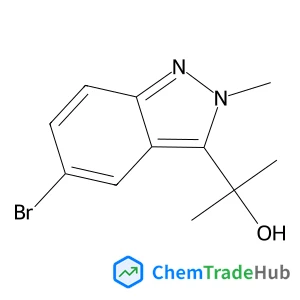
2-(5-Bromo-2-methyl-2H-indazol-3-yl)-2-propanol
CAS Number:
1823787-20-7
Molecular Formula:
C11H13BrN2O
![3-(benzotriazol-1-yl)-N-[[2-[(3-bromophenyl)methoxy]phenyl]methylideneamino]propanamide structure](https://static.chemtradehub.com/structs/559/5595-78-8-0a32.webp "3-(benzotriazol-1-yl)-N-[[2-[(3-bromophenyl)methoxy]phenyl]methylideneamino]propanamide structure")
3-(benzotriazol-1-yl)-N-[[2-[(3-bromophenyl)methoxy]phenyl]methylideneamino]propanamide
CAS Number:
5595-78-8
Molecular Formula:
C32H52O2
Recommended Suppliers




Disclaimer
This page provides academic journal information for reference and research purposes only. We are not affiliated with any journal publishers and do not handle publication submissions. For publication-related inquiries, please contact the respective journal publishers directly.
If you notice any inaccuracies in the information displayed, please contact us at support@chemtradehub.com. We will promptly review and address your concerns.