












Quantitative structure determination of adsorbed formate and surface hydroxyls on Fe3O4(001)
Literature Information
Publication Date
2021-12-13
DOI
10.1039/D1CP04241F
Impact Factor
3.676
Authors
D. J. Payne, T.-L. Lee, D. A. Duncan
View Original
Abstract
Using the chemically specific techniques of normal incidence X-ray standing waves and photoelectron diffraction, we have investigated the dissociative adsorption of formic acid on the Fe3O4(001) surface, specifically probing the local structures of both the adsorbed formate and resulting surface hydroxyl. Using model independent direct methods, we reinforce the observations of a previous surface X-ray diffraction study that the formate molecule adsorbs with both oxygens atop octahedrally coordinated surface Fe cations and that ∼60% of the formate is adsorbed in the so called tet site. We additionally determine, for the first time, that the surface hydroxyl species are found at the so called int site. This confirms previous DFT predictions and reinforces the pivotal role the surface hydroxyl plays in lifting the subsurface cation vacancy termination of the Fe3O4(001) surface.
Related Literature
A ring cycle: studies of heterometallic wheels
Marco Affronte, Richard E. P. Winpenny
2007-02-02
Feature Article
DOI: 10.1039/B615543J
Asymmetric transfer hydrogenation over Ru–TsDPEN catalysts supported on siliceous mesocellular foam
Xiaohua Huang
2007-02-08
Communication
DOI: 10.1039/B615564B
Two-photon degradable supramolecular assemblies of linear-dendritic copolymers
Justin L. Mynar, Andrew P. Goodwin, Joel A. Cohen, Yingzhong Ma, Graham R. Fleming, Jean M. J. Fréchet
2007-03-15
Communication
DOI: 10.1039/B701681F
A new chiral diiron catalyst for enantioselective epoxidation
Caroline Marchi-Delapierre, Adeline Jorge-Robin, Aurore Thibon, Stéphane Ménage
2006-12-19
Communication
DOI: 10.1039/B616172C
Enantioselective catalytic syntheses of α-branched chiral amines
Stefan Bräse, Thomas Baumann, Stefan Dahmen, Henning Vogt
2007-01-30
Feature Article
DOI: 10.1039/B611619A
Photoinduced reduction of catalytically and biologically active Ru(ii)bisterpyridine–cytochrome c bioconjugates
Joshua R. Peterson, Trevor A. Smith, Pall Thordarson
2007-04-13
Communication
DOI: 10.1039/B702996A
Synthesis and characterization of π-extended bowl-shaped π-conjugated molecules‡
Toru Amaya, Koichi Mori, Hsyueh-Liang Wu, Satoshi Ishida, Jun-ichi Nakamura, Kazuhiko Murata, Toshikazu Hirao
2007-04-18
Communication
DOI: 10.1039/B701322A
Fluorescent dyes of the esculetin and alizarin families respond to zinc ions ratiometrically
Lu Zhang, Shen Dong, Lei Zhu
2007-02-19
Communication
DOI: 10.1039/B618413H
57Fe Mössbauer spectroscopy predicts superstructure for K0.08[CuII(N,N′app)Cl]2[FeIII(CN)6]·0.92H3O·3H2O
Uday Mukhopadhyay, C. Matthias Grunert, Joachim Kusz, Sergey Reiman, P. Gütlich, Ivan Bernal
2007-03-07
Communication
DOI: 10.1039/B615130B
You might also like
Compound Q&A
What precautions should be taken when handling 2-Chloro-1,2-bis(4-methylphenyl)ethanone (CAS: 71193-32-3)?
When handling 2-Chloro-1,2-bis(4-methylphenyl)ethanone (CAS: 71193-32-3), it is ...
71193-32-32-Chloro-1,2-bis(4-m...
Compound Q&A
What industries use 4-Ethoxy-3-(5-methyl-4-oxo-7-propyl-1,4-dihydroimidazo[5,1-f][1,2,4]triazin-2-yl)benzenesulfonyl chloride (CAS: 224789-26-8)?
4-Ethoxy-3-(5-methyl-4-oxo-7-propyl-1,4-dihydroimidazo[5,1-f][1,2,4]triazin-2-yl...
224789-26-84-Ethoxy-3-(5-methyl...
Compound Q&A
How should Methyl 3-Oxo-4-Androsten-17-Carboxylate (CAS: 2681-55-2) be stored?
Methyl 3-Oxo-4-Androsten-17-Carboxylate (CAS: 2681-55-2) should be stored in a c...
2681-55-2Methyl 3-Oxo-4-Andro...
Compound Q&A
What are the main uses of (R)-3-Amino-4-(3-hexylphenylamino)-4-oxobutylphosphonic acid (CAS: 909725-61-7)?
(R)-3-Amino-4-(3-hexylphenylamino)-4-oxobutylphosphonic acid is primarily used i...
909725-61-7(R)-3-Amino-4-(3-hex...
Compound Q&A
What regulatory guidelines apply to 2-Methyl-2-propanyl 3-amino-3-carbamoyl-1-azetidinecarboxylate (CAS: 1254120-14-3)?
2-Methyl-2-propanyl 3-amino-3-carbamoyl-1-azetidinecarboxylate (CAS: 1254120-14-...
1254120-14-32-Methyl-2-propanyl ...
Compound Q&A
Are there alternatives to (E)-4-(tert-Butoxy)-4-oxobut-2-enoic acid (CAS: 135355-96-3) in synthesis?
There are alternative reagents that can be used in synthesis instead of (E)-4-(t...
135355-96-3(E)-4-(tert-Butoxy)-...
Compound Q&A
What are the physical and chemical properties of [2-(3-Chlorophenyl)-1,3-thiazol-4-yl]methanol (CAS: 121202-20-8)?
[2-(3-Chlorophenyl)-1,3-thiazol-4-yl]methanol (CAS: 121202-20-8) is a crystallin...
121202-20-8[2-(3-Chlorophenyl)-...
Compound Q&A
What is the market or research trend for Methyl (2S)-[(4S)-2,2-dimethyl-1,3-dioxolan-4-yl]{[(4-methylphenyl)sulfonyl]oxy}acetate (CAS: 166249-17-8)?
The market and research trends for Methyl (2S)-[(4S)-2,2-dimethyl-1,3-dioxolan-4...
166249-17-8Methyl (2S)-[(4S)-2,...
Compound Q&A
What is the market or research trend for 1-Bromo-2-isocyanatoethane (CAS: 42865-19-0)?
The market for 1-Bromo-2-isocyanatoethane (CAS: 42865-19-0) is driven by its use...
42865-19-01-Bromo-2-isocyanato...
Compound Q&A
What are the main uses of 4-Nitro-D-phenylalanine hydrochloride (CAS: 147065-06-3)?
4-Nitro-D-phenylalanine hydrochloride (CAS: 147065-06-3) is primarily used in re...
147065-06-34-Nitro-D-phenylalan...
Source Journal
Physical Chemistry Chemical Physics

CiteScore:
5.5
Self-citation Rate:
10.3%
Articles per Year:
3036
Physical Chemistry Chemical Physics (PCCP) is an international journal co-owned by 19 physical chemistry and physics societies from around the world. This journal publishes original, cutting-edge research in physical chemistry, chemical physics and biophysical chemistry. To be suitable for publication in PCCP, articles must include significant innovation and/or insight into physical chemistry; this is the most important criterion that reviewers and Editors will judge against when evaluating submissions. The journal has a broad scope and welcomes contributions spanning experiment, theory, computation and data science. Topical coverage includes spectroscopy, dynamics, kinetics, statistical mechanics, thermodynamics, electrochemistry, catalysis, surface science, quantum mechanics, quantum computing and machine learning. Interdisciplinary research areas such as polymers and soft matter, materials, nanoscience, energy, surfaces/interfaces, and biophysical chemistry are welcomed if they demonstrate significant innovation and/or insight into physical chemistry. Joined experimental/theoretical studies are particularly appreciated when complementary and based on up-to-date approaches.
Recommended Compounds
![4-[2-(Trichlorosilyl)ethyl]benzenesulfonyl chloride structure](https://static.chemtradehub.com/structs/797/79793-00-3-de16.webp "4-[2-(Trichlorosilyl)ethyl]benzenesulfonyl chloride structure")
4-[2-(Trichlorosilyl)ethyl]benzenesulfonyl chloride
CAS Number:
79793-00-3
Molecular Formula:
C8H8Cl4O2SSi

3,5-Dihydroxy-4-(3-methylbutanoyl)-2,6,6-tris(3-methyl-2-buten-1-yl)-2,4-cyclohexadien-1-one
CAS Number:
468-28-0
Molecular Formula:
C26H38O4
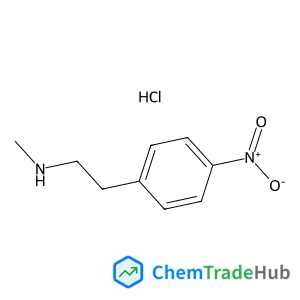
N-Methyl-2-(4-nitrophenyl)ethanamine hydrochloride (1:1)
CAS Number:
166943-39-1
Molecular Formula:
C9H13ClN2O2
Recommended Suppliers






Disclaimer
This page provides academic journal information for reference and research purposes only. We are not affiliated with any journal publishers and do not handle publication submissions. For publication-related inquiries, please contact the respective journal publishers directly.
If you notice any inaccuracies in the information displayed, please contact us at support@chemtradehub.com. We will promptly review and address your concerns.