


Mutual neutralisation of O+ with O−: investigation of the role of metastable ions in a combined experimental and theoretical study
Literature Information
Publication Date
2021-10-25
DOI
10.1039/D1CP03977F
Impact Factor
3.676
Authors
Mathias Poline, Arnaud Dochain, Stefan Rosén, Jon Grumer, MingChao Ji, Gustav Eklund, Ansgar Simonsson, Peter Reinhed, Mikael Blom, Nicholas S. Shuman, Shaun G. Ard, Albert A. Viggiano, Mats Larsson, Henrik Cederquist, Henning T. Schmidt, Henning Zettergren, Xavier Urbain, Paul S. Barklem, Richard D. Thomas
View Original
Abstract
The mutual neutralisation of O+ with O− has been studied in a double ion-beam storage ring with combined merged-beams, imaging and timing techniques. Branching ratios were measured at the collision energies of 55, 75 and 170 (± 15) meV, and found to be in good agreement with previous single-pass merged-beams experimental results at 7 meV collision energy. Several previously unidentified spectral features were found to correspond to mutual neutralisation channels of the first metastable state of the cation (O+(2Do), τ ≈ 3.6 hours), while no contributions from the second metastable state (O+(2Po), τ ≈ 5 seconds) were observed. Theoretical calculations were performed using the multi-channel Landau–Zener model combined with the anion centered asymptotic method, and gave good agreement with several experimentally observed channels, but could not describe well observed contributions from the O+(2Do) metastable state as well as channels involving the O(3s 5So) state.
Recommended Journals

Mini-Reviews in Medicinal Chemistry

Current Pharmaceutical Biotechnology

Contact Lens & Anterior Eye

Environmental Toxicology and Pharmacology

Faraday Discussions

Journal of Enzyme inhibition and Medicinal Chemistry

Journal of Medical Biochemistry

Angewandte Chemie International Edition

Green Chemistry

Physical Chemistry Chemical Physics
Related Literature
Visible light photoredox-catalyzed deoxydisulfuration of alcohols
Chaoyang Liu, Xiaoman Lin, Delie An
2023-11-22
Research Article
DOI: 10.1039/D3QO01742G
A deconstruction–reconstruction strategy to access 1-naphthol derivatives: application to the synthesis of aristolactam scaffolds
Jeong Min Bak, Moonyeong Song, Inji Shin, Hee Nam Lim
2023-10-27
Paper
DOI: 10.1039/D3OB01603J
Theoretical insights into unraveling the mechanism, selectivity patterns, and ligand effects in gold(i)-catalyzed annulations between ynamides and isoxazoles
Qing Sun, Jia-Jie Chen, Jia-Yi Liu, Wen-Qing Zhang, Xin Lu, Ren-Jie Song
2023-12-05
Research Article
DOI: 10.1039/D3QO01792C
Cu-catalyzed arylation of S-tosyl peptides with arylboronic acids
Junjie Ying, Jingrong Huang, Chenguang Liu, Fa-Jie Chen
2023-11-08
Research Article
DOI: 10.1039/D3QO01534C
Serine-mediated hydrazone ligation displaying insulin-like peptides on M13 phage pIII
Nan Zheng, Danny Hung-Chieh Chou
2023-10-24
Paper
DOI: 10.1039/D3OB01487H
Electrochemical selenocyclization of 2-ethynylanilines with diselenides: facile and efficient access to 3-selenylindoles
Mingyu Zhang, Zhenyu Luo, Xinye Tang, Linmin Yu, Jinglin Pei, Junlei Wang, Caicai Lu
2023-10-25
Paper
DOI: 10.1039/D3OB01502E
Direct access to carbamates via acylation of arylamines with dialkyl azodicarboxylates under metal-free conditions
Liangxin Fan, Mengyang He, Xinyuan Liu, Fangyu He, Lulu Wu, Guoyu Yang, Zhenliang Pan, Lijun Shi, Caixia Wang, Cuilian Xu
2023-10-31
Paper
DOI: 10.1039/D3OB01437A
Gold catalyzed spirocyclization of 1-ene-4,9- and 3-ene-1,7-diyne esters to azaspiro[4.4]nonenones and azaspiro[4.5]decadienones
Zhen Liu, Mitch Mathiew, Jichao Chen, Xiangdong Yu, Dandan Shang, Javey Khiapeng Tan, Philip Wai Hong Chan, Weidong Rao
2023-11-27
Research Article
DOI: 10.1039/D3QO01655B
You might also like
Compound Q&A
What precautions should be taken when handling 2-Methyl-2-propanyl 5-amino-2-thiophenecarboxylate (CAS: 1498311-57-1)?
When handling 2-Methyl-2-propanyl 5-amino-2-thiophenecarboxylate (CAS: 1498311-5...
1498311-57-12-Methyl-2-propanyl ...
Compound Q&A
What are the physical and chemical properties of 5-Bromo-1,2-dichloro-3-fluorobenzene (CAS: 1000572-93-9)?
5-Bromo-1,2-dichloro-3-fluorobenzene (CAS: 1000572-93-9) is a crystalline solid ...
1000572-93-95-Bromo-1,2-dichloro...
Compound Q&A
How should (2R)-2-Amino-2-(4-bromophenyl)ethanol (CAS: 354153-64-3) be stored?
(2R)-2-Amino-2-(4-bromophenyl)ethanol (CAS: 354153-64-3) should be stored in a c...
354153-64-3(2R)-2-Amino-2-(4-br...
Compound Q&A
What regulatory guidelines apply to Methyl 4-(aminomethyl)tetrahydro-2H-pyran-4-carboxylate hydrochloride (CAS: 362707-24-2)?
Methyl 4-(aminomethyl)tetrahydro-2H-pyran-4-carboxylate hydrochloride (CAS: 3627...
362707-24-2Methyl 4-(aminomethy...
Compound Q&A
What are the main uses of 1,4-dimethyl-1H-pyrazole-5-sulfonyl chloride (CAS: 1174834-52-6)?
1,4-Dimethyl-1H-pyrazole-5-sulfonyl chloride is primarily used as an intermediat...
1174834-52-61,4-dimethyl-1H-pyra...
Compound Q&A
Is Dinaphtho[1,2-b:2',1'-d]furan (CAS: 239-69-0) safe?
Dinaphtho[1,2-b:2',1'-d]furan is generally safe when handled with appropriate pe...
239-69-0Dinaphtho[1,2-b:2',1...
Compound Q&A
What is the market or research trend for 7-Methyl-7,9-dihydro-1H-purine-2,6,8(3H)-trione (CAS: 612-37-3)?
The market for 7-Methyl-7,9-dihydro-1H-purine-2,6,8(3H)-trione (CAS: 612-37-3) i...
612-37-37-Methyl-7,9-dihydro...
Compound Q&A
What are the physical and chemical properties of 2-(4-Chlorophenyl)malonaldehyde (CAS: 205676-17-1)?
2-(4-Chlorophenyl)malonaldehyde (CAS: 205676-17-1) is a colorless or light yello...
205676-17-12-(4-Chlorophenyl)ma...
Compound Q&A
How is 2-Methylchrysene (CAS: 3351-32-4) typically synthesized?
2-Methylchrysene (CAS: 3351-32-4) is typically synthesized via the reaction of c...
3351-32-42-Methylchrysene
Compound Q&A
Is N-(6-aminopyrimidin-4-yl)acetamide (CAS: 89533-23-3) safe?
N-(6-aminopyrimidin-4-yl)acetamide (CAS: 89533-23-3) is generally considered saf...
89533-23-3N-(6-aminopyrimidin-...
Source Journal
Physical Chemistry Chemical Physics
CiteScore:
5.5
Self-citation Rate:
10.3%
Articles per Year:
3036
Physical Chemistry Chemical Physics (PCCP) is an international journal co-owned by 19 physical chemistry and physics societies from around the world. This journal publishes original, cutting-edge research in physical chemistry, chemical physics and biophysical chemistry. To be suitable for publication in PCCP, articles must include significant innovation and/or insight into physical chemistry; this is the most important criterion that reviewers and Editors will judge against when evaluating submissions. The journal has a broad scope and welcomes contributions spanning experiment, theory, computation and data science. Topical coverage includes spectroscopy, dynamics, kinetics, statistical mechanics, thermodynamics, electrochemistry, catalysis, surface science, quantum mechanics, quantum computing and machine learning. Interdisciplinary research areas such as polymers and soft matter, materials, nanoscience, energy, surfaces/interfaces, and biophysical chemistry are welcomed if they demonstrate significant innovation and/or insight into physical chemistry. Joined experimental/theoretical studies are particularly appreciated when complementary and based on up-to-date approaches.
Recommended Compounds
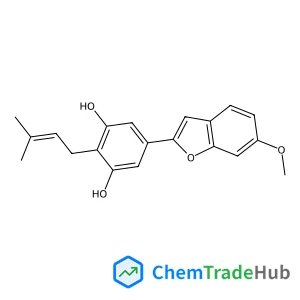
5-(6-Methoxy-1-benzofuran-2-yl)-2-(3-methyl-2-buten-1-yl)-1,3-benzenediol
CAS Number:
1017277-40-5
Molecular Formula:
C20H20O4
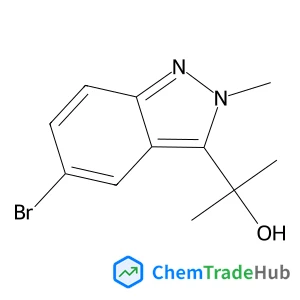
2-(5-Bromo-2-methyl-2H-indazol-3-yl)-2-propanol
CAS Number:
1823787-20-7
Molecular Formula:
C11H13BrN2O
Recommended Suppliers







Disclaimer
This page provides academic journal information for reference and research purposes only. We are not affiliated with any journal publishers and do not handle publication submissions. For publication-related inquiries, please contact the respective journal publishers directly.
If you notice any inaccuracies in the information displayed, please contact us at support@chemtradehub.com. We will promptly review and address your concerns.