












Emergence of carbon nanoscrolls from single walled carbon nanotubes: an oxidative route
Literature Information
Publication Date
2021-11-10
DOI
10.1039/D1CP03945H
Impact Factor
3.676
Authors
S. Reshmi, Girish M. Gouda
View Original
Abstract
Carbon nanoscrolls (CNS), a one dimensional (1D) helical form of carbon, have received enormous attention recently due to their unique structure, superior properties and potential applications. In this work, radial merging of HiPCO single walled nanotube (SWNT) bundles and emergence of CNS are reported following a reflux action involving wet oxidation, HCl washing and annealing at 900 °C. We observe macroscopic quantities of graphene sheets (GS) in the post-treated sample and beautiful manifestation of curling and folding of the GS into CNS. Here, a simple solution based oxidative route for successful merging and exfoliation of SWNT bundles and subsequent formation of CNS are demonstrated and discussed in view of Fourier transform infrared (FTIR) spectroscopy, X-ray photoelectron spectroscopy (XPS) and transmission electron microscopy (TEM) studies. Direct evidence of emergence of CNS from SWNTs via synthesis of GS through a simple oxidative method is reported for the first time.
Related Literature
Quantum efficiency of the photo-induced electronic transfer in dye–TiO2 complexes
2018-10-05
Paper
DOI: 10.1039/C8CP04625E
CAl3X (X = B/Al/Ga/In/Tl) with 16 valence electrons: can planar tetracoordinate carbon be stable?
Hai-feng Zheng, Shuang Yu, Tian-ding Hu, Jing Xu, Yi-hong Ding
2018-10-09
Paper
DOI: 10.1039/C8CP04774J
Magnetic studies of layer-by-layer assembled polyvinyl alcohol/iron oxide nanofilms
Ewa Mosiniewicz-Szablewska, Antonia R. Clavijo, Ana P. O. R. Castilho, Leonardo G. Paterno, Jarosław Więckowski, Maria A. G. Soler
2018-09-28
Paper
DOI: 10.1039/C8CP05404E
Extrapolation of high-order correlation energies: the WMS model
Yan Zhao, Lixue Xia, Xiaobin Liao, Qiu He, Maria X. Zhao, Donald G. Truhlar
2018-10-18
Paper
DOI: 10.1039/C8CP04973D
New tricks for old dogs: improving the accuracy of biomolecular force fields by pair-specific corrections to non-bonded interactions
Aleksei Aksimentiev
2018-02-26
Perspective
DOI: 10.1039/C7CP08185E
Assignment of photoelectron spectra of intramolecular silicon complexes: 1-vinyl- and 1-phenylsilatranes
Elena F. Belogolova, Evgeniya P. Doronina, Valery F. Sidorkin
2018-09-28
Paper
DOI: 10.1039/C8CP04582H
Static and dynamic properties of a semiflexible polymer in a crowded environment with randomly distributed immobile nanoparticles
Dessalegne A. Tsehay
2018-03-12
Paper
DOI: 10.1039/C7CP08341F
You might also like
Compound Q&A
What are the main uses of 1-(3-Aminophenyl)-3-[(3R)-1-(3,3-dimethyl-2-oxobutyl)-2-oxo-5-(2-pyridinyl)-2,3-dihydro-1H-1,4-benzodiazepin-3-yl]urea (CAS: 155412-88-7)?
This compound is mainly used as an intermediate in the synthesis of antipsychoti...
155412-88-71-(3-Aminophenyl)-3-...
Compound Q&A
How should waste containing 1-(D-Ribofuranosyl)-1,4-dihydro-3-pyridinecarboxamide (CAS: 19132-12-8) be handled?
Waste containing 1-(D-Ribofuranosyl)-1,4-dihydro-3-pyridinecarboxamide (CAS: 191...
19132-12-81-(D-Ribofuranosyl)-...
Compound Q&A
What regulatory guidelines apply to 2-Methyl-2-propanyl 3-bromo-3-(hydroxymethyl)-1-azetidinecarboxylate (CAS: 2007919-81-3)?
2-Methyl-2-propanyl 3-bromo-3-(hydroxymethyl)-1-azetidinecarboxylate (CAS: 20079...
2007919-81-32-Methyl-2-propanyl ...
Compound Q&A
What is N-(4-Chloro-2-pyridinyl)acetamide (CAS: 245056-66-0)?
N-(4-Chloro-2-pyridinyl)acetamide (CAS: 245056-66-0) is a chemical compound with...
245056-66-0N-(4-Chloro-2-pyridi...
Compound Q&A
What is 5-Chloro-2-hydroxybenzoic acid (CAS: 321-14-2)?
5-Chloro-2-hydroxybenzoic acid, also known as 5-chlorosalicylic acid, is an arom...
321-14-25-Chloro-2-hydroxybe...
Compound Q&A
What precautions should be taken when handling 1,1-Dichloro-1-fluoroethane (CAS: 1717-00-6)?
When handling 1,1-Dichloro-1-fluoroethane (CAS: 1717-00-6), it is important to u...
1717-00-61,1-Dichloro-1-fluor...
Compound Q&A
What are the physical and chemical properties of Fmoc-(2S,3R)-3-phenylpyrrolidine-2-carboxylic acid (CAS: 281655-32-1)?
Fmoc-(2S,3R)-3-phenylpyrrolidine-2-carboxylic acid is a white crystalline solid ...
281655-32-1Fmoc-(2S,3R)-3-pheny...
Compound Q&A
What are the main uses of 4-Amino-5-bromo-2-pyridinecarboxylic acid (CAS: 1363381-01-4)?
4-Amino-5-bromo-2-pyridinecarboxylic acid is primarily used as a precursor in th...
1363381-01-44-Amino-5-bromo-2-py...
Compound Q&A
What precautions should be taken when handling (S)-tert-butyl 2-((2-(4-bromophenyl)-2-oxoethyl)carbamoyl)pyrrolidine-1-carboxylate (CAS: 1007881-98-2)?
Handling this compound should be done with personal protective equipment (PPE) i...
1007881-98-2(S)-tert-butyl 2-((2...
Compound Q&A
What precautions should be taken when handling 8-bromo-2,2-dimethyl-3,4-dihydro-2H-1,4-benzoxazin-3-one (CAS: 688363-73-7)?
When handling 8-bromo-2,2-dimethyl-3,4-dihydro-2H-1,4-benzoxazin-3-one, use prop...
688363-73-78-bromo-2,2-dimethyl...
Source Journal
Physical Chemistry Chemical Physics

CiteScore:
5.5
Self-citation Rate:
10.3%
Articles per Year:
3036
Physical Chemistry Chemical Physics (PCCP) is an international journal co-owned by 19 physical chemistry and physics societies from around the world. This journal publishes original, cutting-edge research in physical chemistry, chemical physics and biophysical chemistry. To be suitable for publication in PCCP, articles must include significant innovation and/or insight into physical chemistry; this is the most important criterion that reviewers and Editors will judge against when evaluating submissions. The journal has a broad scope and welcomes contributions spanning experiment, theory, computation and data science. Topical coverage includes spectroscopy, dynamics, kinetics, statistical mechanics, thermodynamics, electrochemistry, catalysis, surface science, quantum mechanics, quantum computing and machine learning. Interdisciplinary research areas such as polymers and soft matter, materials, nanoscience, energy, surfaces/interfaces, and biophysical chemistry are welcomed if they demonstrate significant innovation and/or insight into physical chemistry. Joined experimental/theoretical studies are particularly appreciated when complementary and based on up-to-date approaches.
Recommended Compounds


2-(4-Chlorophenyl)-4-(dimethylamino)-2-(2-(dimethylamino)ethyl)butanenitrile
CAS Number:
1246816-57-8
Molecular Formula:
C16H24ClN3
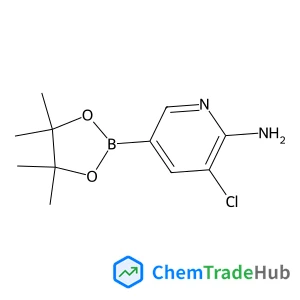
3-Chloro-5-(4,4,5,5-tetramethyl-1,3,2-dioxaborolan-2-yl)-2-pyridinamine
CAS Number:
1032758-99-8
Molecular Formula:
C11H16BClN2O2
![2,6-Di(thiophen-2-yl)dithieno[3,2-b:2',3'-d]thiophene structure](https://static.chemtradehub.com/structs/910/910788-24-8-5b70.webp "2,6-Di(thiophen-2-yl)dithieno[3,2-b:2',3'-d]thiophene structure")
2,6-Di(thiophen-2-yl)dithieno[3,2-b:2',3'-d]thiophene
CAS Number:
910788-24-8
Molecular Formula:
C16H8S5
Recommended Suppliers






Disclaimer
This page provides academic journal information for reference and research purposes only. We are not affiliated with any journal publishers and do not handle publication submissions. For publication-related inquiries, please contact the respective journal publishers directly.
If you notice any inaccuracies in the information displayed, please contact us at support@chemtradehub.com. We will promptly review and address your concerns.