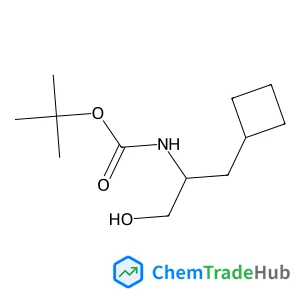
2-Methyl-2-propanyl (1-cyclobutyl-3-hydroxy-2-propanyl)carbamate
CAS Number:
816429-99-9
Molecular Formula:
C12H23NO3
Yuhang Jiang, Shangke Jia, Hao Liu, Guangwei Zhang, Xiujun Han, Ruiqin Zhang
Single-walled carbon nanotubes (SWCNTs) have evoked great interest for various luminescent applications, but the large emission heterogeneity resulting from the structural complexity of the samples seriously restricts their further development. Herein we theoretically explore the electronic structures and optical properties of phenine nanotubes (pNTs), which are typical luminescent SWCNT derivatives with determined molecular structures that have been synthesized recently (Z. Sun, K. Ikemoto, T. M. Fukunaga, T. Koretsune, R. Arita, S. Sato and H. Isobe, Science, 2019, 363, 151–155; K. Ikemoto, S. Yang, H. Naito, M. Kotani, S. Sato and H. Isobe, Nat. Commun., 2020, 11, 1807). Interestingly, pNTs are found to feature different semiconducting properties to SWCNTs, as indicated by a spatial separation trend in the HOMO and LUMO resulting from periodic structural vacancies. The HOMO–LUMO and optical gaps of pNTs depend inversely on their lengths and diameters, but diameter variation should be an ineffective method for property tuning due to its negligible influence. By contrast, chemical modifications via N doping or hydrogenation highly affect the HOMO–LUMO gaps and their distributions and greatly broaden the light absorption/emission range, and importantly, low-dose hydrogenation is predicted to be a feasible strategy to enhance luminescence. This work, by studying the fundamental photophysical properties of pNTs and making comparisons to SWCNTs, shows the promise of structural vacancy engineering and surface functionalization in acquiring multifunctional tube-like materials.
António M. Fonseca, Sara Gonçalves, Pier Parpot, Isabel C. Neves
DOI: 10.1039/B901762N
Martin A. Suhm
DOI: 10.1039/C0CP90051F
Sergey P. Laptenok, Katharine M. Mullen, Ivo H. M. van Stokkum
DOI: 10.1039/B919700A
Benjamin M. Bulheller, G. Dan Pantoş, Jeremy K. M. Sanders, Jonathan D. Hirst
DOI: 10.1039/B905187B
Simon R. Bare, Shelly D. Kelly, Bruce Ravel, Nan Greenlay, Lisa King, George E. Mickelson
DOI: 10.1039/B926621F
Valéria Moraes Longo, Maria das Graça Sampaio Costa, Alexandre Zirpole Simões, Ieda Lúcia Viana Rosa, Carlos Oliveira Paiva Santos, Juan Andrés, Elson Longo, José Arana Varela
DOI: 10.1039/B923281H
When handling 2-Methyl-2-propanyl 5-amino-2-thiophenecarboxylate (CAS: 1498311-5...
5-Bromo-1,2-dichloro-3-fluorobenzene (CAS: 1000572-93-9) is a crystalline solid ...
(2R)-2-Amino-2-(4-bromophenyl)ethanol (CAS: 354153-64-3) should be stored in a c...
Methyl 4-(aminomethyl)tetrahydro-2H-pyran-4-carboxylate hydrochloride (CAS: 3627...
1,4-Dimethyl-1H-pyrazole-5-sulfonyl chloride is primarily used as an intermediat...
Dinaphtho[1,2-b:2',1'-d]furan is generally safe when handled with appropriate pe...
The market for 7-Methyl-7,9-dihydro-1H-purine-2,6,8(3H)-trione (CAS: 612-37-3) i...
2-(4-Chlorophenyl)malonaldehyde (CAS: 205676-17-1) is a colorless or light yello...
2-Methylchrysene (CAS: 3351-32-4) is typically synthesized via the reaction of c...
N-(6-aminopyrimidin-4-yl)acetamide (CAS: 89533-23-3) is generally considered saf...

Physical Chemistry Chemical Physics (PCCP) is an international journal co-owned by 19 physical chemistry and physics societies from around the world. This journal publishes original, cutting-edge research in physical chemistry, chemical physics and biophysical chemistry. To be suitable for publication in PCCP, articles must include significant innovation and/or insight into physical chemistry; this is the most important criterion that reviewers and Editors will judge against when evaluating submissions. The journal has a broad scope and welcomes contributions spanning experiment, theory, computation and data science. Topical coverage includes spectroscopy, dynamics, kinetics, statistical mechanics, thermodynamics, electrochemistry, catalysis, surface science, quantum mechanics, quantum computing and machine learning. Interdisciplinary research areas such as polymers and soft matter, materials, nanoscience, energy, surfaces/interfaces, and biophysical chemistry are welcomed if they demonstrate significant innovation and/or insight into physical chemistry. Joined experimental/theoretical studies are particularly appreciated when complementary and based on up-to-date approaches.
![methyl 6-amino-1H-pyrrolo[2,3-b]pyridine-4-carboxylate structure](https://static.chemtradehub.com/structs/119/1190315-60-6-9d9a.webp "methyl 6-amino-1H-pyrrolo[2,3-b]pyridine-4-carboxylate structure")