












Rapid screening alloying elements for improved corrosion resistance on the Mg(0001) surface using first principles calculations
Literature Information
Publication Date
2021-11-15
DOI
10.1039/D1CP03868K
Impact Factor
3.676
Authors
Chi Zhang, Xin Li, Shuo Wang, Shijie Zhu, Shaokang Guan
View Original
Abstract
The poor corrosion resistance of Mg alloys is a major challenge for their applications. The corrosion of Mg alloys is mainly controlled by the anodic dissolution of Mg and the cathodic hydrogen evolution reaction (HER), which is closely related to the stability and the hydrogen adsorption of the Mg surface. In this work, the effects of alloying elements (As, Ge, Cd, Zn, Ga, Al, and Y) on the stability and the hydrogen adsorption of a Mg(0001) surface have been studied based on first principles calculations. We have developed a horizontally integrated approach to evaluate their effects on corrosion resistance using parameters such as the surface energy, vacancy formation energy, Bader charge, electron density distribution, and the adsorption free energy of H atom at different adsorbed sites. We found that the doped atoms could significantly change the surface atomic structure and electron transfer on the Mg surface. These behaviors modified the energy required to detach the nearest neighbors of doped atoms from the Mg surface, the adsorption free energy of H atoms, and the stable adsorption sites of H atoms on the Mg surface, which regulate the corrosion resistance of Mg alloys. Interestingly, we found that Y doping on the Mg surface increased the corrosion resistance and our new method had tremendous potential in the rapid screening of alloying elements that could improve the stability of Mg alloys and inhibit the hydrogen evolution reaction.
Related Literature
Isomer-dependent fragmentation dynamics of inner-shell photoionized difluoroiodobenzene
Cédric Bomme, Evgeny Savelyev, Hui Xiong, Rajesh Kushawaha, Rebecca Boll, Kasra Amini, Timur Osipov, David Kilcoyne, Artem Rudenko, Nora Berrah, Daniel Rolles
2017-05-11
Communication
DOI: 10.1039/C7CP01379E
Isomerization versus dissociation of phenylalanylglycyltryptophan radical cations
Xiaoyan Mu, Alan C. Hopkinson, Ivan K. Chu
2017-06-09
Paper
DOI: 10.1039/C7CP02355C
Naphthodifuran-based zigzag-type polycyclic arene with conjugated side chains for efficient photovoltaics
Hongjian Peng, Xiangfeng Luan, Liuliu Feng, Jun Yuan, Zhi-Guo Zhang, Yongfang Li, Yingping Zou
2017-05-09
Paper
DOI: 10.1039/C7CP02283B
Effects of temperature, concentration, and isomer on the hydration structure in monosaccharide solutions
Katsufumi Tomobe, Eiji Yamamoto, Masato Yasui, Kenji Yasuoka
2017-05-12
Paper
DOI: 10.1039/C7CP02392H
Vibronic quantized tunneling controlled photoinduced electron transfer in an organic solar cell subjected to an external electric field
Peng Song, Yuanzuo Li, Fengcai Ma
2017-05-30
Paper
DOI: 10.1039/C7CP02157G
Thionine–graphene oxide covalent hybrid and its interaction with light
Ewelina Krzyszkowska, Justyna Walkowiak-Kulikowska, Sven Stienen, Aleksandra Wojcik
2017-05-22
Paper
DOI: 10.1039/C7CP01267E
Heavy ligand atom induced large magnetic anisotropy in Mn(ii) complexes
Sabyasachi Roy Chowdhury, Sabyashachi Mishra
2017-06-05
Paper
DOI: 10.1039/C7CP02957H
Correction: Eu2+–Eu3+ valence transition in double, Eu-, and Na-doped PbSe from transport, magnetic, and electronic structure studies
SunPhil Kim, Yeseul Lee, Bin He, Gloria Lehr, Mercouri G. Kanatzidis, Donald T. Morelli
2017-06-12
Correction
DOI: 10.1039/C7CP90127E
Correlation and squeezing for optical transistor and intensity for router applications in Pr3+:YSO
Ghulam Abbas Khan, Changbiao Li, Faizan Raza, Noor Ahmed, Abdul Rasheed Mahesar, Yanpeng Zhang
2017-05-12
Paper
DOI: 10.1039/C7CP01884C
Factors affecting bubble size in ionic liquids
Stuart A. Brittle, Pratik Desai, William A. Zimmerman
2017-05-16
Paper
DOI: 10.1039/C7CP01725A
You might also like
Compound Q&A
What are the main uses of 1-(3-Aminophenyl)-3-[(3R)-1-(3,3-dimethyl-2-oxobutyl)-2-oxo-5-(2-pyridinyl)-2,3-dihydro-1H-1,4-benzodiazepin-3-yl]urea (CAS: 155412-88-7)?
This compound is mainly used as an intermediate in the synthesis of antipsychoti...
155412-88-71-(3-Aminophenyl)-3-...
Compound Q&A
How should waste containing 1-(D-Ribofuranosyl)-1,4-dihydro-3-pyridinecarboxamide (CAS: 19132-12-8) be handled?
Waste containing 1-(D-Ribofuranosyl)-1,4-dihydro-3-pyridinecarboxamide (CAS: 191...
19132-12-81-(D-Ribofuranosyl)-...
Compound Q&A
What regulatory guidelines apply to 2-Methyl-2-propanyl 3-bromo-3-(hydroxymethyl)-1-azetidinecarboxylate (CAS: 2007919-81-3)?
2-Methyl-2-propanyl 3-bromo-3-(hydroxymethyl)-1-azetidinecarboxylate (CAS: 20079...
2007919-81-32-Methyl-2-propanyl ...
Compound Q&A
What is N-(4-Chloro-2-pyridinyl)acetamide (CAS: 245056-66-0)?
N-(4-Chloro-2-pyridinyl)acetamide (CAS: 245056-66-0) is a chemical compound with...
245056-66-0N-(4-Chloro-2-pyridi...
Compound Q&A
What is 5-Chloro-2-hydroxybenzoic acid (CAS: 321-14-2)?
5-Chloro-2-hydroxybenzoic acid, also known as 5-chlorosalicylic acid, is an arom...
321-14-25-Chloro-2-hydroxybe...
Compound Q&A
What precautions should be taken when handling 1,1-Dichloro-1-fluoroethane (CAS: 1717-00-6)?
When handling 1,1-Dichloro-1-fluoroethane (CAS: 1717-00-6), it is important to u...
1717-00-61,1-Dichloro-1-fluor...
Compound Q&A
What are the physical and chemical properties of Fmoc-(2S,3R)-3-phenylpyrrolidine-2-carboxylic acid (CAS: 281655-32-1)?
Fmoc-(2S,3R)-3-phenylpyrrolidine-2-carboxylic acid is a white crystalline solid ...
281655-32-1Fmoc-(2S,3R)-3-pheny...
Compound Q&A
What are the main uses of 4-Amino-5-bromo-2-pyridinecarboxylic acid (CAS: 1363381-01-4)?
4-Amino-5-bromo-2-pyridinecarboxylic acid is primarily used as a precursor in th...
1363381-01-44-Amino-5-bromo-2-py...
Compound Q&A
What precautions should be taken when handling (S)-tert-butyl 2-((2-(4-bromophenyl)-2-oxoethyl)carbamoyl)pyrrolidine-1-carboxylate (CAS: 1007881-98-2)?
Handling this compound should be done with personal protective equipment (PPE) i...
1007881-98-2(S)-tert-butyl 2-((2...
Compound Q&A
What precautions should be taken when handling 8-bromo-2,2-dimethyl-3,4-dihydro-2H-1,4-benzoxazin-3-one (CAS: 688363-73-7)?
When handling 8-bromo-2,2-dimethyl-3,4-dihydro-2H-1,4-benzoxazin-3-one, use prop...
688363-73-78-bromo-2,2-dimethyl...
Source Journal
Physical Chemistry Chemical Physics

CiteScore:
5.5
Self-citation Rate:
10.3%
Articles per Year:
3036
Physical Chemistry Chemical Physics (PCCP) is an international journal co-owned by 19 physical chemistry and physics societies from around the world. This journal publishes original, cutting-edge research in physical chemistry, chemical physics and biophysical chemistry. To be suitable for publication in PCCP, articles must include significant innovation and/or insight into physical chemistry; this is the most important criterion that reviewers and Editors will judge against when evaluating submissions. The journal has a broad scope and welcomes contributions spanning experiment, theory, computation and data science. Topical coverage includes spectroscopy, dynamics, kinetics, statistical mechanics, thermodynamics, electrochemistry, catalysis, surface science, quantum mechanics, quantum computing and machine learning. Interdisciplinary research areas such as polymers and soft matter, materials, nanoscience, energy, surfaces/interfaces, and biophysical chemistry are welcomed if they demonstrate significant innovation and/or insight into physical chemistry. Joined experimental/theoretical studies are particularly appreciated when complementary and based on up-to-date approaches.
Recommended Compounds
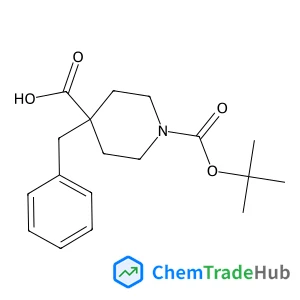
4-Benzyl-1-(tert-butoxycarbonyl)piperidine-4-carboxylic acid
CAS Number:
170838-87-6
Molecular Formula:
C18H25NO4


Recommended Suppliers






Disclaimer
This page provides academic journal information for reference and research purposes only. We are not affiliated with any journal publishers and do not handle publication submissions. For publication-related inquiries, please contact the respective journal publishers directly.
If you notice any inaccuracies in the information displayed, please contact us at support@chemtradehub.com. We will promptly review and address your concerns.