












Naphthodifuran-based zigzag-type polycyclic arene with conjugated side chains for efficient photovoltaics
Literature Information
Publication Date
2017-05-09
DOI
10.1039/C7CP02283B
Impact Factor
3.676
Authors
Hongjian Peng, Xiangfeng Luan, Liuliu Feng, Jun Yuan, Zhi-Guo Zhang, Yongfang Li, Yingping Zou
View Original
Abstract
Ladder-type conjugated structures with rigid and coplanar molecular frameworks feature longer effective conjugation, affirmative optoelectronic properties and strong intermolecular π–π interactions, which are ideal characteristics for organic photovoltaics. Here, a new “zigzag” angular-fused naphthodifuran (zNDF) based on alkoxyphenyl side chains was designed and synthesized. The distannylated zNDF building block was copolymerized with 4,7-di(5-bromothiophen-2-yl)-5,6-dioctyloxybenzo[c][1,2,5]thiadiazole and 5,8-bis(5-bromothiophen-2-yl)-2,3-bis(4-(2-ethylhexyloxy)-3-fluorophenyl)-6,7-difloroquinoxaline (Br-BT and Br-ffQx) acceptor units by Stille cross coupling reaction to form two new medium bandgap donor–acceptor polymers PzNDFP-BT and PzNDFP-ffQx, respectively. The photovoltaic properties of the copolymers blended with [6,6]-phenyl-C71-butyric acid methyl ester (PC71BM) as an electron acceptor were investigated. A 6.9% efficiency was achieved from the single device based on the PzNDFP-BT : PC71BM (1 : 1.5, w/w) blend film with a 0.25% 1,8-diiodooctane (DIO) additive, which is among the highest efficiency for zNDF-based polymer solar cells.
Related Literature
Donor–acceptor cyclopropanes as ortho-quinone methide equivalents in formal (4 + 2)-cycloaddition to alkenes
Konstantin L. Ivanov, Stanislav I. Bezzubov, Mikhail Ya. Melnikov, Ekaterina M. Budynina
2018-03-13
Paper
DOI: 10.1039/C8OB00377G
Nickel-catalyzed cascade carbonylative synthesis of N-benzoyl indoles from 2-nitroalkynes and aryl iodides
Lingyun Yao, Jun Ying
2021-10-05
Research Article
DOI: 10.1039/D1QO01284C
Highly regioselective, electrophile induced cyclizations of 2-(prop-1-ynyl)benzamides
Bhavani Shankar Chinta, Harikrishna Sanapa, Kamala Prasad Vasikarla, Beeraiah Baire
2018-04-26
Paper
DOI: 10.1039/C8OB00434J
A photoredox/nickel dual-catalytic strategy for benzylic C–H alkoxylation
Min Dong, Yuqi Jia, Wei Zhou, Jinlai Gao, Xiaoqing Lv, Fan Luo, Yongqiang Zhang, Shihui Liu
2021-10-26
Research Article
DOI: 10.1039/D1QO01421H
Synthesis of topologically constrained naphthalimide appended palladium(ii)–N-heterocyclic carbene complexes – insights into additive controlled product selectivity
Pradeep Kumar Reddy Panyam, Ramdas Sreedharan, Thirumanavelan Gandhi
2018-05-23
Paper
DOI: 10.1039/C8OB00616D
Correction: 2-Aroylquinoline-5,8-diones as potent anticancer agents displaying tubulin and heat shock protein 90 (HSP90) inhibition
Kunal Nepali, Sunil Kumar, Hsiang-Ling Huang, Fei-Chiao Kuo, Cheng-Hsin Lee, Ching-Chuan Kuo, Teng-Kuang Yeh, Yu-Hsuan Li, Jang-Yang Chang, Jing-Ping Liou, Hsueh-Yun Lee
2018-06-15
Correction
DOI: 10.1039/C8OB90080A
Rhodium-catalyzed regioselective C8-H amination of quinoline N-oxides with trifluoroacetamide at room temperature
Chang You, Tingting Yuan, Yanzhen Huang, Chao Pi, Yangjie Wu, Xiuling Cui
2018-06-04
Paper
DOI: 10.1039/C8OB01108G
Efficient enantioselective synthesis of CF2H-containing dispiro[benzo[b]thiophene-oxindole-pyrrolidine]s via organocatalytic cycloaddition
Yabo Deng, Yongzhen Li, Yalan Wang, Shuo Sun, Sichao Ma, Pengfei Jia, Wenguang Li, Kairong Wang, Wenjin Yan
2021-11-24
Research Article
DOI: 10.1039/D1QO01392K
Homolysis/mesolysis of alkoxyamines activated by chemical oxidation and photochemical-triggered radical reactions at room temperature
Gérard Audran, Mitchell T. Blyth, Michelle L. Coote, Georg Gescheidt, Micael Hardy, Jeffrey Havot, Maxence Holzritter, Samuel Jacoutot, Jean-Patrick Joly, Sylvain R. A. Marque, Tataye Moussounda Moussounda Koumba, Dmytro Neshchadin, Enzo Vaiedelich
2021-10-14
Research Article
DOI: 10.1039/D1QO01276B
You might also like
Compound Q&A
What industries use (1R,3S)-1,3-Cyclopentanediol (CAS: 16326-97-9)?
(1R,3S)-1,3-Cyclopentanediol finds applications in various industries. In the ph...
16326-97-9(1R,3S)-1,3-Cyclopen...
Compound Q&A
What precautions should be taken when handling N'-[4-(Dimethylamino)phenyl]-N,N-dimethyl-1,4-benzenediamine (CAS: 637-31-0)?
When handling N'-[4-(Dimethylamino)phenyl]-N,N-dimethyl-1,4-benzenediamine, it i...
637-31-0N'-[4-(Dimethylamino...
Compound Q&A
Are there alternatives to 5-(2,4-Difluorophenyl)-2-methoxypyrimidine (CAS: 1352318-16-1) in synthesis?
There are several alternatives to 5-(2,4-Difluorophenyl)-2-methoxypyrimidine in ...
1352318-16-15-(2,4-Difluoropheny...
Compound Q&A
What regulatory guidelines apply to 1-(3-Methoxyphenoxy)propan-2-ol (CAS: 382141-68-6)?
1-(3-Methoxyphenoxy)propan-2-ol (CAS: 382141-68-6) must comply with the Globally...
382141-68-61-(3-Methoxyphenoxy)...
Compound Q&A
Is Tetrodotoxin Citrate (CAS: 18660-81-6) safe?
Tetrodotoxin Citrate is extremely dangerous and should be handled with extreme c...
18660-81-6Tetrodotoxin Citrate
Compound Q&A
What are the main uses of 2-Methyl-2-propanyl [(1R,3S)-3-hydroxycyclopentyl]carbamate (CAS: 225641-84-9)?
2-Methyl-2-propanyl [(1R,3S)-3-hydroxycyclopentyl]carbamate (CAS: 225641-84-9) i...
225641-84-92-Methyl-2-propanyl ...
Compound Q&A
How should waste containing 4-(2-Hydroxyhexafluoroisopropyl)Benzoic Acid (CAS: 16261-80-6) be handled?
Waste containing 4-(2-Hydroxyhexafluoroisopropyl)Benzoic Acid (CAS: 16261-80-6) ...
16261-80-64-(2-Hydroxyhexafluo...
Compound Q&A
How is 2-Methyl-2-proanyl {(2S)-1-[(benzyloxy)amino]-3-hydroxy-3-methyl-1-oxo-2-butanyl}carbamate (CAS: 102507-19-7) typically synthesized?
2-Methyl-2-proanyl {(2S)-1-[(benzyloxy)amino]-3-hydroxy-3-methyl-1-oxo-2-butanyl...
102507-19-72-Methyl-2-propanyl ...
Compound Q&A
What is Benzeneethanamine, α-ethyl-, hydrochloride (1:1) (CAS: 20735-15-3)?
Benzeneethanamine, α-ethyl-, hydrochloride (1:1) is an organic compound with the...
20735-15-3Benzeneethanamine, α...
Compound Q&A
Are there alternatives to 3-{(E)-[4-(Dimethylamino)phenyl]diazenyl}benzoic acid (CAS: 20691-84-3) in synthesis?
In the synthesis of compounds similar to 3-{(E)-[4-(Dimethylamino)phenyl]diazeny...
20691-84-33-{(E)-[4-(Dimethyla...
Source Journal
Physical Chemistry Chemical Physics

CiteScore:
5.5
Self-citation Rate:
10.3%
Articles per Year:
3036
Physical Chemistry Chemical Physics (PCCP) is an international journal co-owned by 19 physical chemistry and physics societies from around the world. This journal publishes original, cutting-edge research in physical chemistry, chemical physics and biophysical chemistry. To be suitable for publication in PCCP, articles must include significant innovation and/or insight into physical chemistry; this is the most important criterion that reviewers and Editors will judge against when evaluating submissions. The journal has a broad scope and welcomes contributions spanning experiment, theory, computation and data science. Topical coverage includes spectroscopy, dynamics, kinetics, statistical mechanics, thermodynamics, electrochemistry, catalysis, surface science, quantum mechanics, quantum computing and machine learning. Interdisciplinary research areas such as polymers and soft matter, materials, nanoscience, energy, surfaces/interfaces, and biophysical chemistry are welcomed if they demonstrate significant innovation and/or insight into physical chemistry. Joined experimental/theoretical studies are particularly appreciated when complementary and based on up-to-date approaches.
Recommended Compounds
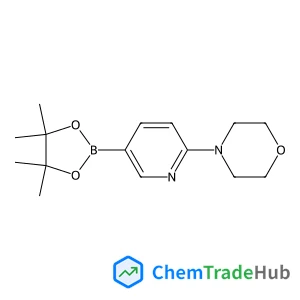
4-(5-(4,4,5,5-tetramethyl-1,3,2-dioxaborolan-2-yl)pyridin-2-yl)morpholine
CAS Number:
485799-04-0
Molecular Formula:
C15H23BN2O3
Recommended Suppliers






Disclaimer
This page provides academic journal information for reference and research purposes only. We are not affiliated with any journal publishers and do not handle publication submissions. For publication-related inquiries, please contact the respective journal publishers directly.
If you notice any inaccuracies in the information displayed, please contact us at support@chemtradehub.com. We will promptly review and address your concerns.