












The molecular mechanism behind the stabilization of insulin by choline and geranate (CAGE) ionic liquids – computational insights into oral insulin drug formulation
Literature Information
Publication Date
2021-10-21
DOI
10.1039/D1CP03349B
Impact Factor
3.676
Authors
Kandhan Palanisamy, Muthuramalingam Prakash
View Original
Abstract
Insulin is a principal hormone that is involved in the regulation of glucose levels in the blood. Oral insulin formulation is a recent development in drug delivery systems. Biocompatible choline-based ionic liquids (ILs) show promising antibacterial activity and are useful for oral and transdermal drug delivery applications. Choline and geranate (CAGE) ILs enhance the stability and oral efficacy of insulin delivery. The molecular mechanism behind insulin formulation in the oral form is at issue. In the present work, the molecular-level understanding of CAGE ILs in insulin is scrutinized by employing atomistic molecular dynamics (MD) simulations. To identify the stability of insulin in an IL medium, we have studied a series of concentration (mole fraction 0.05–1.00) of CAGE ILs with an insulin dimer. It can be well evidenced from the experimental reports that in an aqueous medium, there is a refashioning of CAGE nanostructures at 0.50 mole fraction. It is found from our calculations that the first solvation shell of insulin is readily occupied by choline and geranate ions in the presence of water. Moreover, the geranate ions strongly interacted with the water molecules and thereby, eliminating the intermolecular hydrogen bonding (H-bonding) interactions towards the insulin at 0.30–0.50 mole fraction of CAGE ILs. The most desirable 0.30–0.50 mole fraction of CAGE invigorates water-mediated H-bonding interactions with geranate ions, which also enhances the electrostatic behavior around the vicinity of the insulin dimer. These important findings can help in the development of oral insulin drug delivery and related applications.
Related Literature
Characterizing industrial catalysts using in situ XAFS under identical conditions‡
Simon R. Bare, Shelly D. Kelly, Bruce Ravel, Nan Greenlay, Lisa King, George E. Mickelson
2010-05-26
Paper
DOI: 10.1039/B926621F
Styrene oligomerization as a molecular probe reaction for zeolite acidity: a UV-Vis spectroscopy and DFT study
Inge L. C. Buurmans, Evgeny A. Pidko, Jennifer M. de Groot, Eli Stavitski, Rutger A. van Santen, Bert M. Weckhuysen
2010-05-14
Paper
DOI: 10.1039/C002442B
Water adsorption in hydrophobic MOF channels
Selvarengan Paranthaman, François-Xavier Coudert, Alain H. Fuchs
2010-06-07
Paper
DOI: 10.1039/B925074C
Incorporation and electron transfer of anthracene in pores of ZSM-5 zeolites. Effect of Brønsted acid site density
Matthieu Hureau, Alain Moissette, Séverine Marquis, Claude Brémard, Hervé Vezin
2009-05-26
Paper
DOI: 10.1039/B904010B
The formation of colloidal coppernanoparticles stabilized by zinc stearate: one-pot single-step synthesis and characterization of the core–shell particles
André Rittermeier, Shaojun Miao, Xiaoning Zhang, Maurits W. E. van den Berg, Shankhamala Kundu, Yuemin Wang, Sabine Schimpf, Elke Löffler, Roland A. Fischer, Martin Muhler
2009-07-13
Paper
DOI: 10.1039/B908034A
Electrocapillary maximum and potential of zero charge of carbon aerogel
Jürgen Biener, Dominik Kramer, Raghavan N. Viswanath, Theodore F. Baumann, Alex V. Hamza
2010-06-03
Paper
DOI: 10.1039/B916331J
Inverse freezing in molecular binary mixtures of α-cyclodextrin and 4-methylpyridine
Paolo Bartolini, Claudio Sangregorio, Andrea Taschin
2010-05-13
Paper
DOI: 10.1039/B923682A
Boron nitride nanotubes functionalized by a series of carbenes
Fenglei Cao, Wei Ren, Xianyan Xu, Yue-meng Ji, Cunyuan Zhao
2009-05-15
Paper
DOI: 10.1039/B901512D
You might also like
Compound Q&A
What precautions should be taken when handling 2-Methyl-2-propanyl 5-amino-2-thiophenecarboxylate (CAS: 1498311-57-1)?
When handling 2-Methyl-2-propanyl 5-amino-2-thiophenecarboxylate (CAS: 1498311-5...
1498311-57-12-Methyl-2-propanyl ...
Compound Q&A
What are the physical and chemical properties of 5-Bromo-1,2-dichloro-3-fluorobenzene (CAS: 1000572-93-9)?
5-Bromo-1,2-dichloro-3-fluorobenzene (CAS: 1000572-93-9) is a crystalline solid ...
1000572-93-95-Bromo-1,2-dichloro...
Compound Q&A
How should (2R)-2-Amino-2-(4-bromophenyl)ethanol (CAS: 354153-64-3) be stored?
(2R)-2-Amino-2-(4-bromophenyl)ethanol (CAS: 354153-64-3) should be stored in a c...
354153-64-3(2R)-2-Amino-2-(4-br...
Compound Q&A
What regulatory guidelines apply to Methyl 4-(aminomethyl)tetrahydro-2H-pyran-4-carboxylate hydrochloride (CAS: 362707-24-2)?
Methyl 4-(aminomethyl)tetrahydro-2H-pyran-4-carboxylate hydrochloride (CAS: 3627...
362707-24-2Methyl 4-(aminomethy...
Compound Q&A
What are the main uses of 1,4-dimethyl-1H-pyrazole-5-sulfonyl chloride (CAS: 1174834-52-6)?
1,4-Dimethyl-1H-pyrazole-5-sulfonyl chloride is primarily used as an intermediat...
1174834-52-61,4-dimethyl-1H-pyra...
Compound Q&A
Is Dinaphtho[1,2-b:2',1'-d]furan (CAS: 239-69-0) safe?
Dinaphtho[1,2-b:2',1'-d]furan is generally safe when handled with appropriate pe...
239-69-0Dinaphtho[1,2-b:2',1...
Compound Q&A
What is the market or research trend for 7-Methyl-7,9-dihydro-1H-purine-2,6,8(3H)-trione (CAS: 612-37-3)?
The market for 7-Methyl-7,9-dihydro-1H-purine-2,6,8(3H)-trione (CAS: 612-37-3) i...
612-37-37-Methyl-7,9-dihydro...
Compound Q&A
What are the physical and chemical properties of 2-(4-Chlorophenyl)malonaldehyde (CAS: 205676-17-1)?
2-(4-Chlorophenyl)malonaldehyde (CAS: 205676-17-1) is a colorless or light yello...
205676-17-12-(4-Chlorophenyl)ma...
Compound Q&A
How is 2-Methylchrysene (CAS: 3351-32-4) typically synthesized?
2-Methylchrysene (CAS: 3351-32-4) is typically synthesized via the reaction of c...
3351-32-42-Methylchrysene
Compound Q&A
Is N-(6-aminopyrimidin-4-yl)acetamide (CAS: 89533-23-3) safe?
N-(6-aminopyrimidin-4-yl)acetamide (CAS: 89533-23-3) is generally considered saf...
89533-23-3N-(6-aminopyrimidin-...
Source Journal
Physical Chemistry Chemical Physics

CiteScore:
5.5
Self-citation Rate:
10.3%
Articles per Year:
3036
Physical Chemistry Chemical Physics (PCCP) is an international journal co-owned by 19 physical chemistry and physics societies from around the world. This journal publishes original, cutting-edge research in physical chemistry, chemical physics and biophysical chemistry. To be suitable for publication in PCCP, articles must include significant innovation and/or insight into physical chemistry; this is the most important criterion that reviewers and Editors will judge against when evaluating submissions. The journal has a broad scope and welcomes contributions spanning experiment, theory, computation and data science. Topical coverage includes spectroscopy, dynamics, kinetics, statistical mechanics, thermodynamics, electrochemistry, catalysis, surface science, quantum mechanics, quantum computing and machine learning. Interdisciplinary research areas such as polymers and soft matter, materials, nanoscience, energy, surfaces/interfaces, and biophysical chemistry are welcomed if they demonstrate significant innovation and/or insight into physical chemistry. Joined experimental/theoretical studies are particularly appreciated when complementary and based on up-to-date approaches.
Recommended Compounds
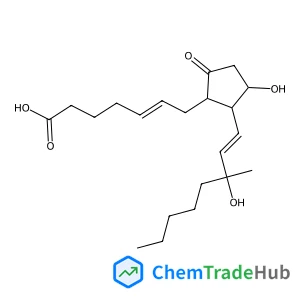
(5Z,11alpha,13E,15R)-11,15-Dihydroxy-15-methyl-9-oxoprosta-5,13-dien-1-oic acid
CAS Number:
55028-70-1
Molecular Formula:
C21H34O5
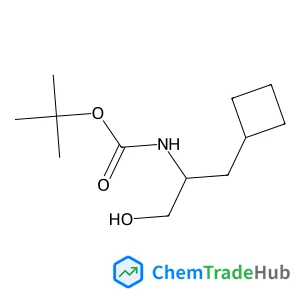
2-Methyl-2-propanyl (1-cyclobutyl-3-hydroxy-2-propanyl)carbamate
CAS Number:
816429-99-9
Molecular Formula:
C12H23NO3
Recommended Suppliers





Disclaimer
This page provides academic journal information for reference and research purposes only. We are not affiliated with any journal publishers and do not handle publication submissions. For publication-related inquiries, please contact the respective journal publishers directly.
If you notice any inaccuracies in the information displayed, please contact us at support@chemtradehub.com. We will promptly review and address your concerns.