












Electrocapillary maximum and potential of zero charge of carbon aerogel
Literature Information
Publication Date
2010-06-03
DOI
10.1039/B916331J
Impact Factor
3.676
Authors
Jürgen Biener, Dominik Kramer, Raghavan N. Viswanath, Theodore F. Baumann, Alex V. Hamza
View Original
Abstract
We present an electrochemical study of carbon aerogel (CA) in aqueous sodium fluoride solutions, focusing on the comparison of two quantities that are related to the potential of zero charge (pzc): the capacitance minimum and the ‘electrocapillary maximum’ of the surface forces. Capacitance minima are well resolved in our samples. Their potential emerges reproducibly as around 90 mV (vs. Ag/AgCl in KCl), similar to the value, 70 mV, of bulk glassy carbon which we use for comparison, and similar to previous reported pzc values for carbon materials. Significantly, no electrocapillary maximum is found in this potential range. This demonstrates that the pzc does not necessarily coincide with the potential of the maximum of surface stress. We also determined the area-specific capacitances, ca = 2.8 μF cm−2, which agrees well with reports for the basal-plane of graphite single crystals. Our experiments yield large reversible strain amplitudes, up to 0.45%.
Related Literature
A degradable copolymer of 2-methylene-1,3-dioxepane and vinyl acetate by photo-induced cobalt-mediated radical polymerization
Dongdong Ding, Xiangqiang Pan, Zhengbiao Zhang, Na Li, Jian Zhu, Xiulin Zhu
2016-07-26
Paper
DOI: 10.1039/C6PY01061J
Effect of residue structure on the thermal and thermoresponsive properties of γ-substituted poly(N-acryloyl-2-pyrrolidones)
R. Bhat, H. Patel, P.-C. Tsai, X.-L. Sun, D. Daoud, R. A. Lalancette, B. Michniak-Kohn, A. Pietrangelo
2015-06-30
Paper
DOI: 10.1039/C5PY00649J
Low bandgap copolymers based on monofluorinated isoindigo towards efficient polymer solar cells
Farid Ouhib, Arnaud Wislez, Anne-Sophie Duwez, Huguette Penxten, Wouter Dierckx, Ilaria Cardinaletti, Ralf A. A. Bovee, Gijs W. P. van Pruissen, Christine Jérôme, Jean Manca, Christophe Detrembleur
2015-07-03
Paper
DOI: 10.1039/C5PY00693G
Different amine-functionalized poly(diphenylsubstituted acetylenes) from the same precursor
Xiao Wang, Yuan Gao, Wenjie Wang, Anjun Qin, Jing Zhi Sun
2016-07-27
Paper
DOI: 10.1039/C6PY01175F
Organo-photocatalysts for photoinduced electron transfer-reversible addition–fragmentation chain transfer (PET-RAFT) polymerization
Jiangtao Xu, Sivaprakash Shanmugam, Hien T. Duong, Cyrille Boyer
2014-11-04
Paper
DOI: 10.1039/C4PY01317D
Facile preparation of recyclable photodeformable azobenzene polymer fibers with chemically crosslinked networks
Guang Han, Juyin Nie, Huiqi Zhang
2016-07-18
Communication
DOI: 10.1039/C6PY01100D
Solution processible hyperbranched inverse-vulcanized polymers as new cathode materials in Li–S batteries
Yangyang Wei, Xiang Li, Zhen Xu, Haiyan Sun, Li Peng, Zheng Liu, Chao Gao, Mingxia Gao
2014-10-22
Paper
DOI: 10.1039/C4PY01055H
Side-chain poly(phosphoramidate)s via acyclic diene metathesis polycondensation
Alper Cankaya, Mark Steinmann, Yagmur Bülbül, Ingo Lieberwirth, Frederik R. Wurm
2016-07-18
Paper
DOI: 10.1039/C6PY00999A
Diffusion-ordered spectroscopy NMR DOSY: an all-in-one tool to simultaneously follow side reactions, livingness and molar masses of polymethylmethacrylate by nitroxide mediated polymerization
A. Khoukh, A. Benaboura, L. Billon
2016-07-26
Paper
DOI: 10.1039/C6PY00927A
You might also like
Compound Q&A
What precautions should be taken when handling 2-Methyl-2-propanyl 5-amino-2-thiophenecarboxylate (CAS: 1498311-57-1)?
When handling 2-Methyl-2-propanyl 5-amino-2-thiophenecarboxylate (CAS: 1498311-5...
1498311-57-12-Methyl-2-propanyl ...
Compound Q&A
What are the physical and chemical properties of 5-Bromo-1,2-dichloro-3-fluorobenzene (CAS: 1000572-93-9)?
5-Bromo-1,2-dichloro-3-fluorobenzene (CAS: 1000572-93-9) is a crystalline solid ...
1000572-93-95-Bromo-1,2-dichloro...
Compound Q&A
How should (2R)-2-Amino-2-(4-bromophenyl)ethanol (CAS: 354153-64-3) be stored?
(2R)-2-Amino-2-(4-bromophenyl)ethanol (CAS: 354153-64-3) should be stored in a c...
354153-64-3(2R)-2-Amino-2-(4-br...
Compound Q&A
What regulatory guidelines apply to Methyl 4-(aminomethyl)tetrahydro-2H-pyran-4-carboxylate hydrochloride (CAS: 362707-24-2)?
Methyl 4-(aminomethyl)tetrahydro-2H-pyran-4-carboxylate hydrochloride (CAS: 3627...
362707-24-2Methyl 4-(aminomethy...
Compound Q&A
What are the main uses of 1,4-dimethyl-1H-pyrazole-5-sulfonyl chloride (CAS: 1174834-52-6)?
1,4-Dimethyl-1H-pyrazole-5-sulfonyl chloride is primarily used as an intermediat...
1174834-52-61,4-dimethyl-1H-pyra...
Compound Q&A
Is Dinaphtho[1,2-b:2',1'-d]furan (CAS: 239-69-0) safe?
Dinaphtho[1,2-b:2',1'-d]furan is generally safe when handled with appropriate pe...
239-69-0Dinaphtho[1,2-b:2',1...
Compound Q&A
What is the market or research trend for 7-Methyl-7,9-dihydro-1H-purine-2,6,8(3H)-trione (CAS: 612-37-3)?
The market for 7-Methyl-7,9-dihydro-1H-purine-2,6,8(3H)-trione (CAS: 612-37-3) i...
612-37-37-Methyl-7,9-dihydro...
Compound Q&A
What are the physical and chemical properties of 2-(4-Chlorophenyl)malonaldehyde (CAS: 205676-17-1)?
2-(4-Chlorophenyl)malonaldehyde (CAS: 205676-17-1) is a colorless or light yello...
205676-17-12-(4-Chlorophenyl)ma...
Compound Q&A
How is 2-Methylchrysene (CAS: 3351-32-4) typically synthesized?
2-Methylchrysene (CAS: 3351-32-4) is typically synthesized via the reaction of c...
3351-32-42-Methylchrysene
Compound Q&A
Is N-(6-aminopyrimidin-4-yl)acetamide (CAS: 89533-23-3) safe?
N-(6-aminopyrimidin-4-yl)acetamide (CAS: 89533-23-3) is generally considered saf...
89533-23-3N-(6-aminopyrimidin-...
Source Journal
Physical Chemistry Chemical Physics

CiteScore:
5.5
Self-citation Rate:
10.3%
Articles per Year:
3036
Physical Chemistry Chemical Physics (PCCP) is an international journal co-owned by 19 physical chemistry and physics societies from around the world. This journal publishes original, cutting-edge research in physical chemistry, chemical physics and biophysical chemistry. To be suitable for publication in PCCP, articles must include significant innovation and/or insight into physical chemistry; this is the most important criterion that reviewers and Editors will judge against when evaluating submissions. The journal has a broad scope and welcomes contributions spanning experiment, theory, computation and data science. Topical coverage includes spectroscopy, dynamics, kinetics, statistical mechanics, thermodynamics, electrochemistry, catalysis, surface science, quantum mechanics, quantum computing and machine learning. Interdisciplinary research areas such as polymers and soft matter, materials, nanoscience, energy, surfaces/interfaces, and biophysical chemistry are welcomed if they demonstrate significant innovation and/or insight into physical chemistry. Joined experimental/theoretical studies are particularly appreciated when complementary and based on up-to-date approaches.
Recommended Compounds
![2-[2-(2-Methoxyethoxy)ethoxy]-2-methylpropane structure](https://static.chemtradehub.com/structs/527/52788-79-1-71c1.webp "2-[2-(2-Methoxyethoxy)ethoxy]-2-methylpropane structure")
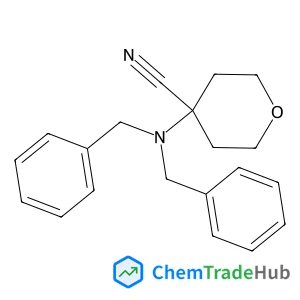
4-(Dibenzylamino)tetrahydro-2H-pyran-4-carbonitrile
CAS Number:
1630906-81-8
Molecular Formula:
C20H22N2O
![L-Lysine,N6-[2-[[(1,1-dimethylethoxy)carbonyl]amino]benzoyl]-N2-[(9H-fluoren-9-ylmethoxy)carbonyl]- structure](https://static.chemtradehub.com/structs/159/159322-59-5-c046.webp "L-Lysine,N6-[2-[[(1,1-dimethylethoxy)carbonyl]amino]benzoyl]-N2-[(9H-fluoren-9-ylmethoxy)carbonyl]- structure")
L-Lysine,N6-[2-[[(1,1-dimethylethoxy)carbonyl]amino]benzoyl]-N2-[(9H-fluoren-9-ylmethoxy)carbonyl]-
CAS Number:
159322-59-5
Molecular Formula:
C33H37N3O7
Recommended Suppliers





Disclaimer
This page provides academic journal information for reference and research purposes only. We are not affiliated with any journal publishers and do not handle publication submissions. For publication-related inquiries, please contact the respective journal publishers directly.
If you notice any inaccuracies in the information displayed, please contact us at support@chemtradehub.com. We will promptly review and address your concerns.