












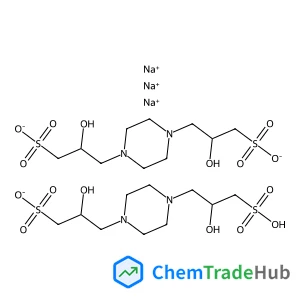
3,3'-(Piperazine-1,4-diyl)bis(2-hydroxypropane-1-sulfonic acid) Sodium Salt
CAS Number:
108321-08-0
Molecular Formula:
C20H41N4Na3O16S4
Lavinia Onel, Rachel Lade, Jennifer Mortiboy, Paul W. Seakins, Dwayne E. Heard, Daniel Stone
The kinetics of the gas phase reaction of the Criegee intermediate CH2OO with SO2 have been studied as a function of temperature in the range 223–344 K at 85 Torr using flash photolysis of CH2I2/O2/SO2/N2 mixtures at 248 nm coupled to time-resolved broadband UV absorption spectroscopy. Measurements were performed under pseudo-first-order conditions with respect to SO2, revealing a negative temperature dependence. Analysis of experimental results using the Master Equation Solver for Multi-Energy well Reactions (MESMER) indicates that the observed temperature dependence, combined with the reported lack of a pressure dependence in the range 1.5–760 Torr, can be described by a reaction mechanism consisting of the formation of a pre-reaction complex leading to a cyclic secondary ozonide which subsequently decomposes to produce HCHO + SO3. The temperature dependence can be characterised by kCH2OO+SO2 = (3.72 ± 0.13) × 10−11 (T/298)(−2.05±0.38) cm3 molecule−1 s−1. The observed negative temperature dependence for the title reaction in conjunction with the decrease in water dimer (the main competitor for the Criegee intermediate) concentration at lower temperatures means that Criegee intermediate chemistry can play an enhanced role in SO2 oxidation in the atmosphere at lower temperatures.
Neeraj N. Patwardhan, Zhengguo Cai, Colby N. Newson, Amanda E. Hargrove
DOI: 10.1039/C8OB02467G
Chunchao Tang, Lei Jin, Yuxing Lin, Jing Su, Yingai Sun, Pan Liu, Qi Li, Guankai Wang, Zheng Zhang, Lupei Du
DOI: 10.1039/C8OB01777H
Zonghua Luo, Junbin Han, Hui Liu, Adam J. Rosenberg, Delphine L. Chen, Robert J. Gropler, Zhude Tu
DOI: 10.1039/C8OB02609B
Youran Liu, Fei Chen, Yan-Mei He, Chenghao Li
DOI: 10.1039/C9OB00770A
Tangxin Xiao, Weiwei Zhong, Lixiang Xu, Xiao-Qiang Sun
DOI: 10.1039/C8OB03095B
Daria E. Kim, Yingchuan Zhu, Timothy R. Newhouse
DOI: 10.1039/C8OB02573H
Anna Albrecht, Jan Bojanowski, Adrianna Kot, Lesław Sieroń
DOI: 10.1039/C9OB00386J
Leslie Sánchez, Fernanda Mendoza, Joel B. Alderete, Verónica A. Jiménez, Gonzalo A. Jaña
DOI: 10.1039/C9OB01055F
Olga Michalak, Piotr Cmoch, Piotr Krzeczyński, Marcin Cybulski
DOI: 10.1039/C8OB02552E
3-Fluoro-2-methylbenzylamine is an organic compound with the CAS number 771573-3...
Tert-butyl 2-(oxetan-3-ylidene)acetate is considered safe for its intended uses ...
Proper personal protective equipment (PPE) such as gloves, goggles, and a lab co...
2-Ethyl-4-methyl-1,3-thiazole is commonly synthesized via the reaction of thiour...
This compound should be stored in a cool, dry place away from direct sunlight an...
L-Lysine Acetate Salt (CAS: 52315-92-1) is subject to various regulatory guideli...
6-Fluoro-3-hydroxy-2-pyrazinecarboxamide (CAS: 259793-96-9) is generally conside...
1,1'-Sulfonylbis(1H-imidazole) is a crystalline solid with a molecular weight of...
4-Methyl-7-nitro-1H-indole-3-carbonitrile (CAS: 289483-82-5) is primarily used i...
Waste containing 5-Bromo-3-indolyl-beta-galactoside (CAS: 97753-82-7) should be ...

Physical Chemistry Chemical Physics (PCCP) is an international journal co-owned by 19 physical chemistry and physics societies from around the world. This journal publishes original, cutting-edge research in physical chemistry, chemical physics and biophysical chemistry. To be suitable for publication in PCCP, articles must include significant innovation and/or insight into physical chemistry; this is the most important criterion that reviewers and Editors will judge against when evaluating submissions. The journal has a broad scope and welcomes contributions spanning experiment, theory, computation and data science. Topical coverage includes spectroscopy, dynamics, kinetics, statistical mechanics, thermodynamics, electrochemistry, catalysis, surface science, quantum mechanics, quantum computing and machine learning. Interdisciplinary research areas such as polymers and soft matter, materials, nanoscience, energy, surfaces/interfaces, and biophysical chemistry are welcomed if they demonstrate significant innovation and/or insight into physical chemistry. Joined experimental/theoretical studies are particularly appreciated when complementary and based on up-to-date approaches.
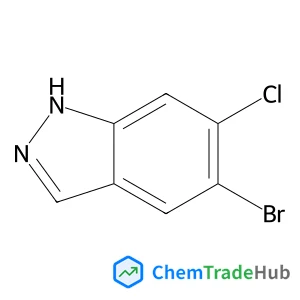
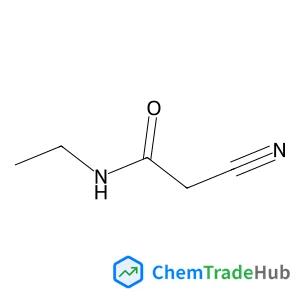
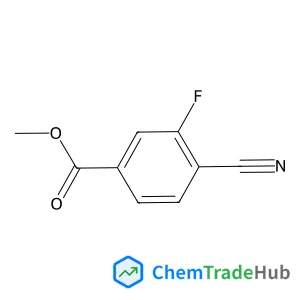
![5-(2-Phenylpyrazolo[1,5-a]pyridin-3-yl)-2H-pyrazolo[3,4-c]pyridazin-3-amine structure](https://static.chemtradehub.com/structs/865/865362-74-9-0091.webp "5-(2-Phenylpyrazolo[1,5-a]pyridin-3-yl)-2H-pyrazolo[3,4-c]pyridazin-3-amine structure")



