












Early thermal decay of energetic hydrogen- and nitro-free furoxan compounds: the case of DNTF and BTF
Literature Information
Publication Date
2021-12-01
DOI
10.1039/D1CP02881B
Impact Factor
3.676
Authors
Shuangfei Zhu, Wei Yang, Qiang Gan, Nianshou Cheng, Changgen Feng
View Original
Abstract
Exploration of the initial reactions of H-free and nitro-free energetic materials could enrich our understanding of the thermal decomposition mechanism of various energetic materials (EMs). In this work, two furoxan compounds, 3,4-dinitrofurazanfuroxan (DNTF) and benzotrifuroxan (BTF), were investigated to shed light on the decay mechanism of furoxan compounds based on the combination of self-consistent charge density functional tight binding and molecular dynamics simulations. The results show that DNTF and BTF decay via a unimolecular mechanism, and the transformation of the furoxan ring into a nitro group is suggested as a novel initial channel. Five initial steps of DNTF thermal decomposition are observed, including NO2 loss and the N(O)–O bond cleavage of the central and peripheral rings. The bond cleavage of peripheral rings dominates the decay at low temperatures, while the central ring opening and C–NO2 dissociation govern the high temperature decay. Besides, NO2, CO and NO fragments are mainly yielded at high temperatures, while CO3N2 is dominant at low temperatures. The three-stage characteristic of the exothermic BTF decay is described under programmed heating conditions for the first time. Four initial steps of BTF thermal decomposition were identified, including furoxan ring opening reactions and the breakage of the 6-membered ring C–C bond. The cleavage of the N(O)–O bond is dominant in the initial step of BTF decomposition under different heating conditions, and the frequency increases with increasing temperature. In addition, the amounts of CON, ON and CO are higher at high temperatures, while C2O2N2 shows an opposite trend. The findings of this work provide deep insights into the complicated sensitivity mechanism of EMs.
Recommended Journals
Related Literature
Thiolation of NHC-boranes: influence of the substitution at boron
Anne-Laure Vallet, Emmanuel Lacôte
2019-04-02
Communication
DOI: 10.1039/C9OB00578A
Catalyst-free [4 + 2] cyclization of para-quinone methide derivatives with homophthalic anhydrides
Jia-Yu Zhou, Chun Ma, Yi-Zhu Zhang, Qiong Wu, Feng Shi
2018-11-23
Paper
DOI: 10.1039/C8OB02776E
Bypassing the stereoselectivity issue: transformations of Kinugasa adducts from chiral alkynes and non-chiral acyclic nitrones
Rafał Kutaszewicz, Barbara Grzeszczyk, Marcin Górecki, Olga Staszewska-Krajewska, Bartłomiej Furman, Marek Chmielewski
2019-05-31
Paper
DOI: 10.1039/C9OB00940J
Total synthesis of (±)-galanthamine from GABA through regioselective aryne insertion
2019-01-28
Paper
DOI: 10.1039/C8OB03123A
Construction of spirothioureas having an amino quaternary stereogenic center via a [3 + 2] annulation of 3-isothiocyanato oxindoles with 2-aminoacrylates
Hou-Ze Gui, Yin Wei
2018-11-19
Paper
DOI: 10.1039/C8OB02748J
Importance of the main chain of lysine for histone lysine methyltransferase catalysis
Abbas H. K. Al Temimi, Ruben S. Teeuwen, Vu Tran, Arthur J. Altunc, Danny C. Lenstra, Wansheng Ren, Ping Qian, Hong Guo
2019-05-20
Communication
DOI: 10.1039/C9OB01038F
Conformational flexibility influences structure–function relationships in nucleic acid N-methyl demethylases
Sodiq O. Waheed, Rajeev Ramanan, Shobhit S. Chaturvedi, Jon Ainsley, Martin Evison, Jennifer M. Ames, Christopher J. Schofield
2019-01-24
Paper
DOI: 10.1039/C9OB00162J
Identification of thienopyridine carboxamides as selective binders of HIV-1 trans Activation Response (TAR) and Rev Response Element (RRE) RNAs
2018-11-16
Paper
DOI: 10.1039/C8OB02753F
You might also like
Compound Q&A
What is 3-Fluoro-2-methylbenzylamine (CAS: 771573-36-5)?
3-Fluoro-2-methylbenzylamine is an organic compound with the CAS number 771573-3...
771573-36-53-Fluoro-2-methylben...
Compound Q&A
Is Tert-butyl 2-(oxetan-3-ylidene)acetate (CAS: 1207175-03-8) safe?
Tert-butyl 2-(oxetan-3-ylidene)acetate is considered safe for its intended uses ...
1207175-03-8Tert-butyl 2-(oxetan...
Compound Q&A
What precautions should be taken when handling 4-Acetyl-2-fluorobenzonitrile (CAS: 214760-18-6)?
Proper personal protective equipment (PPE) such as gloves, goggles, and a lab co...
214760-18-64-Acetyl-2-fluoroben...
Compound Q&A
How is 2-Ethyl-4-methyl-1,3-thiazole (CAS: 15679-12-6) typically synthesized?
2-Ethyl-4-methyl-1,3-thiazole is commonly synthesized via the reaction of thiour...
15679-12-62-Ethyl-4-methyl-1,3...
Compound Q&A
How should 5',5''-([2,2'-Bithiophene]-5,5'-diyl)bis(([1,1':3',1''-terphenyl]-4,4''-dicarboxylic acid)) (CAS: 1227780-71-3) be stored?
This compound should be stored in a cool, dry place away from direct sunlight an...
1227780-71-35',5''''-([2,2'-Bith...
Compound Q&A
What regulatory guidelines apply to L-Lysine Acetate Salt (CAS: 52315-92-1)?
L-Lysine Acetate Salt (CAS: 52315-92-1) is subject to various regulatory guideli...
52315-92-1L-LYSINE ACETATE SAL...
Compound Q&A
Is 6-Fluoro-3-hydroxy-2-pyrazinecarboxamide (CAS: 259793-96-9) safe?
6-Fluoro-3-hydroxy-2-pyrazinecarboxamide (CAS: 259793-96-9) is generally conside...
259793-96-96-Fluoro-3-hydroxy-2...
Compound Q&A
What are the physical and chemical properties of 1,1'-Sulfonylbis(1H-imidazole) (CAS: 7189-69-7)?
1,1'-Sulfonylbis(1H-imidazole) is a crystalline solid with a molecular weight of...
7189-69-71,1'-Sulfonylbis(1H-...
Compound Q&A
What industries use 4-methyl-7-nitro-1H-indole-3-carbonitrile (CAS: 289483-82-5)?
4-Methyl-7-nitro-1H-indole-3-carbonitrile (CAS: 289483-82-5) is primarily used i...
289483-82-54-methyl-7-nitro-1H-...
Compound Q&A
How should waste containing 5-Bromo-3-indolyl-beta-galactoside (CAS: 97753-82-7) be handled?
Waste containing 5-Bromo-3-indolyl-beta-galactoside (CAS: 97753-82-7) should be ...
97753-82-75-Bromo-3-indolyl-be...
Source Journal
Physical Chemistry Chemical Physics

CiteScore:
5.5
Self-citation Rate:
10.3%
Articles per Year:
3036
Physical Chemistry Chemical Physics (PCCP) is an international journal co-owned by 19 physical chemistry and physics societies from around the world. This journal publishes original, cutting-edge research in physical chemistry, chemical physics and biophysical chemistry. To be suitable for publication in PCCP, articles must include significant innovation and/or insight into physical chemistry; this is the most important criterion that reviewers and Editors will judge against when evaluating submissions. The journal has a broad scope and welcomes contributions spanning experiment, theory, computation and data science. Topical coverage includes spectroscopy, dynamics, kinetics, statistical mechanics, thermodynamics, electrochemistry, catalysis, surface science, quantum mechanics, quantum computing and machine learning. Interdisciplinary research areas such as polymers and soft matter, materials, nanoscience, energy, surfaces/interfaces, and biophysical chemistry are welcomed if they demonstrate significant innovation and/or insight into physical chemistry. Joined experimental/theoretical studies are particularly appreciated when complementary and based on up-to-date approaches.
Recommended Compounds
![(1S,4aR,5R,7S,7aS)-1-(beta-D-Glucopyranosyloxy)-5-hydroxy-7-methyl-1,4a,5,6,7,7a-hexahydrocyclopenta[c]pyran-7-yl alpha-D-galactopyranoside structure](https://static.chemtradehub.com/structs/817/81720-07-2-4ffd.webp "(1S,4aR,5R,7S,7aS)-1-(beta-D-Glucopyranosyloxy)-5-hydroxy-7-methyl-1,4a,5,6,7,7a-hexahydrocyclopenta[c]pyran-7-yl alpha-D-galactopyranoside structure")
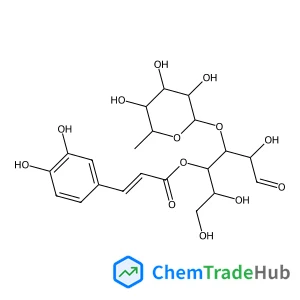
(1S,4aR,5R,7S,7aS)-1-(beta-D-Glucopyranosyloxy)-5-hydroxy-7-methyl-1,4a,5,6,7,7a-hexahydrocyclopenta[c]pyran-7-yl alpha-D-galactopyranoside
CAS Number:
81720-07-2
Molecular Formula:
C21H34O14
Recommended Suppliers






Disclaimer
This page provides academic journal information for reference and research purposes only. We are not affiliated with any journal publishers and do not handle publication submissions. For publication-related inquiries, please contact the respective journal publishers directly.
If you notice any inaccuracies in the information displayed, please contact us at support@chemtradehub.com. We will promptly review and address your concerns.