













Propensity, free energy contributions and conformation of primary n-alcohols at a water surface
Literature Information
Publication Date
2021-08-20
DOI
10.1039/D1CP02818A
Impact Factor
3.676
Authors
Victor Ekholm, Jochen S. Hub, Malin Wohlert
View Original
Abstract
Atmospheric aerosols contain organic molecules that serve as cloud condensation nucleation sites and affect the climate. Several experimental and simulation studies have been dedicated to investigate their surface propensity, but the mechanisms that drive them to the water surface are still not fully understood. In this molecular dynamics (MD) simulation study, primary alcohols are considered as a model system representing polar organic molecules. We find that the surface affinity of n-alcohols increases linearly with the length of the hydrophobic tail. By decomposing the adsorption free energy into enthalpy and entropy contributions, we find that the transition from bulk to surface is entropically driven, compatible with the fact that the hydrophobic effect of small solutes is of entropic origin. The enthalpy of surface adsorption is nearly invariant among different n-alcohols because the loss of solvent–alcohol interactions is balanced by a gain in solvent–solvent interactions. Structural analysis shows that, at the surface, the linear alcohols prefer an orientation with the hydrophobic tail pointing out from the surface, whereas the hydroxyl group remains buried in the water. This general behaviour is likely transferable to other small molecules with similar structures but other functional groups that are present in the atmosphere. Therefore, the present study is a step forward toward a general description of organic molecules in aerosols.
Recommended Journals
Related Literature
Commercial Fe- or Co-containing carbon nanotubes as catalysts for NH3 decomposition
Jian Zhang, Massimiliano Comotti, Ferdi Schüth, Robert Schlögl, Dang Sheng Su
2007-02-21
Communication
DOI: 10.1039/B700969K
Template controlled synthesis of a coordinated [11]ane-P2CNHC macrocycle
Oliver Kaufhold, Andreas Stasch, Peter G. Edwards, F. Ekkehardt Hahn
2007-02-08
Communication
DOI: 10.1039/B617033A
Fluorescent dyes of the esculetin and alizarin families respond to zinc ions ratiometrically
Lu Zhang, Shen Dong, Lei Zhu
2007-02-19
Communication
DOI: 10.1039/B618413H
A dizinc complex for selective fluorescence sensing of uridine and uridine-containing dinucleotides
Carla Bazzicalupi, Andrea Bencini, Laura Bussotti, Emanuela Berni, Silvia Biagini, Enrico Faggi, Claudia Giorgi, Andrea Lapini, Agnese Marcelli, Barbara Valtancoli
2007-02-12
Communication
DOI: 10.1039/B617453A
An unprecedented twofold interpenetrating (3,4)-connected 3-D metal–organic framework
Seunghee Hong, Yang Zou, Dohyun Moon, Myoung Soo Lah
2007-03-30
Communication
DOI: 10.1039/B702216F
Adenosine residues in the template do not block spontaneous replication steps of RNA
Stephanie R. Vogel, Clemens Richert
2007-04-12
Communication
DOI: 10.1039/B702768K
Reversible sol–gel signaling system with epMB for the study of enzyme- and pH-triggered oligonucleotide release from a biotin hydrogel
Young Jun Seo, Sankarprasad Bhuniya, Byeang Hyean Kim
2007-02-13
Communication
DOI: 10.1039/B618528B
A reductase-mimicking thiourea organocatalyst incorporating a covalently bound NADH analogue: efficient 1,2-diketone reduction with in situ prosthetic group generation and recycling
Barbara Procuranti, Stephen J. Connon
2007-01-30
Communication
DOI: 10.1039/B618792G
You might also like
Compound Q&A
What precautions should be taken when handling 2-Chloro-1,2-bis(4-methylphenyl)ethanone (CAS: 71193-32-3)?
When handling 2-Chloro-1,2-bis(4-methylphenyl)ethanone (CAS: 71193-32-3), it is ...
71193-32-32-Chloro-1,2-bis(4-m...
Compound Q&A
What industries use 4-Ethoxy-3-(5-methyl-4-oxo-7-propyl-1,4-dihydroimidazo[5,1-f][1,2,4]triazin-2-yl)benzenesulfonyl chloride (CAS: 224789-26-8)?
4-Ethoxy-3-(5-methyl-4-oxo-7-propyl-1,4-dihydroimidazo[5,1-f][1,2,4]triazin-2-yl...
224789-26-84-Ethoxy-3-(5-methyl...
Compound Q&A
How should Methyl 3-Oxo-4-Androsten-17-Carboxylate (CAS: 2681-55-2) be stored?
Methyl 3-Oxo-4-Androsten-17-Carboxylate (CAS: 2681-55-2) should be stored in a c...
2681-55-2Methyl 3-Oxo-4-Andro...
Compound Q&A
What are the main uses of (R)-3-Amino-4-(3-hexylphenylamino)-4-oxobutylphosphonic acid (CAS: 909725-61-7)?
(R)-3-Amino-4-(3-hexylphenylamino)-4-oxobutylphosphonic acid is primarily used i...
909725-61-7(R)-3-Amino-4-(3-hex...
Compound Q&A
What regulatory guidelines apply to 2-Methyl-2-propanyl 3-amino-3-carbamoyl-1-azetidinecarboxylate (CAS: 1254120-14-3)?
2-Methyl-2-propanyl 3-amino-3-carbamoyl-1-azetidinecarboxylate (CAS: 1254120-14-...
1254120-14-32-Methyl-2-propanyl ...
Compound Q&A
Are there alternatives to (E)-4-(tert-Butoxy)-4-oxobut-2-enoic acid (CAS: 135355-96-3) in synthesis?
There are alternative reagents that can be used in synthesis instead of (E)-4-(t...
135355-96-3(E)-4-(tert-Butoxy)-...
Compound Q&A
What are the physical and chemical properties of [2-(3-Chlorophenyl)-1,3-thiazol-4-yl]methanol (CAS: 121202-20-8)?
[2-(3-Chlorophenyl)-1,3-thiazol-4-yl]methanol (CAS: 121202-20-8) is a crystallin...
121202-20-8[2-(3-Chlorophenyl)-...
Compound Q&A
What is the market or research trend for Methyl (2S)-[(4S)-2,2-dimethyl-1,3-dioxolan-4-yl]{[(4-methylphenyl)sulfonyl]oxy}acetate (CAS: 166249-17-8)?
The market and research trends for Methyl (2S)-[(4S)-2,2-dimethyl-1,3-dioxolan-4...
166249-17-8Methyl (2S)-[(4S)-2,...
Compound Q&A
What is the market or research trend for 1-Bromo-2-isocyanatoethane (CAS: 42865-19-0)?
The market for 1-Bromo-2-isocyanatoethane (CAS: 42865-19-0) is driven by its use...
42865-19-01-Bromo-2-isocyanato...
Compound Q&A
What are the main uses of 4-Nitro-D-phenylalanine hydrochloride (CAS: 147065-06-3)?
4-Nitro-D-phenylalanine hydrochloride (CAS: 147065-06-3) is primarily used in re...
147065-06-34-Nitro-D-phenylalan...
Source Journal
Physical Chemistry Chemical Physics

CiteScore:
5.5
Self-citation Rate:
10.3%
Articles per Year:
3036
Physical Chemistry Chemical Physics (PCCP) is an international journal co-owned by 19 physical chemistry and physics societies from around the world. This journal publishes original, cutting-edge research in physical chemistry, chemical physics and biophysical chemistry. To be suitable for publication in PCCP, articles must include significant innovation and/or insight into physical chemistry; this is the most important criterion that reviewers and Editors will judge against when evaluating submissions. The journal has a broad scope and welcomes contributions spanning experiment, theory, computation and data science. Topical coverage includes spectroscopy, dynamics, kinetics, statistical mechanics, thermodynamics, electrochemistry, catalysis, surface science, quantum mechanics, quantum computing and machine learning. Interdisciplinary research areas such as polymers and soft matter, materials, nanoscience, energy, surfaces/interfaces, and biophysical chemistry are welcomed if they demonstrate significant innovation and/or insight into physical chemistry. Joined experimental/theoretical studies are particularly appreciated when complementary and based on up-to-date approaches.
Recommended Compounds

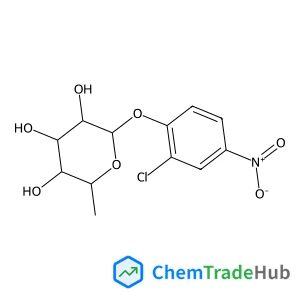
2-Chloro-4-nitrophenyl 6-deoxy-alpha-L-galactopyranoside
CAS Number:
157843-41-9
Molecular Formula:
C12H14ClNO7
Recommended Suppliers






Disclaimer
This page provides academic journal information for reference and research purposes only. We are not affiliated with any journal publishers and do not handle publication submissions. For publication-related inquiries, please contact the respective journal publishers directly.
If you notice any inaccuracies in the information displayed, please contact us at support@chemtradehub.com. We will promptly review and address your concerns.