












The disparate effect of strain on thermal conductivity of 2-D materials
Literature Information
Publication Date
2021-09-14
DOI
10.1039/D1CP02771A
Impact Factor
3.676
Authors
K. V. S. Dheeraj, Sarith P. Sathian
View Original
Abstract
Thermal transport in 2-D (dimensional) structures is highly susceptible to external perturbations such as strain, owing to their high surface-to-volume ratio. In this study, we investigate the influence of strain on the thermal conductivity of flat (graphene and hexagonal boron nitride), buckled and puckered (molybdenum disulfide and black phosphorous) 2-D materials. Unlike bulk materials where the thermal conductivity reduces with strain, the thermal conductivity of 2-D materials under strain is observed to be unique and dependent on the material considered. To understand such diverse strain-dependent thermal conductivity in 2-D materials, the phonon mode properties are calculated. It was observed that the strain softens the longitudinal mode (LA), whereas the out-of-plane acoustic mode (ZA) undergoes stiffening albeit various extents. In flat 2-D materials, the dispersion of ZA mode is linearized under strain while it tends to linearize in buckled and puckered structures. The variation in the phonon group velocity of ZA mode coupled with the anomalous behavior of the phonon lifetime of acoustic modes results in a diverse strain dependence of the thermal conductivity of 2-D materials. Our findings offer insight into the influence of strain of 2-D materials and will be helpful in tailoring the thermal properties of these materials for various applications such as nanoelectronics and thermoelectric devices.
Related Literature
Vibrational spectrum of the spin crossover complex [Fe(phen)2(NCS)2] studied by IR and Raman spectroscopy, nuclear inelastic scattering and DFT calculations
Kate L. Ronayne, Hauke Paulsen, Andreas Höfer, Andrew C. Dennis, Aleksandr I. Chumakov, Volker Schünemann, Heiner Winkler, Hartmut Spiering, Azzedine Bousseksou, Philipp Gütlich, Alfred X. Trautwein, John J. McGarvey
2006-09-25
Paper
DOI: 10.1039/B610634J
The uptake of O3 by myristic acid–oleic acid mixed particles: evidence for solid surface layers
David G. Nash, Tomas Baer
2006-08-24
Paper
DOI: 10.1039/B609855J
Molecular dynamics simulations of peptide carboxylate hydration
T. Liang, T. R. Walsh
2006-08-29
Paper
DOI: 10.1039/B608672A
Onsager heat of transport for water vapour at the surface of water and ice: thermal accommodation coefficients for water vapour on a stainless-steel surface
Christopher J. Pursell, Leon F. Phillips
2006-09-19
Paper
DOI: 10.1039/B608369B
On the nature of metallic nanoparticles obtained from molecular Co3Ru–carbonyl clusters in mesoporous silica matrices‡
Claude Estournès, Pierre Braunstein, Jean Guille, Jean-Louis Paillaud, Mireille Richard-Plouet, Jacky Rosé
2006-08-01
Paper
DOI: 10.1039/B603404G
First steps towards dissolution of NaSO4− by water
Barbara Jagoda-Cwiklik, Pavel Jungwirth
2006-08-07
Communication
DOI: 10.1039/B609941F
Bright luminescence from silane substituted and bridged silicon nanoclusters
Olli Lehtonen, Dage Sundholm
2006-08-10
Paper
DOI: 10.1039/B606643G
High resolution photofragment translational spectroscopy of the near UV photolysis of indole: Dissociation via the 1πσ* state
2006-04-21
Paper
DOI: 10.1039/B603499C
You might also like
Compound Q&A
How is Ethyl 4-chlorothieno[2,3-b]pyridine-5-carboxylate (CAS: 59713-58-5) typically synthesized?
Ethyl 4-chlorothieno[2,3-b]pyridine-5-carboxylate (CAS: 59713-58-5) can be synth...
59713-58-5Ethyl 4-chlorothieno...
Compound Q&A
What regulatory guidelines apply to 5-Methyl-1H-indole-3-carbaldehyde (CAS: 52562-50-2)?
5-Methyl-1H-indole-3-carbaldehyde (CAS: 52562-50-2) is subject to various regula...
52562-50-25-Methyl-1H-indole-3...
Compound Q&A
What are the physical and chemical properties of (1,3-Dimethyl-2,4-dioxo-1,2,3,4-tetrahydro-5-pyrimidinyl)boronic acid (CAS: 223418-73-3)?
(1,3-Dimethyl-2,4-dioxo-1,2,3,4-tetrahydro-5-pyrimidinyl)boronic acid is a white...
223418-73-3(1,3-Dimethyl-2,4-di...
Compound Q&A
How should waste containing Sulfocostunolide A (CAS: 1016983-51-9) be handled?
Waste containing Sulfocostunolide A (CAS: 1016983-51-9) should be handled with c...
1016983-51-9Sulfocostunolide A
Compound Q&A
What precautions should be taken when handling Murraxocin (CAS: 88478-44-8)?
When handling Murraxocin (CAS: 88478-44-8), ensure proper personal protective eq...
88478-44-8Murraxocin
Compound Q&A
What are the physical and chemical properties of Formvar (CAS: 63148-64-1)?
Formvar (CAS: 63148-64-1) is an alkyd resin characterized by a high molecular we...
63148-64-1Formvar(R)
Compound Q&A
Is (S)-4-benzyl-2-((benzyloxy)methyl)morpholine (CAS: 205242-66-6) safe?
(S)-4-benzyl-2-((benzyloxy)methyl)morpholine is generally safe when handled with...
205242-66-6(S)-4-benzyl-2-((ben...
Compound Q&A
What industries use Methyl 1-(5-bromo-2-pyrimidinyl)cyclopropanecarboxylate (CAS: 1447607-69-3)?
Methyl 1-(5-bromo-2-pyrimidinyl)cyclopropanecarboxylate (CAS: 1447607-69-3) is p...
1447607-69-3Methyl 1-(5-bromo-2-...
Compound Q&A
Is 2-Methyl-1-phenyl-1-propanamine hydrochloride (CAS: 24290-47-9) safe?
2-Methyl-1-phenyl-1-propanamine hydrochloride (CAS: 24290-47-9) is generally con...
24290-47-92-Methyl-1-phenyl-1-...
Compound Q&A
How is 3-(4-Bromophenyl)-2-methylpropanoic acid (CAS: 66735-01-1) typically synthesized?
3-(4-Bromophenyl)-2-methylpropanoic acid is synthesized through a multi-step pro...
66735-01-13-(4-Bromophenyl)-2-...
Source Journal
Physical Chemistry Chemical Physics

CiteScore:
5.5
Self-citation Rate:
10.3%
Articles per Year:
3036
Physical Chemistry Chemical Physics (PCCP) is an international journal co-owned by 19 physical chemistry and physics societies from around the world. This journal publishes original, cutting-edge research in physical chemistry, chemical physics and biophysical chemistry. To be suitable for publication in PCCP, articles must include significant innovation and/or insight into physical chemistry; this is the most important criterion that reviewers and Editors will judge against when evaluating submissions. The journal has a broad scope and welcomes contributions spanning experiment, theory, computation and data science. Topical coverage includes spectroscopy, dynamics, kinetics, statistical mechanics, thermodynamics, electrochemistry, catalysis, surface science, quantum mechanics, quantum computing and machine learning. Interdisciplinary research areas such as polymers and soft matter, materials, nanoscience, energy, surfaces/interfaces, and biophysical chemistry are welcomed if they demonstrate significant innovation and/or insight into physical chemistry. Joined experimental/theoretical studies are particularly appreciated when complementary and based on up-to-date approaches.
Recommended Compounds
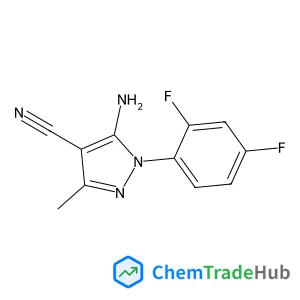
5-Amino-1-(2,4-difluorophenyl)-3-methyl-1H-pyrazole-4-carbonitrile
CAS Number:
1020057-92-4
Molecular Formula:
C11H8F2N4

Recommended Suppliers






Disclaimer
This page provides academic journal information for reference and research purposes only. We are not affiliated with any journal publishers and do not handle publication submissions. For publication-related inquiries, please contact the respective journal publishers directly.
If you notice any inaccuracies in the information displayed, please contact us at support@chemtradehub.com. We will promptly review and address your concerns.