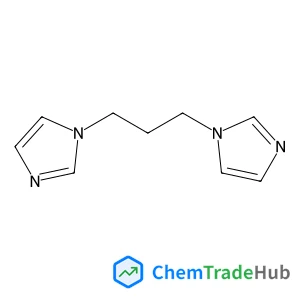
![4-{2-[(9H-Fluoren-9-ylmethoxy)carbonyl]hydrazino}benzoic acid structure](https://static.chemtradehub.com/structs/214/214475-53-3-bf36.webp "4-{2-[(9H-Fluoren-9-ylmethoxy)carbonyl]hydrazino}benzoic acid structure")
4-{2-[(9H-Fluoren-9-ylmethoxy)carbonyl]hydrazino}benzoic acid
CAS Number:
214475-53-3
Molecular Formula:
C22H18N2O4
Haonan Shen, Yang Zhang, Guangzhao Wang, Weixiao Ji, Xiaoming Xue
Triggered by the recent experimental synthesis of the Janus PtSSe monolayer, we use the first-principles calculations to predict two new Janus photocatalysts PtXO (X = S, Se), based on the systematic investigations of the structural stabilities, electronic structures, band alignments, catalytic activity and optical absorption. The two Janus structures are found to be mechanically, dynamically and thermodynamically stable, and have suitable band edge positions for the overall water splitting. Owing to the high electron mobility (up to 2164.95 cm2 V−1 s−1) and large disparity between the electron and hole mobilities, together with the indirect band gaps and the intrinsic dipole induced built-in electric fields, the photogenerated electrons/holes can be efficiently separated in PtXO. Moreover, the S/Se vacancy can effectively lower the free energy difference of the HER, making the catalytic reactions occur spontaneously under the potentials of photoexcited electrons and holes. Large optical absorption coefficients (105 cm−1) are also confirmed in the visible light range, and the biaxial tensile strain can further enhance the optical absorption while maintaining the capability of the overall water splitting. Our results not only propose two new Janus materials by demonstrating the possibility of experimental realization, but also indicate that PtXO are peculiar candidates for photocatalytic water splitting.
Stephanie J. Harris, Daniel Murdock, Yuyuan Zhang, Thomas A. A. Oliver, Michael P. Grubb, Andrew J. Orr-Ewing, Gregory M. Greetham, Ian P. Clark, Michael Towrie, Stephen E. Bradforth, Michael N. R. Ashfold
DOI: 10.1039/C3CP50756D
Marc-Oliver Winghart, Michael Kühn, Andreas-Neil Unterreiner, Thomas J. A. Wolf, Phuong D. Dau, Hong-Tao Liu, Dao-Ling Huang, Lai-Sheng Wang
DOI: 10.1039/C3CP50497B
Bin Wang, Thomas J. Richardson, Guoying Chen
DOI: 10.1039/C3CP50992C
Sunghyun Uhm
DOI: 10.1039/C3CP50885D
Matija Zlatar, Maja Gruden-Pavlović, Mireia Güell
DOI: 10.1039/C2CP43735J
Idan Hod, Zion Tachan, Menny Shalom, Arie Zaban
DOI: 10.1039/C3CP50242B
Rebecca C. Quardokus, Natalie A. Wasio, Ryan P. Forrest, Craig S. Lent, Steven A. Corcelli, John A. Christie, Kenneth W. Henderson, S. Alex Kandel
DOI: 10.1039/C3CP50225B
Ruguang Ma, Mingjun Hu, Hua Cheng, Yang Yang Li
DOI: 10.1039/C3CP50588J
Haoguang Li, Mickael Rivallan, Frederic Thibault-Starzyk, Arnaud Travert
DOI: 10.1039/C3CP50442E
4-Benzyl-2,2-dimethylmorpholine is generally considered safe when handled under ...
(5,6-Dimethoxy-3-pyridinyl)boronic acid is a chemical compound with the molecula...
1,1,3,3-Tetramethyl-1,3-bis(2-methyl-2-propanyl)disiloxane is synthesized throug...
(2R,4S)-1-Boc-4-methylpyrrolidine-2-carboxylic acid is primarily used as a build...
When handling 2,3-Dichloroacrylonitrile, it is crucial to wear appropriate perso...
(S)-1-(o-Tolyl)ethanamine hydrochloride should be stored in a cool, dry place to...
Benzyl [1-(hydroxyamino)-1-imino-2-methyl-2-propanyl]carbamate (CAS: 518047-98-8...
2-Methyloxazole-5-carbaldehyde is used in the pharmaceutical industry for the sy...
The market for 2-Methyl-2-propanyl 4-[(1S)-1-hydroxyethyl]-1-piperidinecarboxyla...
1-Butyl-3-methylpyridinium bromide is generally considered safe for laboratory u...

Physical Chemistry Chemical Physics (PCCP) is an international journal co-owned by 19 physical chemistry and physics societies from around the world. This journal publishes original, cutting-edge research in physical chemistry, chemical physics and biophysical chemistry. To be suitable for publication in PCCP, articles must include significant innovation and/or insight into physical chemistry; this is the most important criterion that reviewers and Editors will judge against when evaluating submissions. The journal has a broad scope and welcomes contributions spanning experiment, theory, computation and data science. Topical coverage includes spectroscopy, dynamics, kinetics, statistical mechanics, thermodynamics, electrochemistry, catalysis, surface science, quantum mechanics, quantum computing and machine learning. Interdisciplinary research areas such as polymers and soft matter, materials, nanoscience, energy, surfaces/interfaces, and biophysical chemistry are welcomed if they demonstrate significant innovation and/or insight into physical chemistry. Joined experimental/theoretical studies are particularly appreciated when complementary and based on up-to-date approaches.