













Adsorption of diferrocenylacetylene on Au(111) studied by scanning tunneling microscopy
Literature Information
Publication Date
2013-03-19
DOI
10.1039/C3CP50225B
Impact Factor
3.676
Authors
Rebecca C. Quardokus, Natalie A. Wasio, Ryan P. Forrest, Craig S. Lent, Steven A. Corcelli, John A. Christie, Kenneth W. Henderson, S. Alex Kandel
View Original
Abstract
Scanning tunneling microscopy images of diferrocenylacetylene (DFA) coadsorbed with benzene on Au(111) show individual and close-packed DFA molecules, either adsorbed alongside benzene or on top of a benzene monolayer. Images acquired over a range of positive and negative tip–sample bias voltages show a shift in contrast, with the acetylene linker appearing brighter than the ferrocenes at positive sample bias (where unoccupied states primarily contribute) and the reverse contrast at negative bias. Density functional theory was used to calculate the electronic structure of the gas-phase DFA molecule, and simulated images produced through two-dimensional projections of these calculations approximate the experimental images. The symmetry of both experimental and calculated molecular features for DFA rules out a cis adsorption geometry, and comparison of experiment to simulation indicates torsion around the inter-ferrocene axis between 90° and 180° (trans); the cyclopentadienyl rings are thus angled with respect to the surface.
Related Literature
Influence of Mo modification on coaromatization coupling methanol with n-hexane over [Zn,Mo]/HZSM-5 catalysts
Bing Zhu, Haibo Li, Xue Wang, Subing Fan, Junmin Lv, Tian-sheng Zhao
2023-07-05
Paper
DOI: 10.1039/D3RE00133D
Batch and continuous flow mechanochemical synthesis of organic compounds including APIs
2023-09-05
Review Article
DOI: 10.1039/D2RE00521B
Levoglucosan and levoglucosenone as bio-based platforms for polymer synthesis
Melissa K. Stanfield, Rhiannon S. Terry, Jason A. Smith, Stuart C. Thickett
2023-10-23
Minireview
DOI: 10.1039/D3PY01019H
Adaptive mixed variable Bayesian self-optimisation of catalytic reactions
Naser Aldulaijan, Joe A. Marsden, Jamie A. Manson, Adam D. Clayton
2023-10-17
Paper
DOI: 10.1039/D3RE00476G
Transport phenomena in solid phase synthesis supported by cross-linked polymer beads
Mathias Kraume, José Danglad-Flores
2023-09-23
Review Article
DOI: 10.1039/D3RE00359K
Optimized synthesis of functional organosilicon monomers and polymers exploiting new types of CuAAC recoverable heterogeneous catalysts
Kseniia S. Klokova, Alexander Yu Pereyaslavtsev, Dmitry A. Migulin
2023-10-27
Paper
DOI: 10.1039/D3RE00532A
Enhanced photocatalytic performance of Ag nanoparticle–TiO2−X nanotube arrays obtained by a predischarge–deposition method and calcination in H2/N2
Qihang Liu, Junjun Chen, Lang Zhang, Olim Ruzimuradov, Yichun Liu, Fengxian Li, Caiju Li, Mingjun Wang, Dong Fang, Jianhong Yi
2023-10-27
Paper
DOI: 10.1039/D3RE00344B
New polymers based on thieno[3,2-b]pyrrole derivatives and their electrochemical properties
Mansur S. Miftakhov, Seda A. Torosyan, Fanuza A. Gimalova, Sergey L. Khursan, Zoya F. Nuriakhmetova, Elena V. Shchurik, Olga. A. Kraevaya
2023-10-11
Paper
DOI: 10.1039/D3PY00893B
Branched polyesters from radical ring-opening polymerization of cyclic ketene acetals: synthesis, chemical hydrolysis and biodegradation
Maryam Mousa, Magnus Jonsson, Olivia Wilson, Roy Geerts, Helena Bergenudd, Christoffer Bengtsson, Anna Larsson Kron
2023-10-18
Paper
DOI: 10.1039/D3PY00630A
An effective approach for the preparation of epoxy vitrimers by in situ formation of dynamic and permanent linkages in a one-pot curing reaction
Du-Yuan Hung, Jia-Jun Lee, Ying-Ling Liu
2023-10-17
Paper
DOI: 10.1039/D3PY00957B
You might also like
Compound Q&A
What is the market or research trend for N-(4-Methoxybenzyl)-2-pyridinamine (CAS: 52818-63-0)?
N-(4-Methoxybenzyl)-2-pyridinamine (CAS: 52818-63-0) is increasingly being used ...
52818-63-0N-(4-Methoxybenzyl)-...
Compound Q&A
What precautions should be taken when handling Ethyl 4-(2-chlorophenyl)-1,3-thiazole-2-carboxylate (CAS: 1050507-06-6)?
When handling Ethyl 4-(2-chlorophenyl)-1,3-thiazole-2-carboxylate, appropriate p...
1050507-06-6Ethyl 4-(2-chlorophe...
Compound Q&A
What regulatory guidelines apply to diethyldiselane (CAS: 628-39-7)?
Diethyldiselane (CAS: 628-39-7) is classified under the Globally Harmonized Syst...
628-39-7Diethyldiselane
Compound Q&A
What is the market or research trend for oxocopper (CAS: 12053-18-8)?
The market for oxocopper (CAS: 12053-18-8) is primarily driven by its use in cat...
12053-18-8oxocopper; oxo-(oxoc...
Compound Q&A
What is the market or research trend for 5-{[(2-Methyl-2-propanyl)oxy]carbonyl}-5-azaspiro[2.4]heptane-7-carboxylic acid?
The market for 5-{[(2-Methyl-2-propanyl)oxy]carbonyl}-5-azaspiro[2.4]heptane-7-c...
1268519-54-55-{[(2-Methyl-2-prop...
Compound Q&A
What is 2-(1-Pyrrolidinyl)-4-pyridinamine (CAS: 35981-63-6)?
2-(1-Pyrrolidinyl)-4-pyridinamine is a chemical compound with the CAS number 359...
35981-63-62-(1-Pyrrolidinyl)-4...
Compound Q&A
What are the physical and chemical properties of 2-(3-Pyridinyl)-1-azabicyclo[2.2.2]octane (CAS: 91556-75-1)?
2-(3-Pyridinyl)-1-azabicyclo[2.2.2]octane (CAS: 91556-75-1) is a crystalline sol...
91556-75-12-(3-Pyridinyl)-1-az...
Compound Q&A
How is (S)-Alpha-allyl-proline hydrochloride (CAS: 129704-91-2) typically synthesized?
(S)-Alpha-allyl-proline hydrochloride is usually synthesized via a Wittig reacti...
129704-91-2(S)-Alpha-allyl-prol...
Compound Q&A
What is 3-Methyl-1,2-oxazole-5-carboxylic acid (CAS: 4857-42-5)?
3-Methyl-1,2-oxazole-5-carboxylic acid (CAS: 4857-42-5) is an organic compound w...
4857-42-53-Methyl-1,2-oxazole...
Compound Q&A
How is Lys-SMCC-DM1 (CAS: 1281816-04-3) typically synthesized?
Lys-SMCC-DM1 is synthesized via a multi-step process involving the coupling of S...
1281816-04-3Lys-SMCC-DM1
Source Journal
Physical Chemistry Chemical Physics

CiteScore:
5.5
Self-citation Rate:
10.3%
Articles per Year:
3036
Physical Chemistry Chemical Physics (PCCP) is an international journal co-owned by 19 physical chemistry and physics societies from around the world. This journal publishes original, cutting-edge research in physical chemistry, chemical physics and biophysical chemistry. To be suitable for publication in PCCP, articles must include significant innovation and/or insight into physical chemistry; this is the most important criterion that reviewers and Editors will judge against when evaluating submissions. The journal has a broad scope and welcomes contributions spanning experiment, theory, computation and data science. Topical coverage includes spectroscopy, dynamics, kinetics, statistical mechanics, thermodynamics, electrochemistry, catalysis, surface science, quantum mechanics, quantum computing and machine learning. Interdisciplinary research areas such as polymers and soft matter, materials, nanoscience, energy, surfaces/interfaces, and biophysical chemistry are welcomed if they demonstrate significant innovation and/or insight into physical chemistry. Joined experimental/theoretical studies are particularly appreciated when complementary and based on up-to-date approaches.
Recommended Compounds
![N-{[(2-Methyl-2-propanyl)oxy]carbonyl}-L-methionylglycine structure](https://static.chemtradehub.com/structs/234/23446-03-9-e1e5.webp "N-{[(2-Methyl-2-propanyl)oxy]carbonyl}-L-methionylglycine structure")
N-{[(2-Methyl-2-propanyl)oxy]carbonyl}-L-methionylglycine
CAS Number:
23446-03-9
Molecular Formula:
C12H22N2O5S
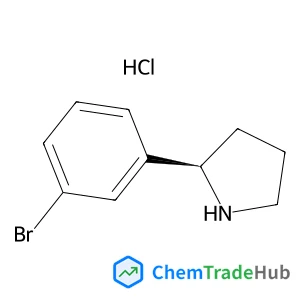
(2R)-2-(3-Bromophenyl)pyrrolidine hydrochloride (1:1)
CAS Number:
1391550-13-2
Molecular Formula:
C10H13BrClN
![1,10-bis(3,5-dimethylphenyl)-12-hydroxy-4,5,6,7-tetrahydroiindeno[7,1-de:1',7'-fg][1,3,2]dioxaphosphocine 12-oxide structure](https://static.chemtradehub.com/structs/141/1412439-82-7-b9a9.webp "1,10-bis(3,5-dimethylphenyl)-12-hydroxy-4,5,6,7-tetrahydroiindeno[7,1-de:1',7'-fg][1,3,2]dioxaphosphocine 12-oxide structure")
1,10-bis(3,5-dimethylphenyl)-12-hydroxy-4,5,6,7-tetrahydroiindeno[7,1-de:1',7'-fg][1,3,2]dioxaphosphocine 12-oxide
CAS Number:
1412439-82-7
Molecular Formula:
C33H31O4P
Recommended Suppliers






Disclaimer
This page provides academic journal information for reference and research purposes only. We are not affiliated with any journal publishers and do not handle publication submissions. For publication-related inquiries, please contact the respective journal publishers directly.
If you notice any inaccuracies in the information displayed, please contact us at support@chemtradehub.com. We will promptly review and address your concerns.