












Mixed-diphosphine-protected chiral undecagold clusters Au11(S,S-DIOP)4(rac-/R-/S-BINAP): effect of the handedness of BINAP on their chiroptical responses
Literature Information
Publication Date
2021-07-26
DOI
10.1039/D1CP02106K
Impact Factor
3.676
Authors
Yasuhiko Sato, Hiroshi Yao
View Original
Abstract
In this article, we report a preference of homochiral-type ligation of BINAP that produces SS-type ligand assembly onto the Au11 clusters protected by diphosphine S,S-DIOP. The Au11 clusters synthesized and isolated are Au11(S,S-DIOP)4(rac-/R-/S-BINAP), and their optical/chiroptical responses are characterized. Absorption spectra of these Au11 clusters are almost identical to each other, but their CD profiles are dependent on the handedness of BINAP. In Au11(S,S-DIOP)4(rac-BINAP), the yield of S-BINAP or R-BINAP coordination is roughly comparable, but we found a small but distinctive preference in the S-BINAP ligation; that is, homochiral-type (SS-type) ligand assembly formation. Quantum chemical calculations for simplified model clusters suggest equal contributions of S- and R-form BINAP coordination. The experimentally-observed preference of homochiral-type ligation can then be due to that of the whole ligand structures and assemblies involving interligand interactions. Chiral sorting and amplification processes through the assembly control of homochirality or heterochirality are of primary importance for the development of enantioselective reactions, so we anticipate this finding will contribute to further understanding of such processes based on various metal clusters with chiral ligands.
Related Literature
Lineshapes in carbon 1s photoelectron spectra of methanol clusters
M. Abu-samha, K. J. Børve, L. J. Sæthre, G. Öhrwall, H. Bergersen, T. Rander, O. Björneholm, M. Tchaplyguine
2006-04-28
Paper
DOI: 10.1039/B516905D
Scalar relativistic calculations of hyperfine coupling tensors using the Douglas–Kroll–Hess method with a finite-size nucleus model
Elena Malkin, Irina Malkin, Olga L. Malkina, Vladimir G. Malkin, Martin Kaupp
2006-08-04
Paper
DOI: 10.1039/B607044B
Isomeric transitions in size-selected methanol hexamers probed by OH-stretch spectroscopy‡
C. Steinbach, M. Fárník, I. Ettischer, J. Siebers, U. Buck
2006-05-17
Paper
DOI: 10.1039/B604715G
Detection of hydrogen bonding in solution: A 2H nuclear magnetic resonance method based on rotational motion of a donor/acceptor complex
Nathaniel K. Szymczak, Alan B. Oelkers, David R. Tyler
2006-08-04
Paper
DOI: 10.1039/B608147A
Mass-analyzed threshold ionization spectroscopy of pyridine. Structural distortion in the first excited state
M. Riese, Z. Altug, J. Grotemeyer
2006-08-29
Paper
DOI: 10.1039/B607402B
High field ENDOR as a characterization tool for functional sites in microporous materials
2006-04-07
Invited Article
DOI: 10.1039/B601513C
Protein-bound chromophoresastaxanthin and phytochromobilin: excited state quantum chemical studies
Leif A. Eriksson
2006-08-02
Invited Article
DOI: 10.1039/B605682B
You might also like
Compound Q&A
How is Ethyl 4-chlorothieno[2,3-b]pyridine-5-carboxylate (CAS: 59713-58-5) typically synthesized?
Ethyl 4-chlorothieno[2,3-b]pyridine-5-carboxylate (CAS: 59713-58-5) can be synth...
59713-58-5Ethyl 4-chlorothieno...
Compound Q&A
What regulatory guidelines apply to 5-Methyl-1H-indole-3-carbaldehyde (CAS: 52562-50-2)?
5-Methyl-1H-indole-3-carbaldehyde (CAS: 52562-50-2) is subject to various regula...
52562-50-25-Methyl-1H-indole-3...
Compound Q&A
What are the physical and chemical properties of (1,3-Dimethyl-2,4-dioxo-1,2,3,4-tetrahydro-5-pyrimidinyl)boronic acid (CAS: 223418-73-3)?
(1,3-Dimethyl-2,4-dioxo-1,2,3,4-tetrahydro-5-pyrimidinyl)boronic acid is a white...
223418-73-3(1,3-Dimethyl-2,4-di...
Compound Q&A
How should waste containing Sulfocostunolide A (CAS: 1016983-51-9) be handled?
Waste containing Sulfocostunolide A (CAS: 1016983-51-9) should be handled with c...
1016983-51-9Sulfocostunolide A
Compound Q&A
What precautions should be taken when handling Murraxocin (CAS: 88478-44-8)?
When handling Murraxocin (CAS: 88478-44-8), ensure proper personal protective eq...
88478-44-8Murraxocin
Compound Q&A
What are the physical and chemical properties of Formvar (CAS: 63148-64-1)?
Formvar (CAS: 63148-64-1) is an alkyd resin characterized by a high molecular we...
63148-64-1Formvar(R)
Compound Q&A
Is (S)-4-benzyl-2-((benzyloxy)methyl)morpholine (CAS: 205242-66-6) safe?
(S)-4-benzyl-2-((benzyloxy)methyl)morpholine is generally safe when handled with...
205242-66-6(S)-4-benzyl-2-((ben...
Compound Q&A
What industries use Methyl 1-(5-bromo-2-pyrimidinyl)cyclopropanecarboxylate (CAS: 1447607-69-3)?
Methyl 1-(5-bromo-2-pyrimidinyl)cyclopropanecarboxylate (CAS: 1447607-69-3) is p...
1447607-69-3Methyl 1-(5-bromo-2-...
Compound Q&A
Is 2-Methyl-1-phenyl-1-propanamine hydrochloride (CAS: 24290-47-9) safe?
2-Methyl-1-phenyl-1-propanamine hydrochloride (CAS: 24290-47-9) is generally con...
24290-47-92-Methyl-1-phenyl-1-...
Compound Q&A
How is 3-(4-Bromophenyl)-2-methylpropanoic acid (CAS: 66735-01-1) typically synthesized?
3-(4-Bromophenyl)-2-methylpropanoic acid is synthesized through a multi-step pro...
66735-01-13-(4-Bromophenyl)-2-...
Source Journal
Physical Chemistry Chemical Physics

CiteScore:
5.5
Self-citation Rate:
10.3%
Articles per Year:
3036
Physical Chemistry Chemical Physics (PCCP) is an international journal co-owned by 19 physical chemistry and physics societies from around the world. This journal publishes original, cutting-edge research in physical chemistry, chemical physics and biophysical chemistry. To be suitable for publication in PCCP, articles must include significant innovation and/or insight into physical chemistry; this is the most important criterion that reviewers and Editors will judge against when evaluating submissions. The journal has a broad scope and welcomes contributions spanning experiment, theory, computation and data science. Topical coverage includes spectroscopy, dynamics, kinetics, statistical mechanics, thermodynamics, electrochemistry, catalysis, surface science, quantum mechanics, quantum computing and machine learning. Interdisciplinary research areas such as polymers and soft matter, materials, nanoscience, energy, surfaces/interfaces, and biophysical chemistry are welcomed if they demonstrate significant innovation and/or insight into physical chemistry. Joined experimental/theoretical studies are particularly appreciated when complementary and based on up-to-date approaches.
Recommended Compounds

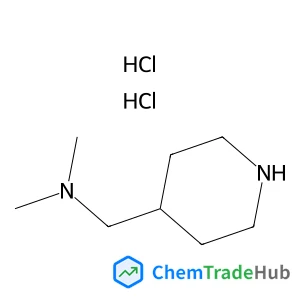
N,N-dimethyl(piperidin-4-yl)methanamine hydrochloride
CAS Number:
172281-72-0
Molecular Formula:
C8H20Cl2N2

Recommended Suppliers





Disclaimer
This page provides academic journal information for reference and research purposes only. We are not affiliated with any journal publishers and do not handle publication submissions. For publication-related inquiries, please contact the respective journal publishers directly.
If you notice any inaccuracies in the information displayed, please contact us at support@chemtradehub.com. We will promptly review and address your concerns.