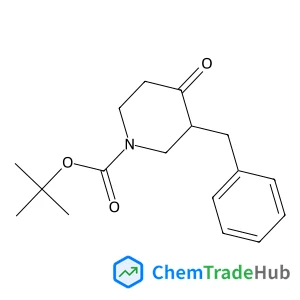
2-Methyl-2-propanyl 3-benzyl-4-oxo-1-piperidinecarboxylate
CAS Number:
193274-82-7
Molecular Formula:
C17H23NO3
Anna Millqvist Fureby
The mechanisms of glass transitions and the behavior of small solute molecules in a glassy matrix are some of the most important topics of modern thermodynamics. Water plays an important role in the physical and chemical stability of lyophilized biologics formulations, in which glassy carbohydrates act as cryoprotectants and stabilizers. In this study, sorption calorimetry was used for simultaneous measurements of water activity and the enthalpy of water sorption by amorphous sucrose, trehalose and maltodextrins. Moreover, the heat capacity of these carbohydrates in mixtures with water was measured by DSC in a broad range of water contents. The hydration enthalpies of glassy sucrose, trehalose and maltodextrins are exothermic, and the enthalpy change of water-induced isothermal glass transitions is higher for small molecules. The partial molar enthalpy of mixing of water in slow experiments is about −18 kJ mol−1, but less exothermic in the case of small molecules at fast hydration scan rates. By measuring the heat capacities of disaccharides and maltodextrins as a function of water content, we separated the contributions of carbohydrates and water to the total heat capacities of the mixtures. The combination of these data allowed testing of thermodynamic models describing the hydration-induced glass transitions. The heat capacity changes calculated by the fitting of the hydration enthalpy data for disaccharides are in good agreement with the heat capacity data obtained by DSC, while for maltodextrins, the effect of sub-Tg transitions should be taken into account. Combining the data obtained by different techniques, we found a distinct difference in the behavior of water in glassy polymers compared to that in glassy disaccharides. By understanding the behavior of water in glassy carbohydrates, these results can be used to improve the design of freeze–dried formulations of proteins and probiotics.
Osvaldo H. Scalise, Moises Silbert
DOI: 10.1039/B107990P
Kathrin Winkler, Jörg Lindner, Vinod Subramaniam, Thomas M. Jovin, Peter Vöhringer
DOI: 10.1039/B108843B
Begoña García, Rafael Alcalde, Santiago Aparicio, José M. Leal
DOI: 10.1039/B109709C
Kristóf Iván, Norbert Kirschner, Mária Wittmann, Viktor Jakab, Zoltán Noszticzius, John H. Merkin, Stephen K. Scott
DOI: 10.1039/B109016J
DOI: 10.1039/B109349E
Khashayar Ghandi, Brenda Addison-Jones, Jean-Claude Brodovitch, Iain McKenzie, Paul W. Percival, Joachim Schüth
DOI: 10.1039/B108656A
Hiroto Tachikawa
DOI: 10.1039/B109641A
Dirk Tuma, Björn Wagner, Gerhard M. Schneider
DOI: 10.1039/B109521H
DOI: 10.1039/B108703G
DOI: 10.1039/B109077C
6-Bromo-2-methylimidazo[1,2-a]pyrimidine (CAS: 1111638-05-1) falls under various...
While there are no direct alternatives, similar compounds like 1-Pyrrolidineetha...
4-Methyl-2,6-bis(2-methyl-2-propanyl)phenyl methylcarbamate (CAS: 1918-11-2) is ...
2-(3-Bromo-4-fluorophenyl)-1,3-dioxolane (CAS: 77771-04-1) should be stored in a...
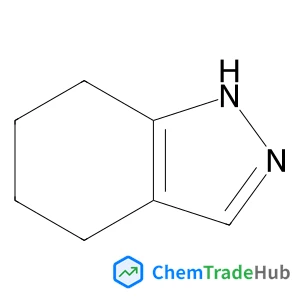
4,5,6,7-Tetrahydro-1H-indazole hydrochloride is a white crystalline solid with a...
(2R)-1-Methoxy-3-phenyl-2-propanamine is a chiral organic compound with the CAS ...
Ethyl 1-(1-phenylethyl)-1H-imidazole-5-carboxylate is used in various industries...
4-[(1E,3S)-1-(4-Hydroxyphenyl)-1,4-pentadien-3-yl]phenol (CAS: 17676-24-3) falls...
(S)-3-Amino-5-phenylpentanoic acid hydrochloride is primarily used in the pharma...
7-Methoxy-1-benzothiophene-2-carboxylic acid is typically synthesized by reactin...

Physical Chemistry Chemical Physics (PCCP) is an international journal co-owned by 19 physical chemistry and physics societies from around the world. This journal publishes original, cutting-edge research in physical chemistry, chemical physics and biophysical chemistry. To be suitable for publication in PCCP, articles must include significant innovation and/or insight into physical chemistry; this is the most important criterion that reviewers and Editors will judge against when evaluating submissions. The journal has a broad scope and welcomes contributions spanning experiment, theory, computation and data science. Topical coverage includes spectroscopy, dynamics, kinetics, statistical mechanics, thermodynamics, electrochemistry, catalysis, surface science, quantum mechanics, quantum computing and machine learning. Interdisciplinary research areas such as polymers and soft matter, materials, nanoscience, energy, surfaces/interfaces, and biophysical chemistry are welcomed if they demonstrate significant innovation and/or insight into physical chemistry. Joined experimental/theoretical studies are particularly appreciated when complementary and based on up-to-date approaches.