












Hidden polymorphism of FAPbI3 discovered by Raman spectroscopy
Literature Information
Publication Date
2021-04-12
DOI
10.1039/D1CP00102G
Impact Factor
3.676
Authors
Josefa Ibaceta-Jaña, Ruslan Muydinov, Pamela Rosado, Sri Hari Bharath Vinoth Kumar, Rene Gunder, Axel Hoffmann, Bernd Szyszka, Markus R. Wagner
View Original
Abstract
Formamidinium lead iodide (FAPbI3) can be used in its cubic, black form as a light absorber material in single-junction solar cells. It has a band-gap (1.5 eV) close to the maximum of the Shockley–Queisser limit, and reveals a high absorption coefficient. Its high thermal stability up to 320 °C has also a downside, which is the instability of the photo-active form at room temperature (RT). Thus, the black α-phase transforms at RT with time into a yellow non-photo-active δ-phase. The black phase can be recovered by annealing of the yellow state. In this work, a polymorphism of the α-phase at room temperature was found: as-synthesized (αi), degraded (αδ) and thermally recovered (αrec). They differ in the Raman spectra and PL signal, but not in the XRD patterns. Using temperature-dependent Raman spectroscopy, we identified a structural change in the αi-polymorph at ca. 110 °C. Above 110 °C, the FAPbI3 structure has undoubtedly cubic Pmm symmetry (high-temperature phase: αHT). Below that temperature, the αi-phase was suggested to have a distorted perovskite structure with Im symmetry. Thermally recovered FAPbI3 (αrec) also demonstrated the structural transition to αHT at the same temperature (ca. 110 °C) during its heating. The understanding of hybrid perovskites may bring additional assets in the development of new and stable structures.
Related Literature
Integrative electrochemical and biological catalysis for the mild and efficient utilization of renewable electricity and carbon resources
Licheng Liu, Deepak Pant
2023-12-06
Review Article
DOI: 10.1039/D3SE00876B
A novel 2D intrinsic metal-free ferromagnetic semiconductor Si3C8 monolayer
Chengyong Zhong, Shuo Li
2023-12-05
Paper
DOI: 10.1039/D3CP05005J
Non-equilibrium magnetic properties of a mixed spin (1/2, 1) Ising graphene nanoisland
Bayram Deviren, Seyma Akkaya Deviren, Tevfik Fikret Yagmuroglu
2023-11-24
Paper
DOI: 10.1039/D3CP04785G
HER catalytic activity and regulation of a transition metal atom-anchored BC3 monolayer: a first-principles study
Liying Pan, Xuxin Kang
2023-11-25
Paper
DOI: 10.1039/D3CP04660E
Peroxidase activity of a Cu–Fe bimetallic hydrogel and applications for colorimetric detection of ascorbic acid
Xiao-Juan Wang, Yan Long, Chuan-Wan Wei, Shu-Qin Gao
2023-12-05
Paper
DOI: 10.1039/D3CP05403A
Coexistence of topological node surface and Dirac fermions in phonon-mediated superconductor YB2C2
Siqi Wang, Mingmin Zhong, Haibo Liu, Meng Ju
2023-11-14
Paper
DOI: 10.1039/D3CP03678B
Combining experiment and energy landscapes to explore anaerobic heme breakdown in multifunctional hemoproteins
Alasdair D. Keith, Elizabeth B. Sawyer, Desmond C. Y. Choy, Yuhang Xie, George S. Biggs, Oskar James Klein, Paul D. Brear, David J. Wales, Paul D. Barker
2023-11-29
Perspective
DOI: 10.1039/D3CP03897A
Low-cost transition metal–nitrogen–carbon electrocatalysts for the oxygen reduction reaction: operating conditions from aqueous electrolytes to fuel cells
Li-Ting Cui, Wen-Feng Lin, Shi-Gang Sun
2023-12-05
Perspective
DOI: 10.1039/D3SE01275A
Green–Kubo expressions for transport coefficients from dissipative particle dynamics simulations revisited
D. C. Malaspina, J. P. Larentzos, J. K. Brennan, A. D. Mackie, J. Bonet Avalos
2023-12-01
Paper
DOI: 10.1039/D3CP03791F
Janus layers and electronic structure of 1T-(TiSeS)2
Yue Lou
2023-12-05
Paper
DOI: 10.1039/D3CP04958B
You might also like
Compound Q&A
How should waste containing N-Methoxy-N-methyl-1,3-thiazole-5-carboxamide (CAS: 898825-89-3) be handled?
Waste containing N-Methoxy-N-methyl-1,3-thiazole-5-carboxamide (CAS: 898825-89-3...
898825-89-3N-Methoxy-N-methyl-1...
Compound Q&A
How should N-(4-Biphenylyl)dibenzo[b,d]furan-4-amine (CAS: 1318338-47-4) be stored?
N-(4-Biphenylyl)dibenzo[b,d]furan-4-amine should be stored in a tightly sealed c...
1318338-47-4N-(4-Biphenylyl)dibe...
Compound Q&A
What is the market or research trend for 3-Acetamido-5-amino-2,4,6-triiodobenzoic acid (CAS: 1713-07-1)?
The market for 3-Acetamido-5-amino-2,4,6-triiodobenzoic acid (CAS: 1713-07-1) is...
1713-07-13-Acetamido-5-amino-...
Compound Q&A
How should Benzyl 2-O-acetyl-3,4,6-tri-O-benzyl-beta-D-galactopyranoside (CAS: 61820-03-9) be stored?
Benzyl 2-O-acetyl-3,4,6-tri-O-benzyl-beta-D-galactopyranoside (CAS: 61820-03-9) ...
61820-03-9Benzyl 2-O-acetyl-3,...
Compound Q&A
What regulatory guidelines apply to 2-Ethylpiperazine dihydrochloride (CAS: 438050-52-3)?
2-Ethylpiperazine dihydrochloride (CAS: 438050-52-3) is regulated under the Glob...
438050-52-32-Ethylpiperazine di...
Compound Q&A
What regulatory guidelines apply to 1,1'-[1,3-Phenylenebis(methylene)]bis(3-methyl-1H-pyrrole-2,5-dione) (CAS: 119462-56-5)?
1,1'-[1,3-Phenylenebis(methylene)]bis(3-methyl-1H-pyrrole-2,5-dione) (CAS: 11946...
119462-56-51,1'-[1,3-Phenyleneb...
Compound Q&A
Are there alternatives to 5-Fluoro-2-(1-pyrrolidinyl)pyridine (CAS: 1287217-79-1) in synthesis?
Several alternatives can be used in the synthesis of 5-Fluoro-2-(1-pyrrolidinyl)...
1287217-79-15-Fluoro-2-(1-pyrrol...
Compound Q&A
What precautions should be taken when handling 1-((2R,3R,4R,5R)-5-((bis(4-methoxyphenyl)(phenyl)methoxy)methyl)-4-hydroxy-3-methoxytetrahydrofuran-2-yl)-5-methylpyrimidine-2,4(1H,3H)-dione (CAS: 153631-19-7)?
Proper personal protective equipment (PPE) must be worn when handling this compo...
153631-19-71-((2R,3R,4R,5R)-5-(...
Compound Q&A
What precautions should be taken when handling 6-Bromoimidazo[1,2-a]pyridin-8-amine (CAS: 676371-00-9)?
When handling 6-Bromoimidazo[1,2-a]pyridin-8-amine, it is important to wear appr...
676371-00-96-Bromoimidazo[1,2-a...
Compound Q&A
Are there alternatives to (2S,4R)-4-(4-Nitrobenzyl)pyrrolidine-2-carboxylic acid hydrochloride (CAS: 1049740-22-8) in synthesis?
Alternatives to (2S,4R)-4-(4-Nitrobenzyl)pyrrolidine-2-carboxylic acid hydrochlo...
1049740-22-8(2S,4R)-4-(4-Nitrobe...
Source Journal
Physical Chemistry Chemical Physics

CiteScore:
5.5
Self-citation Rate:
10.3%
Articles per Year:
3036
Physical Chemistry Chemical Physics (PCCP) is an international journal co-owned by 19 physical chemistry and physics societies from around the world. This journal publishes original, cutting-edge research in physical chemistry, chemical physics and biophysical chemistry. To be suitable for publication in PCCP, articles must include significant innovation and/or insight into physical chemistry; this is the most important criterion that reviewers and Editors will judge against when evaluating submissions. The journal has a broad scope and welcomes contributions spanning experiment, theory, computation and data science. Topical coverage includes spectroscopy, dynamics, kinetics, statistical mechanics, thermodynamics, electrochemistry, catalysis, surface science, quantum mechanics, quantum computing and machine learning. Interdisciplinary research areas such as polymers and soft matter, materials, nanoscience, energy, surfaces/interfaces, and biophysical chemistry are welcomed if they demonstrate significant innovation and/or insight into physical chemistry. Joined experimental/theoretical studies are particularly appreciated when complementary and based on up-to-date approaches.
Recommended Compounds

5,5',5''-(((2,4,6-Trimethylbenzene-1,3,5-triyl)tris(methylene))tris(oxy))triisophthalic acid
CAS Number:
1159974-70-5
Molecular Formula:
C36H30O15

![2-(7,7-Difluorobicyclo[4.1.0]hept-1-yl)ethanamine structure](https://static.chemtradehub.com/structs/209/2098065-08-6-ff24.webp "2-(7,7-Difluorobicyclo[4.1.0]hept-1-yl)ethanamine structure")
2-(7,7-Difluorobicyclo[4.1.0]hept-1-yl)ethanamine
CAS Number:
2098065-08-6
Molecular Formula:
C9H15F2N
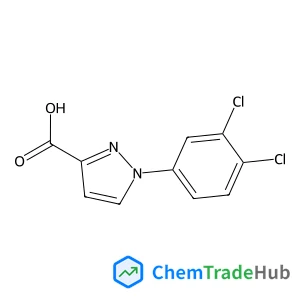
1-(3,4-Dichlorophenyl)-1H-pyrazole-3-carboxylic acid
CAS Number:
1152949-12-6
Molecular Formula:
C10H6Cl2N2O2
Recommended Suppliers






Disclaimer
This page provides academic journal information for reference and research purposes only. We are not affiliated with any journal publishers and do not handle publication submissions. For publication-related inquiries, please contact the respective journal publishers directly.
If you notice any inaccuracies in the information displayed, please contact us at support@chemtradehub.com. We will promptly review and address your concerns.