












Coexistence of topological node surface and Dirac fermions in phonon-mediated superconductor YB2C2
Literature Information
Publication Date
2023-11-14
DOI
10.1039/D3CP03678B
Impact Factor
3.676
Authors
Siqi Wang, Mingmin Zhong, Haibo Liu, Meng Ju
View Original
Abstract
The interaction between nontrivial topology and superconductivity in condensed matter physics has attracted tremendous research interest as it could give rise to exotic phenomena. Herein, based on first-principles calculations, we investigate the electronic structures, mechanical properties, topological properties, dynamic stability, electron–phonon coupling (EPC), and superconducting properties of the synthesized real material YB2C2. It is a tetragonal structure with P4/mbm symmetry and exhibits excellent stability. The calculated electronic band structures reveal that a zero-dimension (0D) Dirac point and two-dimensional (2D) nodal surface coexist near the Fermi level. A spin–orbit coupling (SOC) Dirac point with the topological Fermi arc is observed on the (001) surface. These nodal surfaces are protected by a two-fold screw axis and time-reversal symmetry. Based on the Bardeen–Cooper–Schrieffer theory, the superconducting transition temperature (Tc) in the range 1.25–4.45 K with different Coulomb repulsion constant μ* for YB2C2 is estimated to be consistent with previous experimental results. In addition, the EPC is mainly from the coupling between the dx2−y2 and dz2 orbitals of the Y atom and low-energy phonon modes. The presence of superconductivity and nontrivial topological surface state in YB2C2 suggests that it may be a candidate material for topological superconductors.
Related Literature
A DFT study for CO2 hydrogenation on W(111) and Ni-doped W(111) surfaces
2020-07-10
Paper
DOI: 10.1039/D0CP02285C
CO2 adsorption on hydroxylated In2O3(110)
Alvaro Posada-Borbón, Henrik Grönbeck
2019-08-20
Paper
DOI: 10.1039/C9CP04097H
A dithiocarbamate anchoring group as a flexible platform for interface engineering
Eric Sauter, Giulia Nascimbeni, Daniel Trefz, Sabine Ludwigs, Egbert Zojer, Florian von Wrochem, Michael Zharnikov
2019-10-04
Paper
DOI: 10.1039/C9CP03306H
Effect of chemical aging of aqueous organic aerosols on the rate of their steady-state nucleation
Yuri S. Djikaev, Eli Ruckenstein
2020-07-09
Paper
DOI: 10.1039/D0CP02592E
Spectroscopic identification of fragment ions of DNA/RNA building blocks: the case of pyrimidine
Kuntal Chatterjee, Otto Dopfer
2020-07-07
Paper
DOI: 10.1039/D0CP02919J
Polarization-dependent vibrational shifts on dielectric substrates
W. Wang, A. Nefedov, Y. Wang, C. Wöll
2020-07-09
Paper
DOI: 10.1039/D0CP02399J
Charge transfer dynamics in chlorophyll-based biosolar cells
Li Wang, Lingyun Pan, Shengnan Duan, Naoto Tamai, Hitoshi Tamiaki, Yoshitaka Sanehira, Yingjin Wei, Gang Chen, Xiao-Feng Wang
2019-09-23
Paper
DOI: 10.1039/C9CP03387D
An XAFS study of Cs adsorption by the precipitation bands of Mn–Fe-based Prussian blue analogues spontaneously formed in agarose gel
Hisashi Hayashi, Saya Aoki, Mao Takaishi, Yui Sato
2019-10-01
Paper
DOI: 10.1039/C9CP03661J
You might also like
Compound Q&A
Are there alternatives to 1-(4-Chlorophenyl)-N-hydroxymethanimine (CAS: 3848-36-0) in synthesis?
When considering alternatives to 1-(4-Chlorophenyl)-N-hydroxymethanimine (CAS: 3...
3848-36-01-(4-Chlorophenyl)-N...
Compound Q&A
How should (1R,9S,10S,12S,14E,16S,19R,20R,21S,22R)-3,9,21-Trihydroxy-5,10,12,14,16,20,22-heptamethyl-23,24-dioxatetracyclo[17.3.1.1~6,9~.0~2,7~]tetracosa-2,5,7,14-tetraen-4-one (CAS: 183202-73-5) be stored?
This compound should be stored in a cool, dry place away from direct sunlight. I...
183202-73-5(1R,9S,10S,12S,14E,1...
Compound Q&A
How is 3-(4-Bromophenyl)-5-(2-fluorophenyl)-1,2,4-oxadiazole (CAS: 419553-16-5) typically synthesized?
3-(4-Bromophenyl)-5-(2-fluorophenyl)-1,2,4-oxadiazole is synthesized through a m...
419553-16-53-(4-Bromophenyl)-5-...
Compound Q&A
How is 5-Chloro-2-(4-chlorophenyl)-4-methyl-6-[3-(1-piperidinyl)propoxy]pyrimidine (CAS: 1639220-19-1) typically synthesized?
5-Chloro-2-(4-chlorophenyl)-4-methyl-6-[3-(1-piperidinyl)propoxy]pyrimidine (CAS...
1639220-19-15-Chloro-2-(4-chloro...
Compound Q&A
What industries use 2-Chloro-4-(difluoromethoxy)pyridine (CAS: 1206978-15-5)?
2-Chloro-4-(difluoromethoxy)pyridine is used in the pharmaceutical industry for ...
1206978-15-52-Chloro-4-(difluoro...
Compound Q&A
What regulatory guidelines apply to 3-Chloro-6-methylpyridazine (CAS: 1121-79-5)?
3-Chloro-6-methylpyridazine (CAS: 1121-79-5) is classified under the Globally Ha...
1121-79-53-Chloro-6-methylpyr...
Compound Q&A
Are there alternatives to Methyl 4,5-dimethyl-2-nitrobenzoate in synthesis?
Several alternatives can be used in the synthesis of Methyl 4,5-dimethyl-2-nitro...
90922-74-0Methyl 4,5-dimethyl-...
Compound Q&A
Are there alternatives to (2E,2'E)-3,3'-(1,4-Phenylene)bisacrylaldehyde in synthesis?
Alternatives to (2E,2'E)-3,3'-(1,4-Phenylene)bisacrylaldehyde include other acry...
63405-68-5(2E,2'E)-3,3'-(1,4-P...
Compound Q&A
What is 3-Amino-5-chloropyridin-2-ol hydrochloride (CAS: 1261906-29-9)?
3-Amino-5-chloropyridin-2-ol hydrochloride is an organic compound with the CAS n...
1261906-29-93-Amino-5-chloropyri...
Compound Q&A
What precautions should be taken when handling 6,7-Difluoro-2,3-dihydro-4H-chromen-4-one (CAS: 1092349-93-3)?
When handling 6,7-Difluoro-2,3-dihydro-4H-chromen-4-one, it is essential to wear...
1092349-93-36,7-Difluoro-2,3-dih...
Source Journal
Physical Chemistry Chemical Physics

CiteScore:
5.5
Self-citation Rate:
10.3%
Articles per Year:
3036
Physical Chemistry Chemical Physics (PCCP) is an international journal co-owned by 19 physical chemistry and physics societies from around the world. This journal publishes original, cutting-edge research in physical chemistry, chemical physics and biophysical chemistry. To be suitable for publication in PCCP, articles must include significant innovation and/or insight into physical chemistry; this is the most important criterion that reviewers and Editors will judge against when evaluating submissions. The journal has a broad scope and welcomes contributions spanning experiment, theory, computation and data science. Topical coverage includes spectroscopy, dynamics, kinetics, statistical mechanics, thermodynamics, electrochemistry, catalysis, surface science, quantum mechanics, quantum computing and machine learning. Interdisciplinary research areas such as polymers and soft matter, materials, nanoscience, energy, surfaces/interfaces, and biophysical chemistry are welcomed if they demonstrate significant innovation and/or insight into physical chemistry. Joined experimental/theoretical studies are particularly appreciated when complementary and based on up-to-date approaches.
Recommended Compounds
![2-{[4-(2-Methoxyethyl)phenoxy]methyl}oxirane structure](https://static.chemtradehub.com/structs/567/56718-70-8-f037.webp "2-{[4-(2-Methoxyethyl)phenoxy]methyl}oxirane structure")
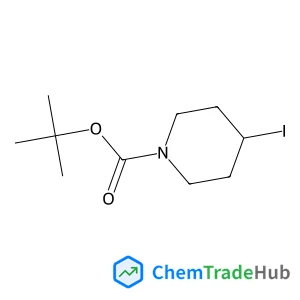
2-Methyl-2-propanyl 4-iodo-1-piperidinecarboxylate
CAS Number:
301673-14-3
Molecular Formula:
C10H18INO2
Recommended Suppliers






Disclaimer
This page provides academic journal information for reference and research purposes only. We are not affiliated with any journal publishers and do not handle publication submissions. For publication-related inquiries, please contact the respective journal publishers directly.
If you notice any inaccuracies in the information displayed, please contact us at support@chemtradehub.com. We will promptly review and address your concerns.