













Combining experiment and energy landscapes to explore anaerobic heme breakdown in multifunctional hemoproteins
Literature Information
Publication Date
2023-11-29
DOI
10.1039/D3CP03897A
Impact Factor
3.676
Authors
Alasdair D. Keith, Elizabeth B. Sawyer, Desmond C. Y. Choy, Yuhang Xie, George S. Biggs, Oskar James Klein, Paul D. Brear, David J. Wales, Paul D. Barker
View Original
Abstract
To survive, many pathogens extract heme from their host organism and break down the porphyrin scaffold to sequester the Fe2+ ion via a heme oxygenase. Recent studies have revealed that certain pathogens can anaerobically degrade heme. Our own research has shown that one such pathway proceeds via NADH-dependent heme degradation, which has been identified in a family of hemoproteins from a range of bacteria. HemS, from Yersinia enterocolitica, is the main focus of this work, along with HmuS (Yersinia pestis), ChuS (Escherichia coli) and ShuS (Shigella dysenteriae). We combine experiments, Energy Landscape Theory, and a bioinformatic investigation to place these homologues within a wider phylogenetic context. A subset of these hemoproteins are known to bind certain DNA promoter regions, suggesting not only that they can catalytically degrade heme, but that they are also involved in transcriptional modulation responding to heme flux. Many of the bacterial species responsible for these hemoproteins (including those that produce HemS, ChuS and ShuS) are known to specifically target oxygen-depleted regions of the gastrointestinal tract. A deeper understanding of anaerobic heme breakdown processes exploited by these pathogens could therefore prove useful in the development of future strategies for disease prevention.
Related Literature
Hydrogen evolution reaction on a smooth iron electrode in alkaline solution at different temperatures
2001-06-29
Paper
DOI: 10.1039/B102777H
Flexible multipole models for hydrogen fluoride
Matthew P. Hodges, Richard J. Wheatley
2000-03-24
Paper
DOI: 10.1039/A910293K
Dynamics of the reaction of O− with D2 at low collision energies: reagent rotational energy effects
Susan Troutman Lee, Elizabeth Richards O'Grady, Michael A. Carpenter, James M. Farrar
2000-01-07
Paper
DOI: 10.1039/A906996H
Nanocomposites of colloidal gold particles and fatty acids formed by the high-affinity biotin–avidin interaction
Neeta Lala, Murali Sastry
2000-05-03
Paper
DOI: 10.1039/B000182L
The ( 2A′← 2A′) laser induced fluorescence excitation spectrum of DCO in a supersonic jet expansion
J. Gripp, A. Kuczmann, C. Stöck, F. Temps, A. Tröllsch
2000-03-24
Paper
DOI: 10.1039/A910318J
Dynamic behaviour of triethylamine molecules adsorbed in aluminophosphate (AlPO4-5) and silicoaluminophosphate (SAPO-5) molecular sieves
Kazuma Gotoh, Shin'ichi Ishimaru, Ryuichi Ikeda
2000-01-05
Paper
DOI: 10.1039/A908962D
Nanometre-scale photoelectric characteristics of a molecular device monolayer
Takeshi Mikayama, Masato Ara, Kaku Uehara, Akira Sugimoto, Kazuhiko Mizuno, Naohisa Inoue
2001-06-07
Paper
DOI: 10.1039/B101102M
Nitromethane decomposition over Cu-ZSM-5 and Co-ZSM-5
Seung-Kyu Park, Hosun Choo, Larry Kevan
2001-07-04
Paper
DOI: 10.1039/B008117P
A generic equation of state for the hard-sphere fluid incorporating the high density limit
Leonid V. Yelash, Thomas Kraska
2001-06-29
Paper
DOI: 10.1039/B102972J
You might also like
Compound Q&A
Are there alternatives to 1-(4-Chlorophenyl)-N-hydroxymethanimine (CAS: 3848-36-0) in synthesis?
When considering alternatives to 1-(4-Chlorophenyl)-N-hydroxymethanimine (CAS: 3...
3848-36-01-(4-Chlorophenyl)-N...
Compound Q&A
How should (1R,9S,10S,12S,14E,16S,19R,20R,21S,22R)-3,9,21-Trihydroxy-5,10,12,14,16,20,22-heptamethyl-23,24-dioxatetracyclo[17.3.1.1~6,9~.0~2,7~]tetracosa-2,5,7,14-tetraen-4-one (CAS: 183202-73-5) be stored?
This compound should be stored in a cool, dry place away from direct sunlight. I...
183202-73-5(1R,9S,10S,12S,14E,1...
Compound Q&A
How is 3-(4-Bromophenyl)-5-(2-fluorophenyl)-1,2,4-oxadiazole (CAS: 419553-16-5) typically synthesized?
3-(4-Bromophenyl)-5-(2-fluorophenyl)-1,2,4-oxadiazole is synthesized through a m...
419553-16-53-(4-Bromophenyl)-5-...
Compound Q&A
How is 5-Chloro-2-(4-chlorophenyl)-4-methyl-6-[3-(1-piperidinyl)propoxy]pyrimidine (CAS: 1639220-19-1) typically synthesized?
5-Chloro-2-(4-chlorophenyl)-4-methyl-6-[3-(1-piperidinyl)propoxy]pyrimidine (CAS...
1639220-19-15-Chloro-2-(4-chloro...
Compound Q&A
What industries use 2-Chloro-4-(difluoromethoxy)pyridine (CAS: 1206978-15-5)?
2-Chloro-4-(difluoromethoxy)pyridine is used in the pharmaceutical industry for ...
1206978-15-52-Chloro-4-(difluoro...
Compound Q&A
What regulatory guidelines apply to 3-Chloro-6-methylpyridazine (CAS: 1121-79-5)?
3-Chloro-6-methylpyridazine (CAS: 1121-79-5) is classified under the Globally Ha...
1121-79-53-Chloro-6-methylpyr...
Compound Q&A
Are there alternatives to Methyl 4,5-dimethyl-2-nitrobenzoate in synthesis?
Several alternatives can be used in the synthesis of Methyl 4,5-dimethyl-2-nitro...
90922-74-0Methyl 4,5-dimethyl-...
Compound Q&A
Are there alternatives to (2E,2'E)-3,3'-(1,4-Phenylene)bisacrylaldehyde in synthesis?
Alternatives to (2E,2'E)-3,3'-(1,4-Phenylene)bisacrylaldehyde include other acry...
63405-68-5(2E,2'E)-3,3'-(1,4-P...
Compound Q&A
What is 3-Amino-5-chloropyridin-2-ol hydrochloride (CAS: 1261906-29-9)?
3-Amino-5-chloropyridin-2-ol hydrochloride is an organic compound with the CAS n...
1261906-29-93-Amino-5-chloropyri...
Compound Q&A
What precautions should be taken when handling 6,7-Difluoro-2,3-dihydro-4H-chromen-4-one (CAS: 1092349-93-3)?
When handling 6,7-Difluoro-2,3-dihydro-4H-chromen-4-one, it is essential to wear...
1092349-93-36,7-Difluoro-2,3-dih...
Source Journal
Physical Chemistry Chemical Physics

CiteScore:
5.5
Self-citation Rate:
10.3%
Articles per Year:
3036
Physical Chemistry Chemical Physics (PCCP) is an international journal co-owned by 19 physical chemistry and physics societies from around the world. This journal publishes original, cutting-edge research in physical chemistry, chemical physics and biophysical chemistry. To be suitable for publication in PCCP, articles must include significant innovation and/or insight into physical chemistry; this is the most important criterion that reviewers and Editors will judge against when evaluating submissions. The journal has a broad scope and welcomes contributions spanning experiment, theory, computation and data science. Topical coverage includes spectroscopy, dynamics, kinetics, statistical mechanics, thermodynamics, electrochemistry, catalysis, surface science, quantum mechanics, quantum computing and machine learning. Interdisciplinary research areas such as polymers and soft matter, materials, nanoscience, energy, surfaces/interfaces, and biophysical chemistry are welcomed if they demonstrate significant innovation and/or insight into physical chemistry. Joined experimental/theoretical studies are particularly appreciated when complementary and based on up-to-date approaches.
Recommended Compounds
![2-{[4-(2-Methoxyethyl)phenoxy]methyl}oxirane structure](https://static.chemtradehub.com/structs/567/56718-70-8-f037.webp "2-{[4-(2-Methoxyethyl)phenoxy]methyl}oxirane structure")
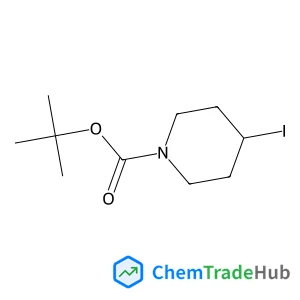
2-Methyl-2-propanyl 4-iodo-1-piperidinecarboxylate
CAS Number:
301673-14-3
Molecular Formula:
C10H18INO2

Recommended Suppliers




Disclaimer
This page provides academic journal information for reference and research purposes only. We are not affiliated with any journal publishers and do not handle publication submissions. For publication-related inquiries, please contact the respective journal publishers directly.
If you notice any inaccuracies in the information displayed, please contact us at support@chemtradehub.com. We will promptly review and address your concerns.