












A paper microfluidic device based colorimetric sensor for the detection and discrimination of elapid versus viper envenomation
Literature Information
Publication Date
2021-12-20
DOI
10.1039/D1AN01698A
Impact Factor
4.616
Authors
Lakshmi Narashimhan Ramana, Santosh S. Mathapati, Nitin Salvi, M. V. Khadilkar, Anita Malhotra, Tarun Kumar Sharma
View Original
Abstract
Snake bites are a neglected tropical disease, causing mortality and severe damage to various vital organs like the nervous system, kidneys and heart. There is increasing interest in designing new antivenom treatments that are more specific to particular groups (either taxonomic or regional) of species, given the increasing evidence that current polyvalent Indian antivenom is ineffective in many situations. Under these circumstances, being able to detect the species, or a group of species, responsible for the envenomation becomes important. Unfortunately, no such diagnostic tool is available in the Indian market. Such a tool will need to be rapid, sensitive and affordable. To address this need, we have combined the power of nanotechnology and paper microfluidics and herein report a device that has the ability to detect and differentiate viper venom from elapid and scorpion venom. In principle, this assay is based on the release of the dye from the stimuli-responsive glutaraldehyde cross-linked methylene blue-loaded gelatin (GMG) nanoparticles in the presence of snake venom metalloproteases and serine proteases. The developed equipment-free assay can detect and discriminate viper venom from that of elapids and scorpions. The low-end detection limit of the sensor is ∼3.0 ng for the saw-scaled viper Echis carinatus, while the same for Russell's viper Daboia russelii is ∼6.0 ng. The performance of the sensor remains unaltered for different batches of GMG nanoparticles. Altogether, this finding establishes the role of nanotechnology and paper microfluidics in the rapid and accurate detection of viper venom.
Related Literature
Ion transport mechanism in anhydrous lithium thiocyanate LiSCN Part I: ionic conductivity and defect chemistry
Markus Joos, Ashkan Rad, Payam Kaghazchi, Rotraut Merkle, Robert E. Dinnebier, Thomas Schleid, Joachim Maier
2022-08-05
Paper
DOI: 10.1039/D2CP01836E
Temperature-driven phase transition of Ti2CN from first-principles calculations
Jin Zhang, Huafeng Dong, Xinfeng Li, Zhenhai Wang, Dong Xiao
2022-07-16
Paper
DOI: 10.1039/D2CP01466A
Designing SnS/MoS2 van der Waals heterojunction for direct Z-scheme photocatalytic overall water-splitting by DFT investigation
Xiaofang Jia, Jinlong Wang, Yue Lu, Jiaming Sun, Yang Li, Yuyan Wang, Junying Zhang
2022-08-18
Paper
DOI: 10.1039/D2CP02692A
Glucose-induced self-assembly and phase separation in hydrophilic triblock copolymers and the governing mechanism
Divya Patel, Amit K. Bhojani, Debes Ray, Dheeraj K. Singh, Sanyukta Bhattacharjee, Debabrata Seth, Vinod K. Aswal, Ketan Kuperkar, Pratap Bahadur
2022-08-10
Paper
DOI: 10.1039/D2CP01909D
In silico capture of noble gas atoms with a light atom molecule
Stefan Mebs, Jens Beckmann
2022-08-15
Paper
DOI: 10.1039/D2CP02517E
Tunable Dirac states in doped B2S3 monolayers
Xiaoteng Li, Xi Zuo, Bin Cui, Wenkai Zhao, Yuqing Xu, Dongqing Zou, Chuanlu Yang
2022-04-02
Paper
DOI: 10.1039/D1CP05693J
Revisiting the K-edge X-ray absorption fine structure of Si, Ge–Si alloys, and the isoelectronic series: CuBr, ZnSe, GaAs, and Ge
J. C. Woicik
2022-08-18
Paper
DOI: 10.1039/D2CP00912A
The protein-stabilizing effects of TMAO in aqueous and non-aqueous conditions
Daron M. Standley, Tomoko Matsuda, Mohammad Reza Housaindokht
2022-08-10
Paper
DOI: 10.1039/D2CP01279K
Predicting Coulomb explosion fragment angular distributions using molecular ground-state vibrational motion
Louis Minion, Jason W. L. Lee, Michael Burt
2022-04-26
Paper
DOI: 10.1039/D2CP01114J
Decomposition of multifunctionalized α-alkoxyalkyl-hydroperoxides derived from the reactions of Criegee intermediates with diols in liquid phases
Yasuyuki Endo, Shinichi Enami
2022-04-27
Paper
DOI: 10.1039/D2CP00915C
You might also like
Compound Q&A
How is Ethyl 4-chlorothieno[2,3-b]pyridine-5-carboxylate (CAS: 59713-58-5) typically synthesized?
Ethyl 4-chlorothieno[2,3-b]pyridine-5-carboxylate (CAS: 59713-58-5) can be synth...
59713-58-5Ethyl 4-chlorothieno...
Compound Q&A
What regulatory guidelines apply to 5-Methyl-1H-indole-3-carbaldehyde (CAS: 52562-50-2)?
5-Methyl-1H-indole-3-carbaldehyde (CAS: 52562-50-2) is subject to various regula...
52562-50-25-Methyl-1H-indole-3...
Compound Q&A
What are the physical and chemical properties of (1,3-Dimethyl-2,4-dioxo-1,2,3,4-tetrahydro-5-pyrimidinyl)boronic acid (CAS: 223418-73-3)?
(1,3-Dimethyl-2,4-dioxo-1,2,3,4-tetrahydro-5-pyrimidinyl)boronic acid is a white...
223418-73-3(1,3-Dimethyl-2,4-di...
Compound Q&A
How should waste containing Sulfocostunolide A (CAS: 1016983-51-9) be handled?
Waste containing Sulfocostunolide A (CAS: 1016983-51-9) should be handled with c...
1016983-51-9Sulfocostunolide A
Compound Q&A
What precautions should be taken when handling Murraxocin (CAS: 88478-44-8)?
When handling Murraxocin (CAS: 88478-44-8), ensure proper personal protective eq...
88478-44-8Murraxocin
Compound Q&A
What are the physical and chemical properties of Formvar (CAS: 63148-64-1)?
Formvar (CAS: 63148-64-1) is an alkyd resin characterized by a high molecular we...
63148-64-1Formvar(R)
Compound Q&A
Is (S)-4-benzyl-2-((benzyloxy)methyl)morpholine (CAS: 205242-66-6) safe?
(S)-4-benzyl-2-((benzyloxy)methyl)morpholine is generally safe when handled with...
205242-66-6(S)-4-benzyl-2-((ben...
Compound Q&A
What industries use Methyl 1-(5-bromo-2-pyrimidinyl)cyclopropanecarboxylate (CAS: 1447607-69-3)?
Methyl 1-(5-bromo-2-pyrimidinyl)cyclopropanecarboxylate (CAS: 1447607-69-3) is p...
1447607-69-3Methyl 1-(5-bromo-2-...
Compound Q&A
Is 2-Methyl-1-phenyl-1-propanamine hydrochloride (CAS: 24290-47-9) safe?
2-Methyl-1-phenyl-1-propanamine hydrochloride (CAS: 24290-47-9) is generally con...
24290-47-92-Methyl-1-phenyl-1-...
Compound Q&A
How is 3-(4-Bromophenyl)-2-methylpropanoic acid (CAS: 66735-01-1) typically synthesized?
3-(4-Bromophenyl)-2-methylpropanoic acid is synthesized through a multi-step pro...
66735-01-13-(4-Bromophenyl)-2-...
Source Journal
Analyst

CiteScore:
7.8
Self-citation Rate:
5.6%
Articles per Year:
653
Analyst publishes analytical and bioanalytical research that reports premier fundamental discoveries and inventions, and the applications of those discoveries, unconfined by traditional discipline barriers.
Recommended Compounds
![Sodium 6-amino-3-[(E)-{4-[(E)-(4-aminophenyl)diazenyl]-2-methoxy-5-methylphenyl}diazenyl]-4-hydroxy-2-naphthalenesulfonate structure](https://static.chemtradehub.com/structs/294/2945-96-2-092f.webp "Sodium 6-amino-3-[(E)-{4-[(E)-(4-aminophenyl)diazenyl]-2-methoxy-5-methylphenyl}diazenyl]-4-hydroxy-2-naphthalenesulfonate structure")
Sodium 6-amino-3-[(E)-{4-[(E)-(4-aminophenyl)diazenyl]-2-methoxy-5-methylphenyl}diazenyl]-4-hydroxy-2-naphthalenesulfonate
CAS Number:
2945-96-2
Molecular Formula:
C24H21N6NaO5S
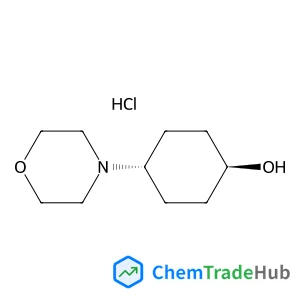
trans-4-(4-Morpholinyl)cyclohexanol hydrochloride (1:1)
CAS Number:
1588441-09-1
Molecular Formula:
C10H20ClNO2
Recommended Suppliers




Disclaimer
This page provides academic journal information for reference and research purposes only. We are not affiliated with any journal publishers and do not handle publication submissions. For publication-related inquiries, please contact the respective journal publishers directly.
If you notice any inaccuracies in the information displayed, please contact us at support@chemtradehub.com. We will promptly review and address your concerns.