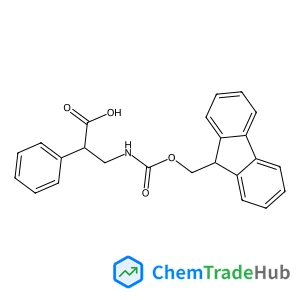
(S)-3-((((9H-Fluoren-9-yl)methoxy)carbonyl)amino)-2-phenylpropanoic acid
CAS Number:
1217663-60-9
Molecular Formula:
C24H21NO4
Yibin Yang, Xun Cui, Di Gao, Huichao He, Yingqing Ou, Ming Zhou, Qingxin Lai, Xijun Wei, Peng Xiao, Yunhuai Zhang
Efficient methods are urgently required for developing electrocatalysts with superior activities and practical applications. In this work, a novel pure ternary CoFeCr hydroxide was synthesized on carbon paper using a low-temperature (60 °C) hydrothermal approach. The OER performances of the CoFeCr hydroxides with different atomic ratios were systematically investigated. Intriguingly, the optimized trimetallic CoFeCr-6:2:1 electrocatalyst exhibited significantly improved OER performance with a small overpotential of 260 mV at 10 mA cm−2 and a low Tafel slope of 40.1 mV dec−1 under alkaline conditions. Combined experimental and DFT+U computational studies revealed that Fe was the active site and the excellent OER activity could be attributed to the electronic structure regulation effect via the introduction of Cr, which on the one hand improved the d-band center position of the Fe sites and on the other hand decreased the band gap of the sample. This regulation effect optimized the adsorption of oxygen species and efficiently accelerated the oxygen evolution kinetics and charge transfer kinetics, thus enhancing the OER performance of CoFeCr-6:2:1. Our results provide both experimental and theoretical basis for the further exploration of efficient hydroxide electrocatalysts for energy-related applications.
Peter Černoch, Alessandro Jager, Zulfiya Černochová, Vladimir Sincari, Lindomar J. C. Albuquerque, Rafal Konefal, Ewa Pavlova, Fernando C. Giacomelli, Eliezer Jager
DOI: 10.1039/D1PY00141H
Randall A. Scanga, James F. Reuther
DOI: 10.1039/D0PY01558J
Xianheng Shi, Min Liu, Lishan Li, Jiandong Zhang, Haiyan Li, Zhihao Huang, Wei Zhang, Zhengbiao Zhang, Nianchen Zhou, Xiulin Zhu
DOI: 10.1039/D1PY00165E
R. R. Gibson, A. Fernyhough, O. M. Musa, S. P. Armes
DOI: 10.1039/D1PY00572C
Vincent Bouad, Marc Guerre, Sami Zeliouche, Bruno Améduri, Cédric Totée, Gilles Silly, Rinaldo Poli, Vincent Ladmiral
DOI: 10.1039/D0PY01753A
Vajk Farkas, Gábor Turczel, János Deme, László Trif, Anvar Mirzaei, Dang Vu Hai, Sándor Kéki, Péter Huszthy, Róbert Tuba
DOI: 10.1039/D1PY00194A
Jurrie Noordijk, Bert Gebben, Monique H. M. Meeusen-Wierts, Katrien V. Bernaerts
DOI: 10.1039/D1PY00005E
Raita Goseki, Shogo Miyai, Satoshi Uchida, Takashi Ishizone
DOI: 10.1039/D1PY00500F
Chao Li, Li Han, Xiping Chen, Xinyu Bao, Qi Sun, Hongwei Ma, Yang Li
DOI: 10.1039/D1PY00416F
(1R,3S)-1,3-Cyclopentanediol finds applications in various industries. In the ph...
When handling N'-[4-(Dimethylamino)phenyl]-N,N-dimethyl-1,4-benzenediamine, it i...
There are several alternatives to 5-(2,4-Difluorophenyl)-2-methoxypyrimidine in ...
1-(3-Methoxyphenoxy)propan-2-ol (CAS: 382141-68-6) must comply with the Globally...
Tetrodotoxin Citrate is extremely dangerous and should be handled with extreme c...
2-Methyl-2-propanyl [(1R,3S)-3-hydroxycyclopentyl]carbamate (CAS: 225641-84-9) i...
Waste containing 4-(2-Hydroxyhexafluoroisopropyl)Benzoic Acid (CAS: 16261-80-6) ...
2-Methyl-2-proanyl {(2S)-1-[(benzyloxy)amino]-3-hydroxy-3-methyl-1-oxo-2-butanyl...
Benzeneethanamine, α-ethyl-, hydrochloride (1:1) is an organic compound with the...
In the synthesis of compounds similar to 3-{(E)-[4-(Dimethylamino)phenyl]diazeny...