














Optimal and strategic delivery of CO2 for Chlorella minutissima-mediated valorization of domestic wastewater with concomitant production of biomass and biofuel
Literature Information
Publication Date
2020-10-13
DOI
10.1039/D0SE00296H
Impact Factor
6.367
Authors
Ramalingam Dineshkumar, Ashutosh Singh Chauhan, Ramkrishna Sen
View Original
Abstract
Algal biorefineries have emerged as a sustainable solution towards addressing the current challenges relating to energy and the environment. Mixotrophic mode of microalgal cultivation can help in the removal of nutrients from wastewater and the capture of CO2, along with the accumulation of metabolic products such as lipids, starch, and pigments for biofuel and nutraceutical applications. In this study, bioremediation of domestic wastewater was attempted along with the strategic supply of CO2 for improved microalgal biomass and biodiesel production by Chlorella minutissima. On cultivation of C. minutissima in domestic wastewater, biomass productivity of 255 ± 10.0 mg L−1 d−1 and lipid productivity of 60.4 ± 2.7 mg L−1 d−1 were obtained with 98% COD removal. Subsequently, augmenting wastewater with an optimal dose of mustard deoiled cake hydrolysate (a low-cost nutrient-rich waste) was found to improve the biomass and lipid productivity by 42.9% and 33.1%, respectively, along with 79% COD reduction. Further, strategic feeding of CO2 at different time intervals was evaluated in order to reduce the lag phase and prolong the log phase in the growth cycle of the microalgae to further enhance the biomass and lipid productivity with more efficient nutrient removal. Among the intermittent CO2 feeding experiments, Strategy III, where CO2 (3.5%, v/v) was sparged during the lag phase and also from mid-log phase to harvest, resulted in higher biomass (510 ± 26.0 mg L−1 d−1) and lipid (120.1 ± 2.8 mg L−1 d−1) productivity with 85% COD removal. Thus, this study demonstrates the efficacy of employing a suitable CO2 feeding strategy along with augmenting with low-cost nutrient-rich waste for improved algal biomass and lipid production with concurrent remediation of domestic wastewater and CO2.
Related Literature
Synthetic macromolecular peptide-mimetics with amino acid substructure residues as protein stabilising excipients
Ruggero Foralosso, Cameron Alexander, Giuseppe Mantovani, Snow Stolnik
2023-12-29
Paper
DOI: 10.1039/D3TB02102E
Dual-mode fluorescence and electrochemiluminescence sensors based on Ru-MOF nanosheets for sensitive detection of apoE genes
Huiting Hu, Hanfeng Cui, Xia Yin, Qiqi Fan, Hai Shuai, Jing Zhang, Fusheng Liao, Wei Xiong, Hedong Jiang, Hao Fan, Wenming Liu, Guobing Wei
2023-11-10
Paper
DOI: 10.1039/D3TB01934A
Silver(i)-catalyzed stereoselective Meyer–Schuster-type rearrangement: synthesis of densely substituted α-iodo α,β-unsaturated thioesters
José L. Lopes, Lucas L. Baldassari, Diogo S. Lüdtke
2023-12-07
Paper
DOI: 10.1039/D3NJ05144G
Evaluation of using the time-dependent density functional theory in studying the fluorescence properties of coumarin derivatives
Nguyen Khoa Hien, Mai Van Bay, Quan V. Vo, Ngo Duy Y., Duong Tuan Quang, Pham Cam Nam
2023-12-11
Paper
DOI: 10.1039/D3NJ05220F
Phthalimide-based unfused-ring non-fullerene acceptors for constructing efficient organic solar cells with high open-circuit voltage
Baitian He, Luting Tang, Xiuhua Huang, Jinming Zhang, Manjun Xiao, Guiting Chen, Chuanbo Dai
2023-12-08
Paper
DOI: 10.1039/D3NJ05123D
An artificial protein cage made from a 12-membered ring
Bernard Piette, Kinga Borzęcka-Solarz, Antonina Naskalska, Jonathan G. Heddle
2023-12-13
Communication
DOI: 10.1039/D3TB01659E
Enhanced in vivo antiviral activity against pseudorabies virus through transforming gallic acid into graphene quantum dots with stimulation of interferon-related immune responses
Shiyi Ye, Fei Su, Junxing Li, Bin Yu, Lihua Xu, Tao Xiong, Kang Shao, Xiufang Yuan
2023-11-14
Paper
DOI: 10.1039/D3TB01844J
2D nanomaterial-based 3D network hydrogels for anti-infection therapy
Mingji Jiang, Yingnan Zhu, Qingsi Li, Wenxin Liu, Alideertu Dong, Lei Zhang
2023-12-19
Review Article
DOI: 10.1039/D3TB02244G
153Sm-labeled Fe3O4@lapatinib nanoparticles as a potential therapeutic agent for breast cancer: synthesis, quality control, and in vivo evaluation
Thanh Minh Pham, Dong Vu Cao, Ho Hong Quang Dang, Phuoc Minh Thanh Mai, Thanh Binh Nguyen, Ngoc Bao Nam Dinh, Thi Khanh Giang Nguyen, Thi Mai Huong Le, Van Dat Doan, Duc Thuan Nguyen
2023-12-11
Paper
DOI: 10.1039/D3TB01957H
You might also like
Compound Q&A
How should waste containing (6-Bromo-2-naphthyl)oxy](dimethyl)(2-methyl-2-propanyl)silane be handled?
Waste containing (6-Bromo-2-naphthyl)oxy](dimethyl)(2-methyl-2-propanyl)silane (...
100751-65-3[(6-Bromo-2-naphthyl...
Compound Q&A
How is 7-Fluoro-4-isoquinolinecarboxylic acid (CAS: 1841081-40-0) typically synthesized?
7-Fluoro-4-isoquinolinecarboxylic acid can be synthesized via a multi-step proce...
1841081-40-07-Fluoro-4-isoquinol...
Compound Q&A
What are the physical and chemical properties of 2,3,5,6-Tetrabromothieno[3,2-b]thiophene (CAS: 124638-53-5)?
2,3,5,6-Tetrabromothieno[3,2-b]thiophene is a crystalline compound with a high m...
124638-53-52,3,5,6-Tetrabromoth...
Compound Q&A
Is 1-[4-(Benzylamino)-7,8-dihydro-5H-pyrano[4,3-d]pyrimidin-2-yl]-2-methyl-1H-indole-4-carboxamide (CAS: 1542705-92-9) safe?
1-[4-(Benzylamino)-7,8-dihydro-5H-pyrano[4,3-d]pyrimidin-2-yl]-2-methyl-1H-indol...
1542705-92-91-[4-(Benzylamino)-7...
Compound Q&A
What is the market or research trend for imidazo[5,1-d]-1,2,3,5-tetrazine-8-carboxylic acid, 3,4-dihydro-3-methyl-4-oxo- (CAS: 113942-30-6)?
The market for imidazo[5,1-d]-1,2,3,5-tetrazine-8-carboxylic acid, 3,4-dihydro-3...
113942-30-6Imidazo[5,1-d]-1,2,3...
Compound Q&A
What is 3-(Triisopropylsilyl)propiolaldehyde (CAS: 163271-80-5)?
3-(Triisopropylsilyl)propiolaldehyde is a synthetic organic compound with the CA...
163271-80-53-(Triisopropylsilyl...
Compound Q&A
What regulatory guidelines apply to 6-Nitro-2H-1,4-benzoxazin-3(4H)-one (CAS: 81721-87-1)?
6-Nitro-2H-1,4-benzoxazin-3(4H)-one (CAS: 81721-87-1) is subject to various regu...
81721-87-16-Nitro-2H-1,4-benzo...
Compound Q&A
How should waste containing (3-Fluorophenyl)(4-{[(2-methyl-2-propanyl)oxy]carbonyl}-1-piperazinyl)acetic acid (CAS: 885272-91-3) be handled?
Waste containing (3-Fluorophenyl)(4-{[(2-methyl-2-propanyl)oxy]carbonyl}-1-piper...
885272-91-3(3-Fluorophenyl)(4-{...
Compound Q&A
What are the physical and chemical properties of N,N'-4,4'-Biphenyldiyldiisonicotinamide (CAS: 55119-40-9)?
N,N'-4,4'-Biphenyldiyldiisonicotinamide is a white crystalline solid with a mole...
55119-40-9N,N'-4,4'-Biphenyldi...
Compound Q&A
What industries use 6-Bromo-8-fluoro-2-quinazolinol (CAS: 1036756-15-6)?
6-Bromo-8-fluoro-2-quinazolinol is primarily used in the pharmaceutical industry...
1036756-15-66-Bromo-8-fluoro-2-q...
Source Journal
Recommended Compounds
![2-{[4-(2-Methoxyethyl)phenoxy]methyl}oxirane structure](https://static.chemtradehub.com/structs/567/56718-70-8-f037.webp "2-{[4-(2-Methoxyethyl)phenoxy]methyl}oxirane structure")
![N-[(E)-Phenylmethylene]benzenesulfonamide structure](https://static.chemtradehub.com/structs/139/13909-34-7-8167.webp "N-[(E)-Phenylmethylene]benzenesulfonamide structure")
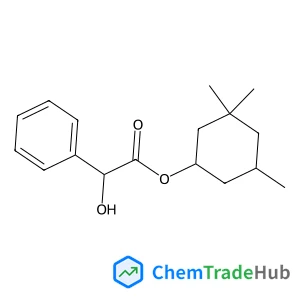
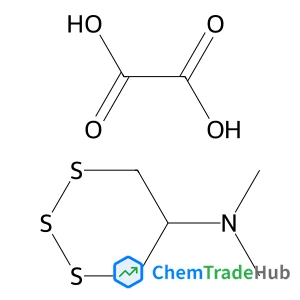
Oxalic acid compound with cyclohexylsulfamothioic O-acid (11)
CAS Number:
31895-22-4
Molecular Formula:
C7H13NO4S3
Recommended Suppliers




Disclaimer
This page provides academic journal information for reference and research purposes only. We are not affiliated with any journal publishers and do not handle publication submissions. For publication-related inquiries, please contact the respective journal publishers directly.
If you notice any inaccuracies in the information displayed, please contact us at support@chemtradehub.com. We will promptly review and address your concerns.