













Radiometric measurement techniques for in-depth characterization of photoreactors – part 1: 2 dimensional radiometry‡
Literature Information
Publication Date
2021-06-16
DOI
10.1039/D0RE00456A
Impact Factor
4.239
Authors
Maximilian Sender, Benjamin Wriedt, Dirk Ziegenbalg
View Original
Abstract
This contribution presents a spatially resolving radiometric scanning method for the evaluation of the radiation field of photochemical reactors. By moving a calibrated spectrometer, a virtual canvas is created, capturing a UV/vis spectrum for every grid position. The measurements can be displayed as heatmaps, visualizing the received photon flux per measurement point or another property of the captured spectrum. This allows for an in-depth analysis of the radiation field to understand radiometric characteristics of the investigated setup. A perfluoroalkoxy alkane (PFA) capillary reactor system with one or two layers of capillaries was used to demonstrate the capabilities of the method. For a setup with two layers it is found that the first layer absorbs the majority of the incident photons (50%) whereas the second layer is absorbing 9%. The presented method allows for a sophisticated analysis of real photoreactors as the fundament for the development of highly efficient photoreactor designs and scale-up.
Related Literature
Mercury dications: linear form is more stable than aromatic ring‡
Minh Tho Nguyen, Tamás Veszprémi
2009-11-19
Communication
DOI: 10.1039/B916847H
Incorporation of Pd into Au(111): enhanced electrocatalytic activity for the hydrogen evolution reaction
Peter J. Schäfer, Ludwig A. Kibler
2010-09-28
Paper
DOI: 10.1039/C0CP00780C
A study of alcohol-induced gelation of β-lactoglobulin with small-angle neutron scattering, neutron spin echo, and dynamic light scattering measurements
Koji Yoshida, Toshio Yamaguchi, Noboru Osaka, Hitoshi Endo, Mitsuhiro Shibayama
2010-02-11
Paper
DOI: 10.1039/B920187D
Enhancing the interactions between neutral molecular tweezers and anions
Jose M. Hermida-Ramón, Marcos Mandado, Marta Sánchez-Lozano, Carlos M. Estévez
2009-11-09
Paper
DOI: 10.1039/B915483C
Fast optical vapour sensing by Bloch surface waves on porous siliconmembranes
Francesco Michelotti, Beniamino Sciacca, Lorenzo Dominici, Marzia Quaglio, Emiliano Descrovi, Fabrizio Giorgis, Francesco Geobaldo
2009-11-16
Paper
DOI: 10.1039/B914280K
Guiding the time-evolution of a molecule: optical control by computer
Graham A. Worth, Cristina Sanz Sanz
2010-11-04
Perspective
DOI: 10.1039/C0CP01740J
Zero-point vibrational corrections to isotropic hyperfine coupling constants in polyatomic molecules
Zilvinas Rinkevicius, Kenneth Ruud, Hans Ågren
2010-11-09
Paper
DOI: 10.1039/C0CP01443E
Compact microcubic structures platform based on self-assembly Prussian blue nanoparticles with highly tuneable conductivity
Maria Guix
2010-10-26
Paper
DOI: 10.1039/C0CP00960A
Phase behaviour and conductivity study on multi-component mixtures for electrodeposition in supercritical fluids
Philip N. Bartlett, David C. Cook, Michael W. George, Jie Ke, William Levason, Gillian Reid, Wenta Su, Wenjian Zhang
2009-11-13
Paper
DOI: 10.1039/B918981E
You might also like
Compound Q&A
What are the main uses of 4-Nitrophenyl phosphate disodium salt hexahydrate (CAS: 333338-18-4)?
4-Nitrophenyl phosphate disodium salt hexahydrate is primarily used as a substra...
333338-18-44-Nitrophenyl phosph...
Compound Q&A
What are the main uses of 2-(Trifluoromethyl)-1,3-oxazole-4-carboxylic Acid (CAS: 1060816-01-4)?
2-(Trifluoromethyl)-1,3-oxazole-4-carboxylic Acid (CAS: 1060816-01-4) is widely ...
1060816-01-42-(Trifluoromethyl)-...
Compound Q&A
How should 2-Fluoro-4-biphenylcarboxylic acid (CAS: 137045-30-8) be stored?
2-Fluoro-4-biphenylcarboxylic acid should be stored in a cool, dry place at room...
137045-30-82-Fluoro-4-biphenylc...
Compound Q&A
What industries use Prednisolone-21-Carboxylic Acid (CAS: 61549-70-0)?
Prednisolone-21-Carboxylic Acid is primarily used in the pharmaceutical industry...
61549-70-0Prednisolone-21-Carb...
Compound Q&A
How should 4-(Hydrazinomethyl)-1,2,3-benzenetriol (CAS: 3614-72-0) be stored?
4-(Hydrazinomethyl)-1,2,3-benzenetriol (CAS: 3614-72-0) should be stored in a co...
3614-72-04-(Hydrazinomethyl)-...
Compound Q&A
What industries use 4-Amino-1-methyl-1H-pyrazole-5-carboxylic acid hydrochloride (CAS: 92534-70-8)?
4-Amino-1-methyl-1H-pyrazole-5-carboxylic acid hydrochloride (CAS: 92534-70-8) i...
92534-70-84-Amino-1-methyl-1H-...
Compound Q&A
What regulatory guidelines apply to dehydropachymic acid (CAS: 77012-31-8)?
Dehydropachymic acid (CAS: 77012-31-8) is regulated by various agencies. It fall...
77012-31-8Dehydropachymic acid
Compound Q&A
What is the market or research trend for 6-[(2,2-Dimethylpropanoyl)amino]nicotinic acid (CAS: 898561-66-5)?
The market and research trends for 6-[(2,2-Dimethylpropanoyl)amino]nicotinic aci...
898561-66-56-[(2,2-Dimethylprop...
Compound Q&A
How should 1,10-Phenanthroline-2,9-dicarbaldehyde (CAS: 57709-62-3) be stored?
1,10-Phenanthroline-2,9-dicarbaldehyde should be stored in a cool, dry place awa...
57709-62-31,10-Phenanthroline-...
Compound Q&A
How is 5-Carbamoyl-11-oxo-10,11-dihydro-5H-dibenzo[b,f]azepin-10-yl acetate (CAS: 113952-21-9) typically synthesized?
5-Carbamoyl-11-oxo-10,11-dihydro-5H-dibenzo[b,f]azepin-10-yl acetate can be synt...
113952-21-95-Carbamoyl-11-oxo-1...
Source Journal
Reaction Chemistry & Engineering

CiteScore:
0
Self-citation Rate:
8.8%
Articles per Year:
284
Reaction Chemistry & Engineering is an interdisciplinary journal reporting cutting-edge research focused on enhancing the understanding and efficiency of reactions. Reaction engineering leverages the interface where fundamental molecular chemistry meets chemical engineering and technology. Challenges in chemistry can be overcome by the application of new technologies, while engineers may find improved solutions for process development from the latest developments in reaction chemistry. Reaction Chemistry & Engineering is a unique forum for researchers whose interests span the broad areas of chemical engineering and chemical sciences to come together in solving problems of importance to wider society. All papers should be written to be approachable by readers across the engineering and chemical sciences. Papers that consider multiple scales, from the laboratory up to and including plant scale, are particularly encouraged.
Recommended Compounds

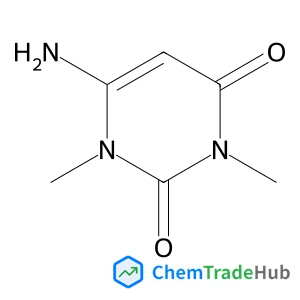
6-amino-1,3-dimethyl-1,2,3,4-tetrahydropyrimidine-2,4-dione
CAS Number:
6642-31-5
Molecular Formula:
C6H9N3O2
Recommended Suppliers





Disclaimer
This page provides academic journal information for reference and research purposes only. We are not affiliated with any journal publishers and do not handle publication submissions. For publication-related inquiries, please contact the respective journal publishers directly.
If you notice any inaccuracies in the information displayed, please contact us at support@chemtradehub.com. We will promptly review and address your concerns.