












Strategies for the synthesis of furo-pyranones and their application in the total synthesis of related natural products
Literature Information
Publication Date
2021-01-25
DOI
10.1039/D0QO01421D
Impact Factor
5.281
Authors
View Original
Abstract
The furo-pyranone framework is widely present in the molecular structure of various biologically potent natural products and un-natural small molecules, and it represents a valuable target in synthetic organic chemistry and medicinal chemistry. In the last five decades, numerous innovative synthetic methodologies have been disclosed for these bis-oxacyclic fused heterocycles, expanding the scope of accessible building blocks, efficient and affordable catalysis, facile reaction conditions, and overall practicality of the process. In this comprehensive review article, we focus on showcasing the complete spectrum (from the first report in the 1970s to the latest disclosure in 2020) of efforts devoted towards the synthesis of diverse classes of furo-pyranones through systematization and critical analysis of the accumulated experimental knowledge and their elegant applications in total syntheses of biologically interesting related natural products.
Related Literature
Supramolecular complex composed of a covalently linked zinc porphyrin dimer and fulleropyrrolidine bearing two axially coordinating pyridine entities
Francis D'Souza, Suresh Gadde, Melvin E. Zandler, Mitsunari Itou, Yasuyuki Araki, Osamu Ito
2004-09-08
Communication
DOI: 10.1039/B407985J
Construction of building-blocks for polyether synthesis using sequential catalytic ring-closing enyne and cross metathesis
J. Stephen Clark, Frédéric Elustondo, Marc C. Kimber
2004-09-24
Communication
DOI: 10.1039/B409067E
High-efficiency and minimum-waste continuous kinetic resolution of racemic alcohols by using lipase in supercritical carbon dioxide
Tomoko Matsuda, Kazunori Watanabe, Tadao Harada, Kaoru Nakamura, Yoshitaka Arita, Yukihiro Misumi, Shinichiro Ichikawa, Takao Ikariya
2004-08-26
Communication
DOI: 10.1039/B406882C
Halide anion directed assembly of luminescent pseudorotaxanes
David Curiel, Paul D. Beer, Rowena L. Paul, Andrew Cowley, Mark R. Sambrook, Fridrich Szemes
2004-04-22
Communication
DOI: 10.1039/B401900H
Efficient synthesis of a nucleoside-diphospho-exo-glycal displaying time-dependent inactivation of UDP-galactopyranose mutase
Audrey Caravano, Stéphane P. Vincent, Pierre Sinaÿ
2004-04-23
Communication
DOI: 10.1039/B402469A
Olefincopolymerizationvia reversible addition–fragmentation chain transfer
Rajan Venkatesh, Bastiaan B P Staal, Bert Klumperman
2004-05-20
Communication
DOI: 10.1039/B403342F
A novel fluoride sensor based on fluorescence enhancement
Guoxiang Xu, Matthew A. Tarr
2004-04-02
Communication
DOI: 10.1039/B316121H
Self-assembly of aluminium–salen coupled nanostructures from encoded modules with cleavable disulfide DNA-linkers
Raymond S. Brown, Morten Nielsen, Kurt V. Gothelf
2004-05-27
Communication
DOI: 10.1039/B403956D
New, highly acidic ionic liquid systems and their application in the carbonylation of toluene
Nicole Brausch, Andreas Metlen, Peter Wasserscheid
2004-05-21
Communication
DOI: 10.1039/B403464C
A novel supramolecular assembly in an iron(iii) compound exhibiting magnetic ordering at 70 K
Donatella Armentano, Giovanni De Munno, Teresa F. Mastropietro, Miguel Julve, Francesc Lloret
2004-04-21
Communication
DOI: 10.1039/B402055C
You might also like
Compound Q&A
What precautions should be taken when handling 2-Chloro-1,2-bis(4-methylphenyl)ethanone (CAS: 71193-32-3)?
When handling 2-Chloro-1,2-bis(4-methylphenyl)ethanone (CAS: 71193-32-3), it is ...
71193-32-32-Chloro-1,2-bis(4-m...
Compound Q&A
What industries use 4-Ethoxy-3-(5-methyl-4-oxo-7-propyl-1,4-dihydroimidazo[5,1-f][1,2,4]triazin-2-yl)benzenesulfonyl chloride (CAS: 224789-26-8)?
4-Ethoxy-3-(5-methyl-4-oxo-7-propyl-1,4-dihydroimidazo[5,1-f][1,2,4]triazin-2-yl...
224789-26-84-Ethoxy-3-(5-methyl...
Compound Q&A
How should Methyl 3-Oxo-4-Androsten-17-Carboxylate (CAS: 2681-55-2) be stored?
Methyl 3-Oxo-4-Androsten-17-Carboxylate (CAS: 2681-55-2) should be stored in a c...
2681-55-2Methyl 3-Oxo-4-Andro...
Compound Q&A
What are the main uses of (R)-3-Amino-4-(3-hexylphenylamino)-4-oxobutylphosphonic acid (CAS: 909725-61-7)?
(R)-3-Amino-4-(3-hexylphenylamino)-4-oxobutylphosphonic acid is primarily used i...
909725-61-7(R)-3-Amino-4-(3-hex...
Compound Q&A
What regulatory guidelines apply to 2-Methyl-2-propanyl 3-amino-3-carbamoyl-1-azetidinecarboxylate (CAS: 1254120-14-3)?
2-Methyl-2-propanyl 3-amino-3-carbamoyl-1-azetidinecarboxylate (CAS: 1254120-14-...
1254120-14-32-Methyl-2-propanyl ...
Compound Q&A
Are there alternatives to (E)-4-(tert-Butoxy)-4-oxobut-2-enoic acid (CAS: 135355-96-3) in synthesis?
There are alternative reagents that can be used in synthesis instead of (E)-4-(t...
135355-96-3(E)-4-(tert-Butoxy)-...
Compound Q&A
What are the physical and chemical properties of [2-(3-Chlorophenyl)-1,3-thiazol-4-yl]methanol (CAS: 121202-20-8)?
[2-(3-Chlorophenyl)-1,3-thiazol-4-yl]methanol (CAS: 121202-20-8) is a crystallin...
121202-20-8[2-(3-Chlorophenyl)-...
Compound Q&A
What is the market or research trend for Methyl (2S)-[(4S)-2,2-dimethyl-1,3-dioxolan-4-yl]{[(4-methylphenyl)sulfonyl]oxy}acetate (CAS: 166249-17-8)?
The market and research trends for Methyl (2S)-[(4S)-2,2-dimethyl-1,3-dioxolan-4...
166249-17-8Methyl (2S)-[(4S)-2,...
Compound Q&A
What is the market or research trend for 1-Bromo-2-isocyanatoethane (CAS: 42865-19-0)?
The market for 1-Bromo-2-isocyanatoethane (CAS: 42865-19-0) is driven by its use...
42865-19-01-Bromo-2-isocyanato...
Compound Q&A
What are the main uses of 4-Nitro-D-phenylalanine hydrochloride (CAS: 147065-06-3)?
4-Nitro-D-phenylalanine hydrochloride (CAS: 147065-06-3) is primarily used in re...
147065-06-34-Nitro-D-phenylalan...
Source Journal
Organic Chemistry Frontiers

CiteScore:
7.8
Self-citation Rate:
8.7%
Articles per Year:
724
Organic Chemistry Frontiers publishes high-quality research from across organic chemistry. Emphases are placed on studies that make significant contributions to the field of organic chemistry by reporting either new or significantly improved protocols or methodologies. Topics include, but are not limited to the following: Organic synthesis Development of synthetic methodologies Catalysis Natural products Functional organic materials Supramolecular and macromolecular chemistry Physical and computational organic chemistry
Recommended Compounds
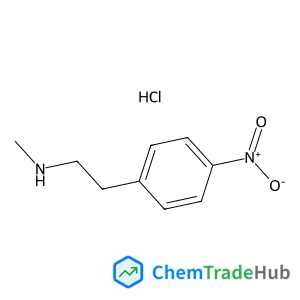
N-Methyl-2-(4-nitrophenyl)ethanamine hydrochloride (1:1)
CAS Number:
166943-39-1
Molecular Formula:
C9H13ClN2O2

Recommended Suppliers





Disclaimer
This page provides academic journal information for reference and research purposes only. We are not affiliated with any journal publishers and do not handle publication submissions. For publication-related inquiries, please contact the respective journal publishers directly.
If you notice any inaccuracies in the information displayed, please contact us at support@chemtradehub.com. We will promptly review and address your concerns.