












Correction: Functionalization of triblock copolymer elastomers by cross-linking the end blocks via trans-N-alkylation-based exchangeable bonds
Literature Information
Publication Date
2020-03-09
DOI
10.1039/D0PY90040K
Impact Factor
5.582
Authors
Mikihiro Hayashi
View Original
Abstract
Correction for ‘Functionalization of triblock copolymer elastomers by cross-linking the end blocks via trans-N-alkylation-based exchangeable bonds’ by Mikihiro Hayashi et al., Polym. Chem., 2020, DOI: 10.1039/c9py01759c.
Related Literature
Fabrication of freestanding silk fibroin films containing Ag nanowires/NaYF4:Yb,Er nanocomposites with metal-enhanced fluorescence behavior
Bing Zhao, Ning Qi, Ke-Qin Zhang, Xiao Gong
2016-05-09
Paper
DOI: 10.1039/C6CP02024K
The first UV absorption band of l-tryptophan is not due to two simultaneous orthogonal electronic transitions differing in the dipole moment
2016-05-09
Paper
DOI: 10.1039/C6CP00790B
Oversolubility in the microvicinity of solid–solution interfaces
Isabelle Bergonzi, Lionel Mercury, Patrick Simon, Frédéric Jamme, Kirill Shmulovich
2016-04-27
Paper
DOI: 10.1039/C5CP08012F
Fractional electron number, temperature, and perturbations in chemical reactions
Paul W. Ayers
2016-04-29
Paper
DOI: 10.1039/C6CP00939E
Connectivity matters – ultrafast isomerization dynamics of bisazobenzene photoswitches
Chavdar Slavov, Chong Yang, Luca Schweighauser, Chokri Boumrifak, Andreas Dreuw, Hermann A. Wegner, Josef Wachtveitl
2016-03-09
Paper
DOI: 10.1039/C6CP00603E
Pressure dependent low temperature kinetics for CN + CH3CN: competition between chemical reaction and van der Waals complex formation
Chantal Sleiman, Sergio González, Stephen J. Klippenstein, Dahbia Talbi, Gisèle El Dib, André Canosa
2016-05-10
Paper
DOI: 10.1039/C6CP01982J
Nuclear size effects in vibrational spectra
Adel Almoukhalalati, Avijit Shee, Trond Saue
2016-05-09
Paper
DOI: 10.1039/C6CP01913G
A comprehensive picture of the ultrafast excited-state dynamics of retinal
Oliver Flender, Mirko Scholz, Jonas Hölzer, Kawon Oum, Thomas Lenzer
2016-05-18
Paper
DOI: 10.1039/C6CP01335J
Molecular dynamics of anhydrous glycolipid self-assembly in lamellar and hexagonal phases
T. S. Velayutham, B. K. Ng, W. C. Gan, V. Manickam Achari, N. I. Zahid, W. H. Abd. Majid, C. Zannoni, R. Hashim
2016-05-05
Paper
DOI: 10.1039/C6CP00583G
Analysis of the magnetically induced current density of molecules consisting of annelated aromatic and antiaromatic hydrocarbon rings
Dage Sundholm, Raphael J. F. Berger, Heike Fliegl
2016-05-13
Paper
DOI: 10.1039/C6CP01968D
You might also like
Compound Q&A
Is 4-Benzyl-2,2-dimethylmorpholine (CAS: 84761-04-6) safe?
4-Benzyl-2,2-dimethylmorpholine is generally considered safe when handled under ...
84761-04-64-Benzyl-2,2-dimethy...
Compound Q&A
What is (5,6-Dimethoxy-3-pyridinyl)boronic acid (CAS: 1346526-61-1)?
(5,6-Dimethoxy-3-pyridinyl)boronic acid is a chemical compound with the molecula...
1346526-61-1(5,6-Dimethoxy-3-pyr...
Compound Q&A
How is 1,1,3,3-Tetramethyl-1,3-bis(2-methyl-2-propanyl)disiloxane (CAS: 67875-55-2) typically synthesized?
1,1,3,3-Tetramethyl-1,3-bis(2-methyl-2-propanyl)disiloxane is synthesized throug...
67875-55-21,1,3,3-Tetramethyl-...
Compound Q&A
What are the main uses of (2R,4S)-1-Boc-4-methylpyrrolidine-2-carboxylic acid (CAS: 1018818-04-6)?
(2R,4S)-1-Boc-4-methylpyrrolidine-2-carboxylic acid is primarily used as a build...
1018818-04-6(2R,4S)-1-Boc-4-meth...
Compound Q&A
What precautions should be taken when handling 2,3-Dichloroacrylonitrile (CAS: 22410-58-8)?
When handling 2,3-Dichloroacrylonitrile, it is crucial to wear appropriate perso...
22410-58-82,3-Dichloroacryloni...
Compound Q&A
How should (S)-1-(o-Tolyl)ethanamine hydrochloride (CAS: 1332832-16-2) be stored?
(S)-1-(o-Tolyl)ethanamine hydrochloride should be stored in a cool, dry place to...
1332832-16-2(S)-1-(o-Tolyl)ethan...
Compound Q&A
What are the physical and chemical properties of Benzyl [1-(hydroxyamino)-1-imino-2-methyl-2-propanyl]carbamate (CAS: 518047-98-8)?
Benzyl [1-(hydroxyamino)-1-imino-2-methyl-2-propanyl]carbamate (CAS: 518047-98-8...
518047-98-8Benzyl [1-(hydroxyam...
Compound Q&A
What industries use 2-Methyloxazole-5-carbaldehyde (CAS: 885273-42-7)?
2-Methyloxazole-5-carbaldehyde is used in the pharmaceutical industry for the sy...
885273-42-72-Methyloxazole-5-ca...
Compound Q&A
What is the market or research trend for 2-Methyl-2-propanyl 4-[(1S)-1-hydroxyethyl]-1-piperidinecarboxylate (CAS: 389889-82-1)?
The market for 2-Methyl-2-propanyl 4-[(1S)-1-hydroxyethyl]-1-piperidinecarboxyla...
389889-82-12-Methyl-2-propanyl ...
Compound Q&A
Is 1-Butyl-3-methylpyridinium bromide (CAS: 26576-85-2) safe?
1-Butyl-3-methylpyridinium bromide is generally considered safe for laboratory u...
26576-85-21-Butyl-3-methylpyri...
Source Journal
Polymer Chemistry

CiteScore:
8.6
Self-citation Rate:
7.3%
Articles per Year:
457
Polymer Chemistry welcomes submissions in all areas of polymer science that have a strong focus on macromolecular chemistry. Manuscripts may cover a broad range of fields, yet no direct application focus is required.
Recommended Compounds
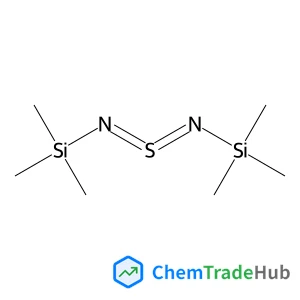
1,3-Bis(trimethylsilyl)-2lambda~4~-diazathia-1,2-diene
CAS Number:
18156-25-7
Molecular Formula:
C6H18N2SSi2
Recommended Suppliers







Disclaimer
This page provides academic journal information for reference and research purposes only. We are not affiliated with any journal publishers and do not handle publication submissions. For publication-related inquiries, please contact the respective journal publishers directly.
If you notice any inaccuracies in the information displayed, please contact us at support@chemtradehub.com. We will promptly review and address your concerns.