![4-{[4-(Trifluoromethoxy)benzyl]oxy}benzonitrile structure](https://static.chemtradehub.com/structs/103/1036629-63-6-2172.webp "4-{[4-(Trifluoromethoxy)benzyl]oxy}benzonitrile structure")
4-{[4-(Trifluoromethoxy)benzyl]oxy}benzonitrile
CAS Number:
1036629-63-6
Molecular Formula:
C15H10F3NO2
Guilhem Coste, Jose E. Sanchez, Gail E. Fanucci, Brent S. Sumerlin
We report a post-polymerization modification strategy to functionalize methacrylic copolymers through enol-ester transesterification. A new monomer, vinyl methacryloxy acetate (VMAc), containing both enol-ester and methacryloyl functionality, was successfully copolymerized with methyl methacrylate (MMA) by selective reversible addition–fragmentation chain transfer (RAFT) polymerization. Post-polymerization modification of pendent enol esters proceeded through an “irreversible” transesterification process, driven by the low nucleophilicity of the tautomerization product, to result in high conversion under mild conditions.

Acta Metallurgica Sinica-English Letters

Journal of Asian Natural Products Research

Atomization and Sprays

Journal of the Indian Institute of Science

Bioorganic & Medicinal Chemistry Letters

Critical Reviews in Solid State and Materials Sciences

Journal of Chemical Sciences

NDT & E International

Herald of the Russian Academy of Sciences

Heteroatom Chemistry
Swagat Sharma, Lauren Lesiak, Christopher D. Aretz, Yu Du, Sushil Kumar, Nagsen Gautam, Yazen Alnouti, Nikilesh V. Dhuria, Yashpal S. Chhonker, C. David Weaver, Corey R. Hopkins
DOI: 10.1039/D1MD00129A
Maximillian Taro William Lee, William Mahy, Mark David Rackham
DOI: 10.1039/D1MD00113B
Chanchal Sonkar, Sayantan Sarkar
DOI: 10.1039/D1MD00220A
Huihui Yang
DOI: 10.1039/D1MD00066G
Lewis D. Turner, Lucy Lin, Sabine Pellett, Takashi Sugane, Eric A. Johnson, Kim D. Janda
DOI: 10.1039/D1MD00089F
Zeyu Wang, Mingju Shui, Ian W. Wyman, Qing-Wen Zhang, Ruibing Wang
DOI: 10.1039/D1MD00019E
Ivana Cacciatore, Hasan Turkez, Annalisa Di Rienzo, Michele Ciulla, Antonio Di Stefano
DOI: 10.1039/D1MD00177A
Sahil Mishra, Shreya
DOI: 10.1039/D0MD00318B
Waste containing 6-Chloro-5-(2'-hydroxy-3'-methoxy-4-biphenylyl)-3-(3-methoxyphe...
(3alpha,5alpha)-3-Hydroxypregnane-11,20-dione is primarily used in the pharmaceu...
The market for 4-Amino-6-chloro-2-pyridinecarboxylic acid (CAS: 546141-56-4) is ...
Alternatives to (2-Benzoylethyl)trimethylammonium chloride (CAS: 24472-88-6) in ...
N-[4-Nitro-3-(trifluoromethyl)phenyl]acetamide (CAS: 393-12-4) is generally safe...
Alternative reagents such as other phosphates or similar functional groups can b...
There are alternatives to N,N'-Bis(3-aminopropyl)-1,3-propanediamine (CAS: 4605-...
When handling Aluminium trihexadecanoate, it is important to use appropriate per...
(1,1-Dioxido-3-oxo-1,2-benzothiazol-2(3H)-yl)acetic acid is a chemical compound ...
Several alternatives to 5,5-dimethyloxolan-2-one (CAS: 3123-97-5) can be used in...

Polymer Chemistry welcomes submissions in all areas of polymer science that have a strong focus on macromolecular chemistry. Manuscripts may cover a broad range of fields, yet no direct application focus is required.
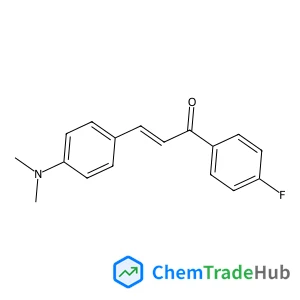
![2-Methyl-2-propanyl [2-(2-oxa-6-azaspiro[3.3]hept-6-yl)ethyl]carbamate structure](https://static.chemtradehub.com/structs/141/1415562-38-7-c0a4.webp "2-Methyl-2-propanyl [2-(2-oxa-6-azaspiro[3.3]hept-6-yl)ethyl]carbamate structure")