


Self-assembly of strawberry-like organic–inorganic hybrid particle clusters with directionally distributed bimetal and facile transformation of the core and corona
Literature Information
Publication Date
2020-04-14
DOI
10.1039/D0PY00237B
Impact Factor
5.582
Authors
Shuxing Mei, Juan Wang, Xiaopeng Zhang, Shaofeng Song, Chao Li
View Original
Abstract
A controllable structure of organic–inorganic hybrid particle clusters (HPCs) with directionally distributed bimetal was produced through the self-assembly of organic poly(styrene-co-glycidyl methacrylate-co-vinylbenzoic acid) (PSGV) and γ-aminopropyltriethoxysilane-modified inorganic SiO2&Au nanoparticles (NPs), during which the strong interaction between the carboxyl groups of the organic particles and the amino groups of the inorganic particles played a key role in self-assembly. Controlling the mean size and feeding route of the above two particles allowed strawberry-shaped PSGV&Ag@SiO2&Au and SiO2&Au@PSGV&Ag HPCs with exchangeable core and corona to be obtained. The scanning electron microscopy and transmission electron microscopy study results demonstrated that surface of the PSGV domains was embellished with Ag NPs from the chemical bonding between silver ions and amino groups, which were obtained by later modification of PSGV@SiO2&Au, while the Au NPs were only seen on the surface of the SiO2&Au domains. The resultant PSGV&Ag@SiO2&Au particles showed an excellent performance in the catalytic degradation of Rhodamine B, where an above 99% degradation efficiency can be gained within 3 min. The improvement of catalytic activity was ascribed to the unique morphological structure of the HPCs and synergistic effect of the directionally distributed Au and Ag NPs.
Recommended Journals

Biocatalysis and Biotransformation

Journal of Asian Natural Products Research

Main Group Chemistry

Acta Metallurgica Sinica-English Letters

Polycyclic Aromatic Compounds

Cellulose

Bioorganic & Medicinal Chemistry Letters

Critical Reviews in Solid State and Materials Sciences

Chinese Journal of Chemistry

Atomization and Sprays
Related Literature
Drugging the undruggable: a computational chemist's view of KRASG12C
Michael S. Bodnarchuk, Doyle J. Cassar, Jason G. Kettle, Graeme Robb, Richard A. Ward
2021-03-29
Research Article
DOI: 10.1039/D1MD00055A
Cucurbit[8]uril-based supramolecular hydrogels for biomedical applications
Zeyu Wang, Mingju Shui, Ian W. Wyman, Qing-Wen Zhang, Ruibing Wang
2021-03-10
Review Article
DOI: 10.1039/D1MD00019E
Challenges and opportunities of pharmaceutical cocrystals: a focused review on non-steroidal anti-inflammatory drugs
Utsav Garg, Yasser Azim
2021-02-09
Review Article
DOI: 10.1039/D0MD00400F
Cyclisation strategies for stabilising peptides with irregular conformations
Quynh Ngoc Vu, Reginald Young, Haritha Krishna Sudhakar, Tianyi Gao, Tiancheng Huang, Yaw Sing Tan, Yu Heng Lau
2021-04-28
Review Article
DOI: 10.1039/D1MD00098E
Macrocyclization strategies for cyclic peptides and peptidomimetics
Clément Bechtler, Christina Lamers
2021-06-29
Review Article
DOI: 10.1039/D1MD00083G
Chemical modulation of Kv7 potassium channels
Matteo Borgini, Pravat Mondal, Ruiting Liu, Peter Wipf
2021-01-14
Review Article
DOI: 10.1039/D0MD00328J
Covalent PROTACs: the best of both worlds?
Neil P. Grimster
2021-07-15
Opinion
DOI: 10.1039/D1MD00191D
The tridecaptins: non-ribosomal peptides that selectively target Gram-negative bacteria
Samantha J. Bann, Ross D. Ballantine, Stephen A. Cochrane
2021-01-22
Review Article
DOI: 10.1039/D0MD00413H
Put a ring on it: application of small aliphatic rings in medicinal chemistry
Matthias R. Bauer, Paolo Di Fruscia, Simon C. C. Lucas, Iacovos N. Michaelides, Jennifer E. Nelson, R. Ian Storer, Benjamin C. Whitehurst
2021-01-07
Review Article
DOI: 10.1039/D0MD00370K
You might also like
Compound Q&A
How should waste containing 6-Chloro-5-(2'-hydroxy-3'-methoxy-4-biphenylyl)-3-(3-methoxyphenyl)-1H-pyrrolo[3,2-d]pyrimidine-2,4(3H,5H)-dione (CAS: 1346607-05-3) be handled?
Waste containing 6-Chloro-5-(2'-hydroxy-3'-methoxy-4-biphenylyl)-3-(3-methoxyphe...
1346607-05-36-Chloro-5-(2'-hydro...
Compound Q&A
What are the main uses of (3alpha,5alpha)-3-Hydroxypregnane-11,20-dione (CAS: 23930-19-0)?
(3alpha,5alpha)-3-Hydroxypregnane-11,20-dione is primarily used in the pharmaceu...
23930-19-0(3alpha,5alpha)-3-Hy...
Compound Q&A
What is the market or research trend for 4-Amino-6-chloro-2-pyridinecarboxylic acid (CAS: 546141-56-4)?
The market for 4-Amino-6-chloro-2-pyridinecarboxylic acid (CAS: 546141-56-4) is ...
546141-56-44-Amino-6-chloro-2-p...
Compound Q&A
Are there alternatives to (2-Benzoylethyl)trimethylammonium chloride (CAS: 24472-88-6) in synthesis?
Alternatives to (2-Benzoylethyl)trimethylammonium chloride (CAS: 24472-88-6) in ...
24472-88-6(2-Benzoylethyl)trim...
Compound Q&A
Is N-[4-Nitro-3-(trifluoromethyl)phenyl]acetamide (CAS: 393-12-4) safe?
N-[4-Nitro-3-(trifluoromethyl)phenyl]acetamide (CAS: 393-12-4) is generally safe...
393-12-4N-[4-Nitro-3-(triflu...
Compound Q&A
Are there alternatives to [(4R,5R,6S)-5-hydroxy-10-imino-3,7-dioxa-1,9-diazatricyclo[6.4.0.02,6]dodeca-8,11-dien-4-yl]methyl dihydrogen phosphate (CAS: 39679-56-6) in synthesis?
Alternative reagents such as other phosphates or similar functional groups can b...
39679-56-6[(4R,5R,6S)-5-hydrox...
Compound Q&A
Are there alternatives to N,N'-Bis(3-aminopropyl)-1,3-propanediamine (CAS: 4605-14-5) in synthesis?
There are alternatives to N,N'-Bis(3-aminopropyl)-1,3-propanediamine (CAS: 4605-...
4605-14-5N,N'-Bis(3-aminoprop...
Compound Q&A
What precautions should be taken when handling Aluminium trihexadecanoate (CAS: 555-35-1)?
When handling Aluminium trihexadecanoate, it is important to use appropriate per...
555-35-1Aluminium trihexadec...
Compound Q&A
What is (1,1-Dioxido-3-oxo-1,2-benzothiazol-2(3H)-yl)acetic acid (CAS: 52188-11-1)?
(1,1-Dioxido-3-oxo-1,2-benzothiazol-2(3H)-yl)acetic acid is a chemical compound ...
52188-11-1(1,1-Dioxido-3-oxo-1...
Compound Q&A
Are there alternatives to 5,5-dimethyloxolan-2-one (CAS: 3123-97-5) in synthesis?
Several alternatives to 5,5-dimethyloxolan-2-one (CAS: 3123-97-5) can be used in...
3123-97-55,5-dimethyloxolan-2...
Source Journal
Polymer Chemistry

CiteScore:
8.6
Self-citation Rate:
7.3%
Articles per Year:
457
Polymer Chemistry welcomes submissions in all areas of polymer science that have a strong focus on macromolecular chemistry. Manuscripts may cover a broad range of fields, yet no direct application focus is required.
Recommended Compounds
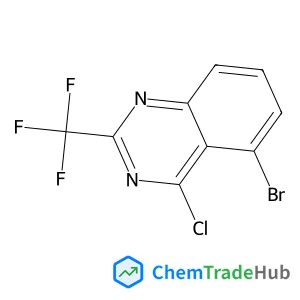
5-Bromo-4-chloro-2-(trifluoromethyl)quinazoline
CAS Number:
2089311-03-3
Molecular Formula:
C9H3BrClF3N2
![2-morpholino-2-[2-(trifluoromethyl)pyrimidin-5-yl]ethanamine structure](https://static.chemtradehub.com/structs/119/1192570-20-9-2810.webp "2-morpholino-2-[2-(trifluoromethyl)pyrimidin-5-yl]ethanamine structure")
2-morpholino-2-[2-(trifluoromethyl)pyrimidin-5-yl]ethanamine
CAS Number:
1192570-20-9
Molecular Formula:
C11H15F3N4O
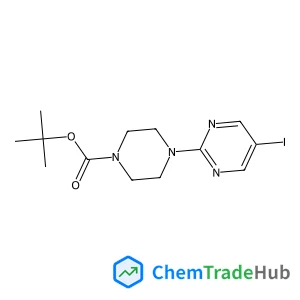
2-Methyl-2-propanyl 4-(5-iodo-2-pyrimidinyl)-1-piperazinecarboxylate
CAS Number:
1027616-32-5
Molecular Formula:
C13H19IN4O2
Recommended Suppliers






Disclaimer
This page provides academic journal information for reference and research purposes only. We are not affiliated with any journal publishers and do not handle publication submissions. For publication-related inquiries, please contact the respective journal publishers directly.
If you notice any inaccuracies in the information displayed, please contact us at support@chemtradehub.com. We will promptly review and address your concerns.